

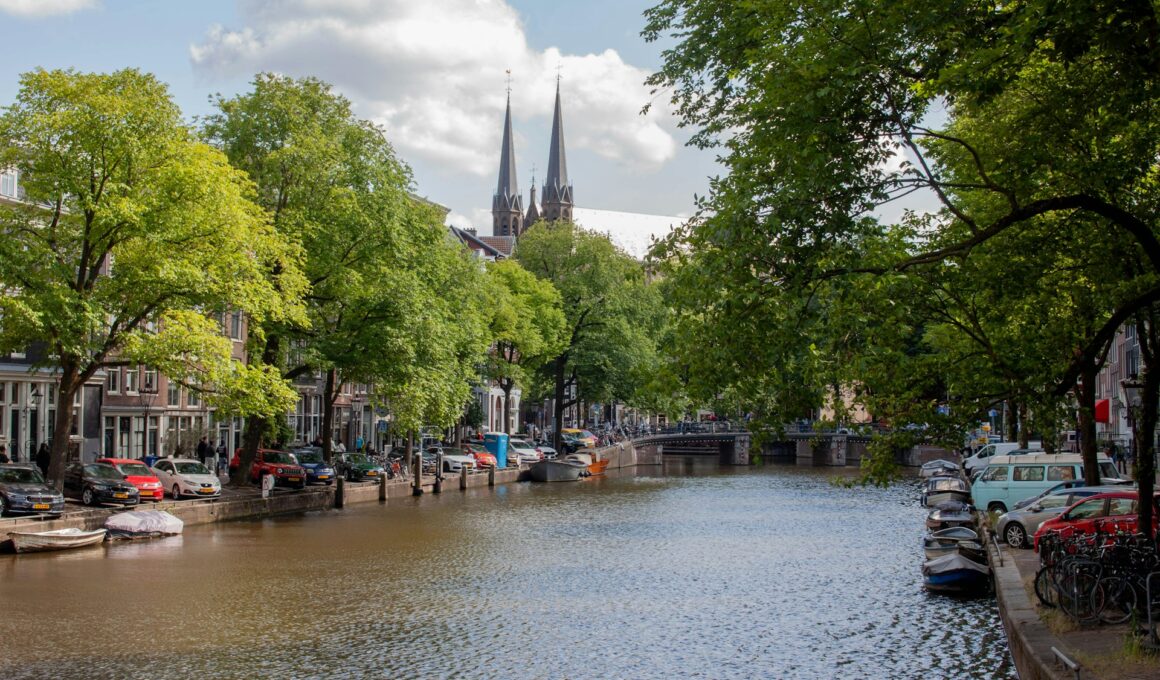
The Singel forms the innermost ring of Amsterdam’s water network, wrapping directly around the medieval city center. Originally dug as a defensive moat in the fifteenth century, it now serves as a scenic boundary separating the old core from the later canal belt. The waterway stretches from the IJ harbor in the north down to the lively Muntplein, offering a diverse mix of architecture along its banks.
Historically, this canal acted as the primary commercial artery where ships offloaded goods directly into warehouses before the city expanded outward. Travelers visit to admire the imposing copper dome of the Round Lutheran Church and to spot some of the narrowest facades in the entire city.
Did You Know?
This waterway served as the outer defensive moat of the medieval city until the late sixteenth century when expansion transformed it into an inner canal.
Table of Contents
History of the Canal
The Singel began its life in the fifteenth century as the defensive moat that encircled the medieval city of Amsterdam. For over a century, these waters served as the outer limit of the capital, protected by earthen ramparts and fortified city gates. When the population exploded during the Dutch Golden Age, city planners expanded the boundaries outward, transforming the Singel from a military barrier into a bustling inner canal.
Wealthy merchants and ship owners quickly claimed the new waterfront real estate to build grand warehouses and residences. You can see the legacy of this prosperity at number 140, where Captain Frans Banning Cocq, the central figure in Rembrandt’s The Night Watch, lived in the imposing “De Dolphijn” house. The city briefly attempted to rename the waterway “Koningsgracht” to honor the French King Henry IV, but locals stubbornly stuck to the original name.
The canal also evolved into a vital hub for trade and public life as the city matured. In 1648, engineers constructed the Torensluis, an extra-wide bridge that once housed a prison in its base and remains the oldest preserved bridge in the city today. By 1862, the canal became the permanent home of the famous Bloemenmarkt, where florists sold their wares directly from boats because land stalls were forbidden.
Today, the Singel acts as the scenic dividing line between the chaotic medieval center and the orderly seventeenth-century canal ring. It offers a cross-section of Amsterdam’s history, from the distinctive copper dome of the Round Lutheran Church to the world’s only floating cat sanctuary. Whether you are shopping for tulip bulbs or admiring the step-gabled architecture, this waterway serves as the perfect introduction to the city’s relationship with water.
Did You Know?
Traders have sold fresh flowers from floating barges at the Bloemenmarkt since 1862 because the market stalls originally needed to move to allow boats to pass.
What to Expect
The Singel acts as a living timeline of Amsterdam’s growth, marking the exact boundary where the medieval city ends and the Golden Age expansion begins. While it is easy to get distracted by the bustle of the flower market, the canal banks hide historic prisons, architectural oddities, and unique floating sanctuaries. Pay attention to the specific landmarks along this route to spot the fascinating details that many visitors walk right past.
Bloemenmarkt
Visit the world’s only floating flower market, which has sold blooms from houseboats on this canal since 1862. It remains the classic spot to buy tulip bulbs and souvenirs, maintaining a tradition from the days when nurserymen sailed their wares directly into the city.
Torensluis
Walk across Amsterdam’s oldest preserved bridge, which dates back to 1648 and spans an unusually wide 42 meters across the water. Look closely at the base of the bridge to find the barred windows and entrance of a former dungeon that once held city prisoners.
De Poezenboot
Step onto this converted houseboat to visit the only floating animal sanctuary in the world. It provides a refuge for stray and abandoned city cats, offering a quirky and heartwarming stop for animal lovers right on the water.
Ronde Lutherse Kerk
Admire the massive copper dome of this seventeenth-century church, which was originally built to welcome Lutheran immigrants arriving by boat. The unique circular design allowed the pulpit to be visible to all worshippers and remains a dominant feature of the northern skyline.
Singel 7
Stop to photograph the house often cited as the narrowest in the world, with a facade that is barely wider than its own front door. While this is technically the rear of the building, it remains a favorite curiosity for architecture enthusiasts hunting for the city’s quirks.
Munttoren
Stand at the bustling intersection where the Singel meets the Amstel River to see this tower, which was originally part of a medieval city gate. The carillon in the open spire still rings out every fifteen minutes, adding a melodic soundtrack to the busy square.
Huis De Dolphijn
Look for the double house at number 140, once the home of Captain Frans Banning Cocq, the central figure in Rembrandt’s masterpiece The Night Watch. The red brick facade features early Baroque elements and stands as a testament to the wealth of the merchants who first settled here.
Did You Know?
The house at number 7 is famous for having a rear facade that measures barely one meter wide to make it one of the narrowest in the world.
Image Library
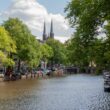
This photo library displays the historic charm of the city’s innermost canal and former medieval moat. You can view the distinctive copper dome of the Round Lutheran Church reflecting in the winding water, offering perfect sightlines past the famous floating flower stalls. The images showcase the architectural variety of the quayside, from the narrowest facade in the city to the expansive Torensluis bridge. Use these pictures to scout the best angles for your own photography or to visualize the bustling atmosphere before you arrive.
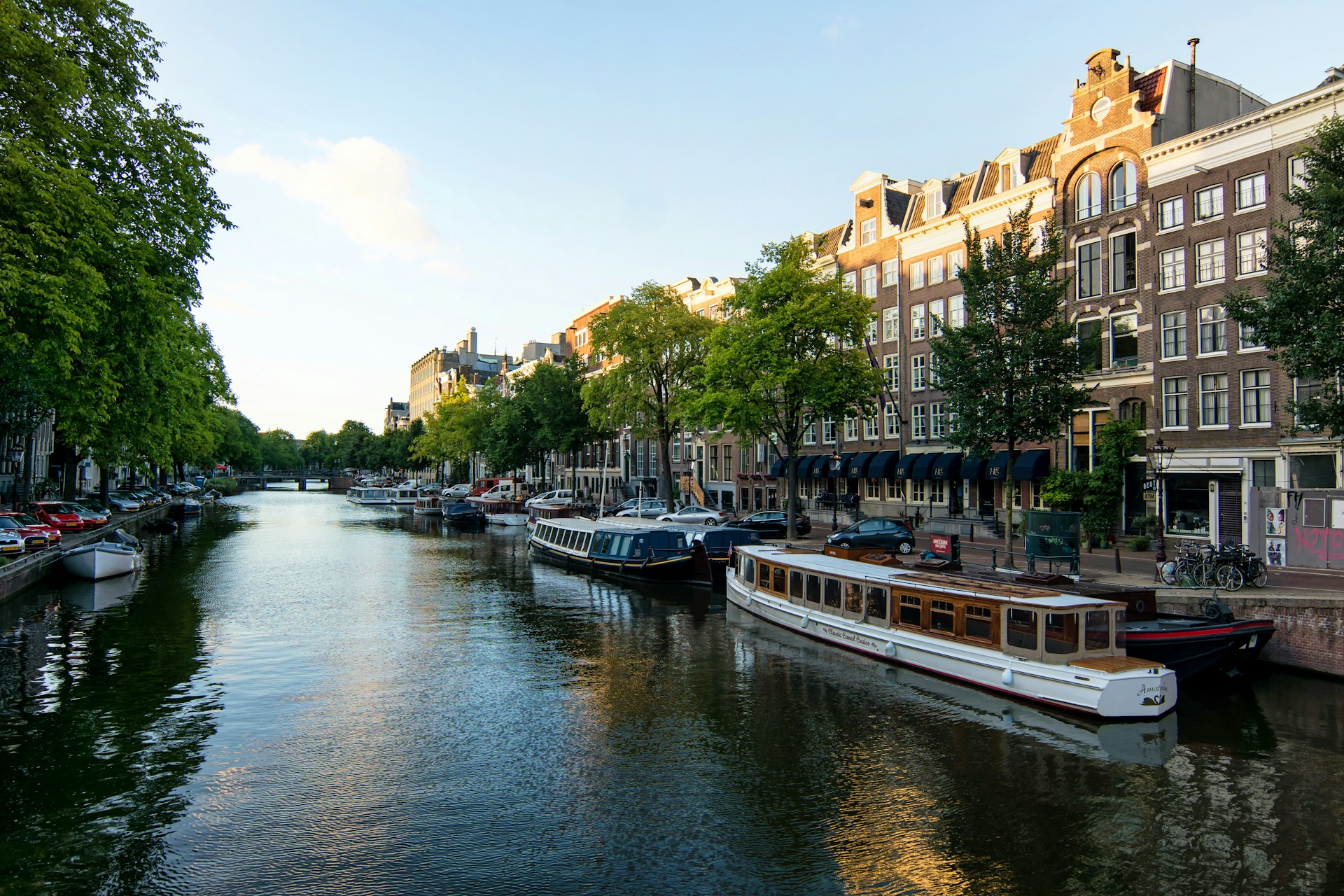
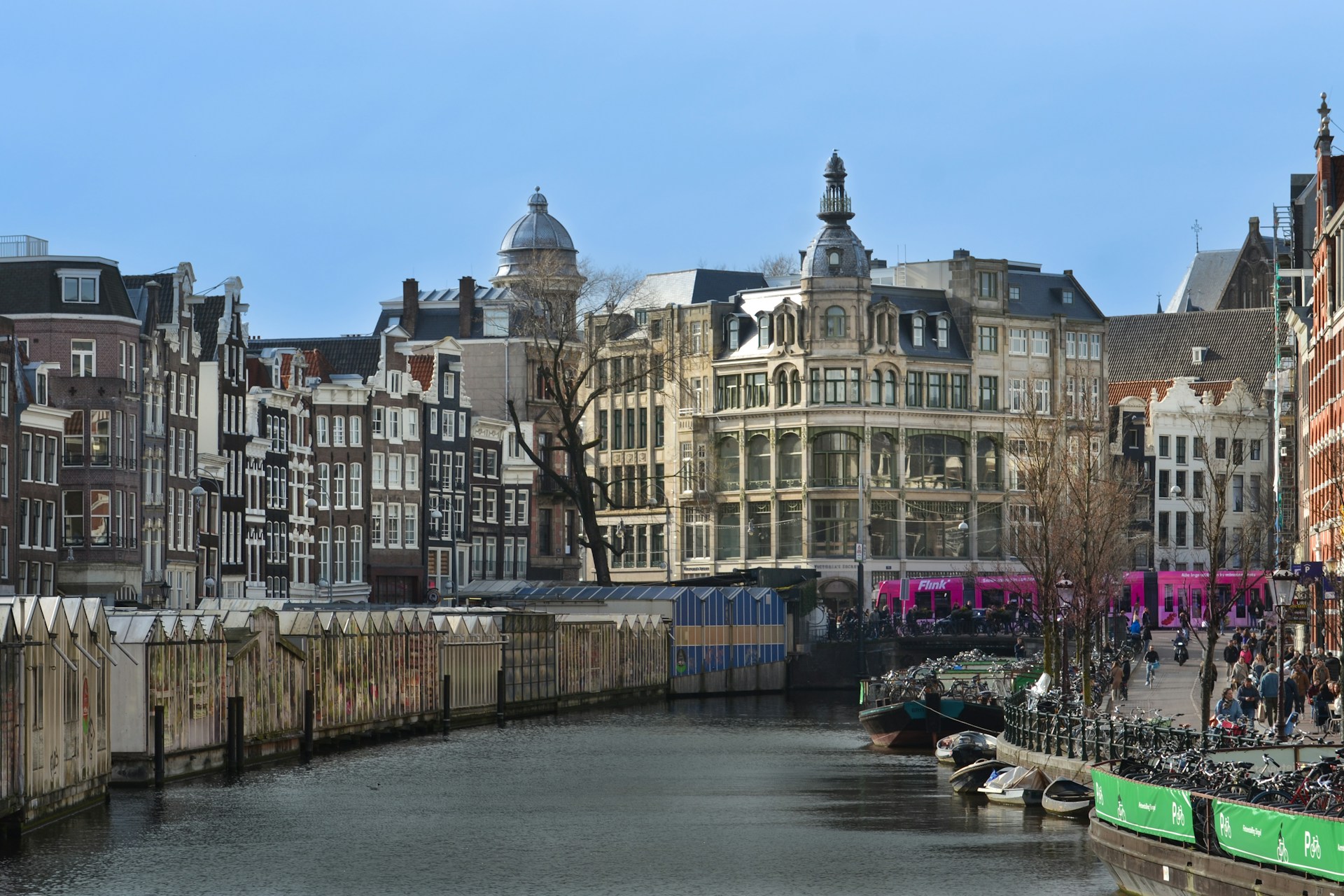
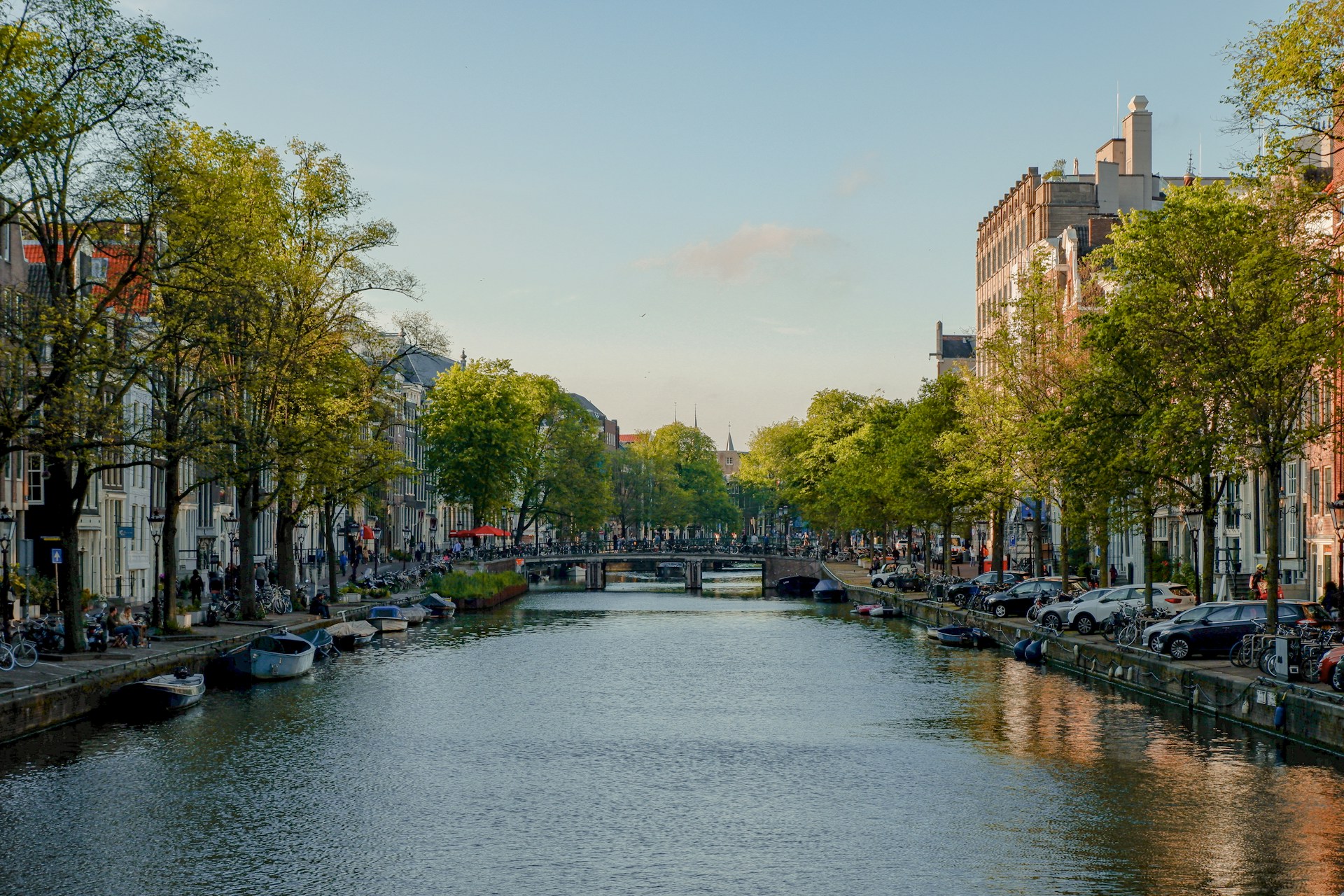
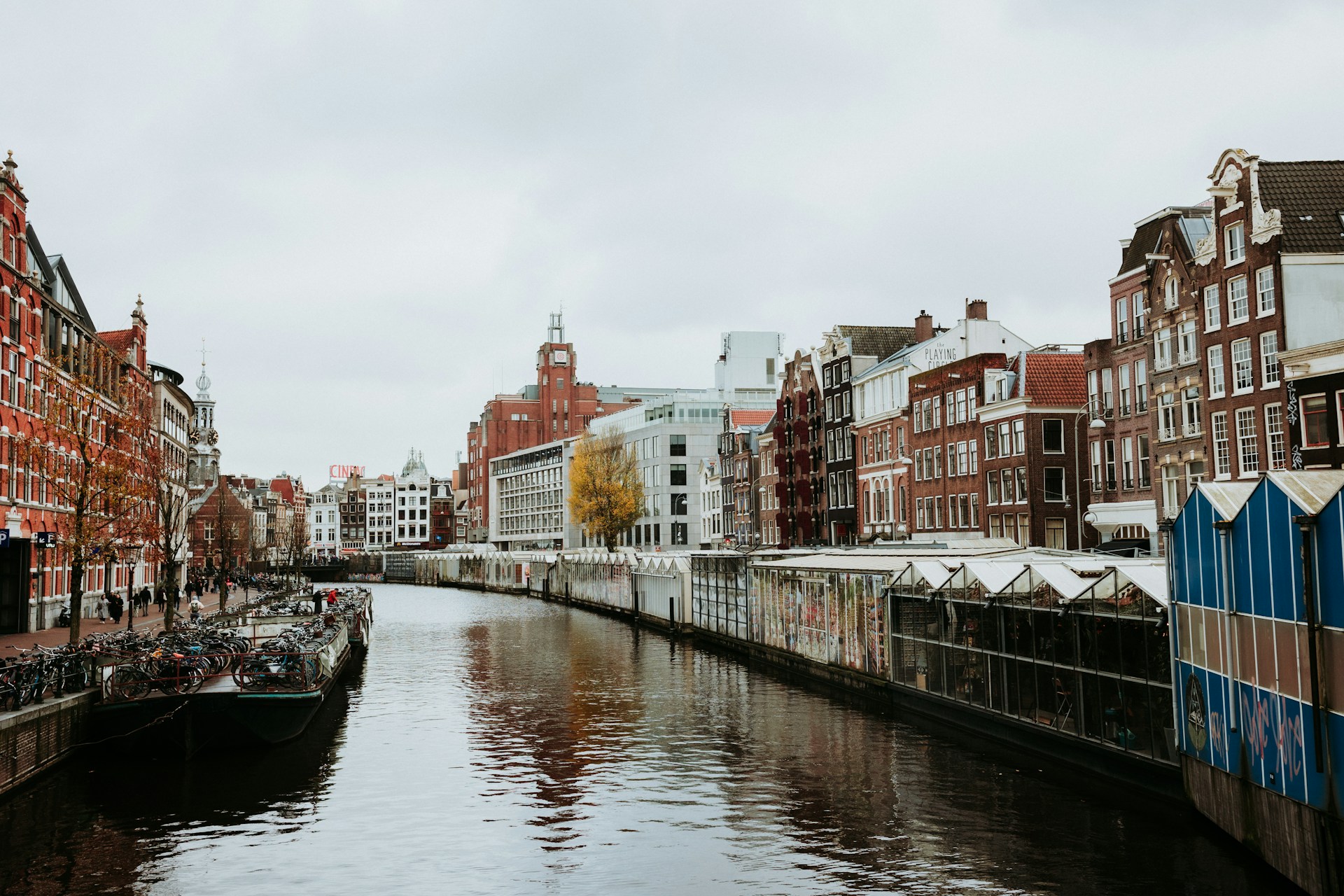
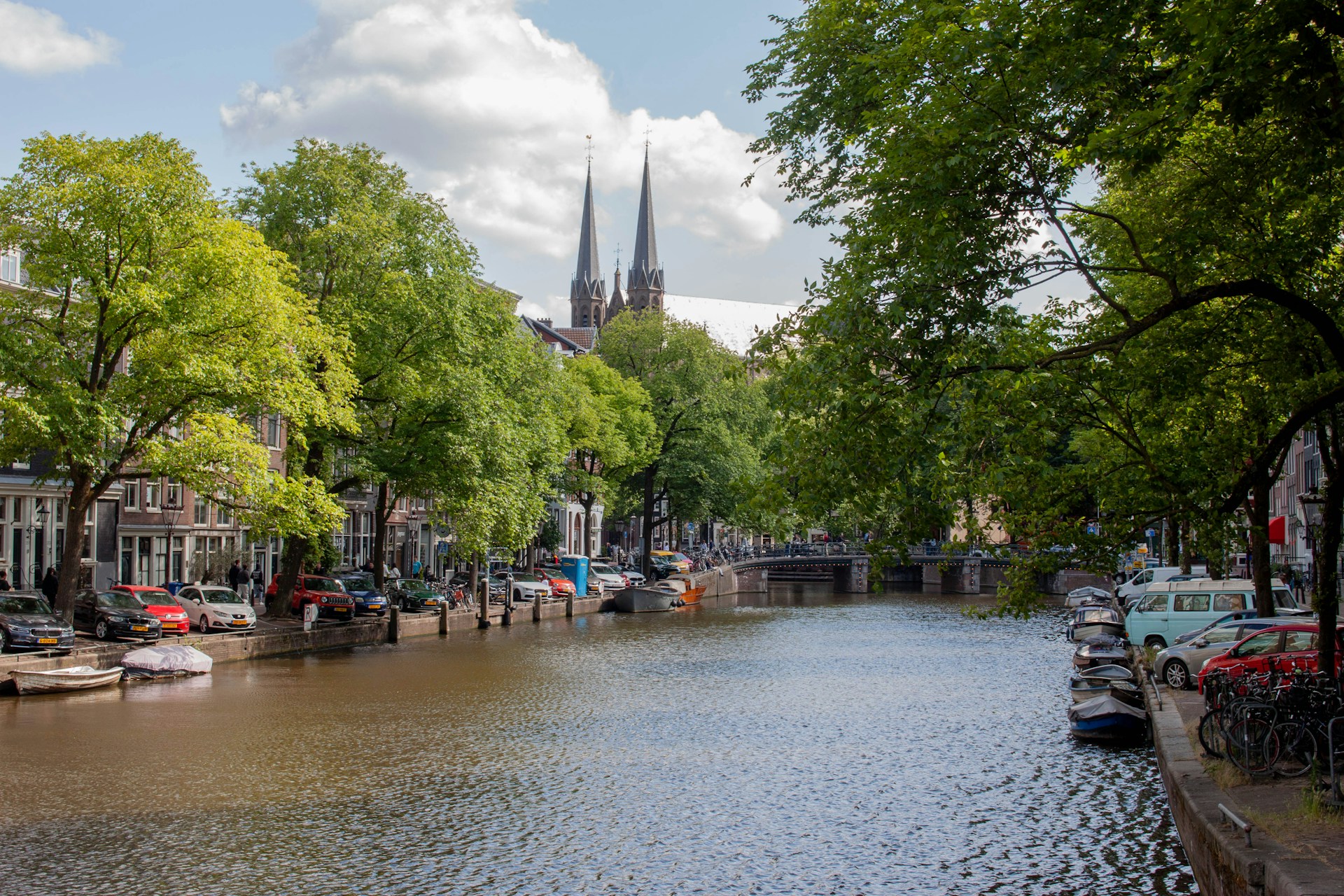
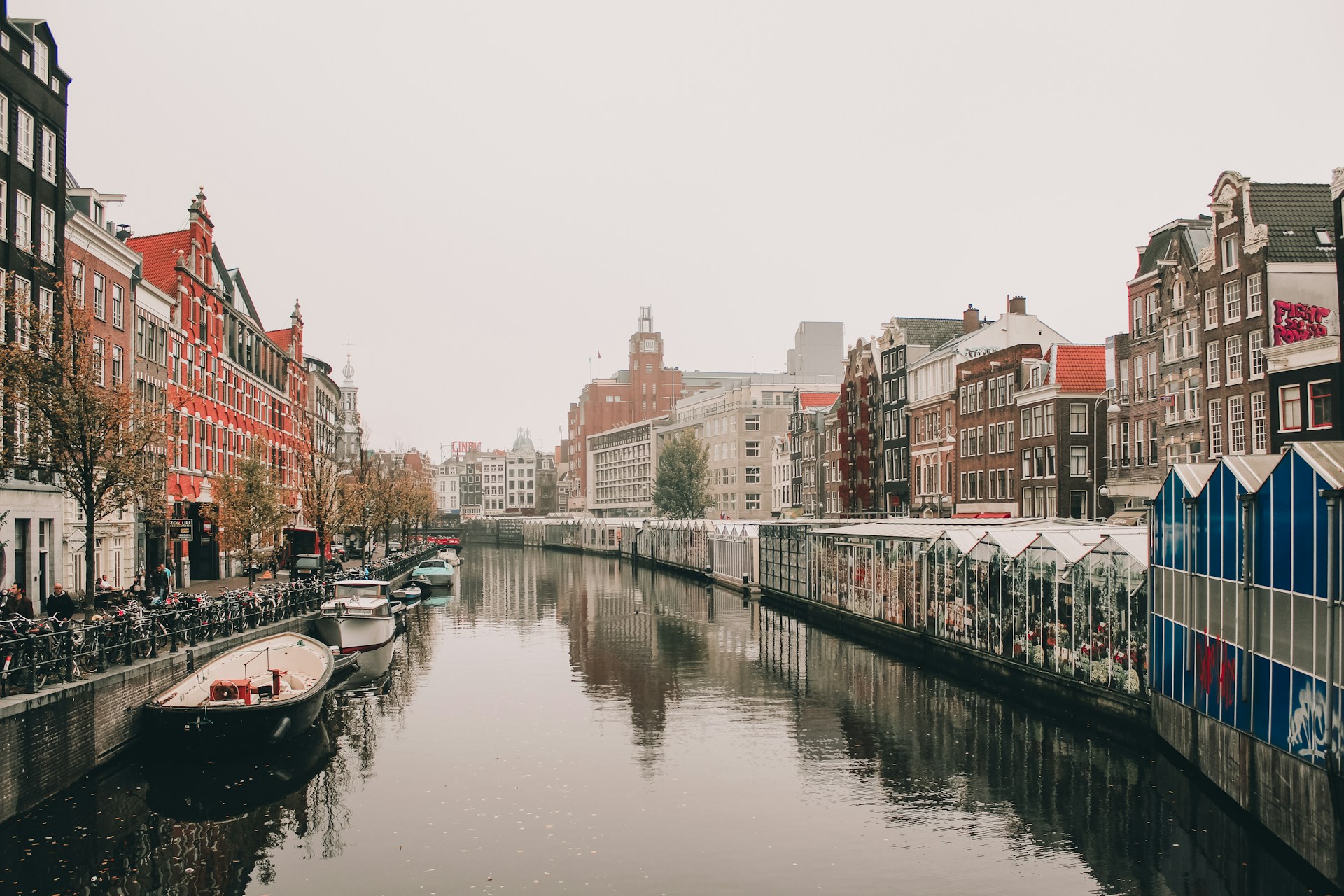
These photos also demonstrate how the light and seasons change the mood of the canal throughout the year. You see the sun illuminating the ornate gable of the “De Dolphijn” house and the warm glow of street lanterns on the dark water at night. Whether you want to find the location of the world’s only floating cat sanctuary or simply admire the vibrant colors of the Bloemenmarkt, this collection highlights why the Singel remains the city’s most eclectic waterway.
Did You Know?
The Torensluis bridge spans the water as the oldest preserved bridge in Amsterdam and once housed a cramped prison within its thick brick foundation.
Location & Access
Getting to this historic waterway is effortless, as it wraps directly around the medieval city center just inside the Herengracht. While it serves as a clear boundary for the old town, the Singel is just steps away from the busy Kalverstraat and Dam Square, making it the perfect scenic connector between Central Station and the floating flower market.
Did You Know?
City officials briefly renamed this waterway the Koningsgracht in the seventeenth century to honor King Henry IV of France before the locals reverted to the original name.