
Discover the sweetest side of Austrian culture by tasting these ten incredible local desserts on your next trip. Beyond the stunning alpine landscapes and grand imperial architecture, this beautiful nation boasts a historic baking tradition that is truly second to none. Passionate pastry chefs and neighborhood bakers dedicate their lives to perfecting beloved family recipes handed down through generations.
Every distinct region presents a unique culinary journey, featuring warm doughy comforts, elegantly layered creations, and sweet fruity masterpieces. Exploring these culinary delights provides a wonderful window into daily life. Prepare your palate for an unforgettable and utterly delicious European vacation.
Taste these top ten mouthwatering Austrian treats to make your European vacation truly unforgettable:
Life is uncertain. Eat dessert first.
~ Ernestine Ulmer
The top 10 desserts in Germany
Sachertorte
This iconic cake consists of a dense, rich chocolate sponge cake with a thin layer of sweet apricot jam, all completely coated in a smooth, dark chocolate glaze.
Its history dates back to 1832, when a 16-year-old apprentice chef named Franz Sacher invented it for Prince Wenzel von Metternich, who had demanded a special dessert for his high-profile guests. The cake was an instant success.
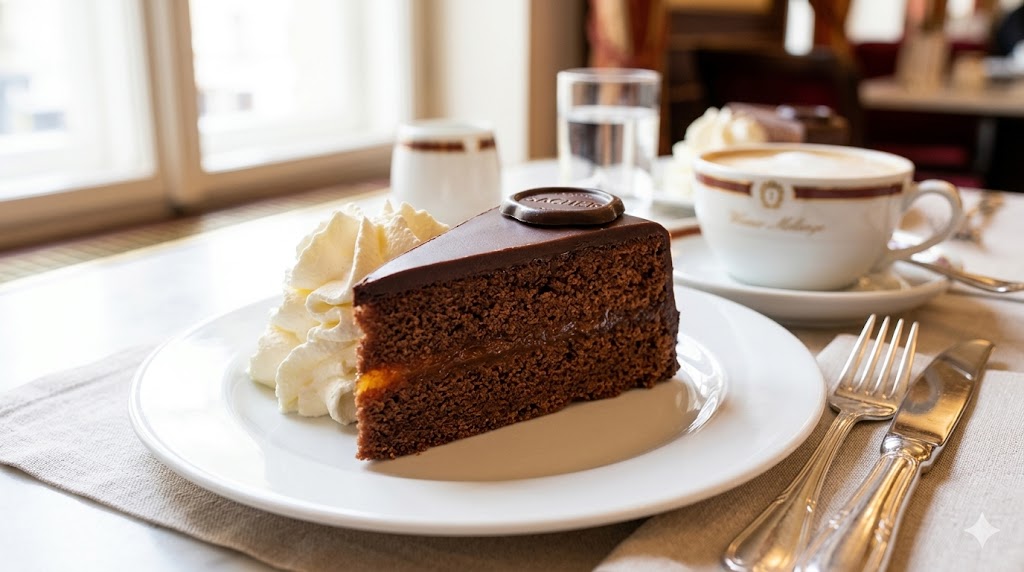
Today, traditional Viennese coffee houses always serve Sachertorte with a generous dollop of unsweetened whipped cream (called Schlagobers in Austrian German) to perfectly balance the intense richness and slight dryness of the dark chocolate cake.
English Name: Sacher Cake
Apfelstrudel
While strudel has roots across the former Austro-Hungarian Empire, the apple version became the absolute pride of Viennese baking. A traditional Apfelstrudel consists of a delicately spiced filling made from tart baking apples, dark raisins, cinnamon, sugar, and butter-toasted breadcrumbs.
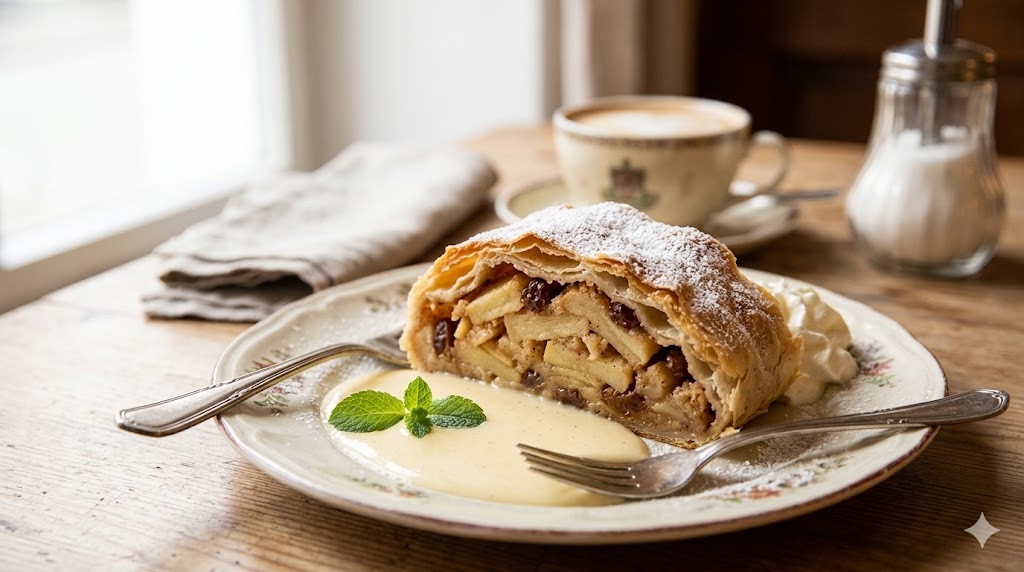
The true hallmark of an authentic Austrian strudel is its incredibly thin, unleavened dough. Instead of using a puffy, flaky puff pastry, traditional bakers carefully stretch a simple flour-and-water dough by hand over a large table until it becomes almost entirely transparent. Once baked, this ultra-thin dough creates an incredibly crisp, shatteringly delicate crust around the soft, warm fruit.
Locals usually enjoy it warm, often served with a dusting of powdered sugar and a side of whipped cream or hot vanilla sauce.
English Name: Apple Strudel
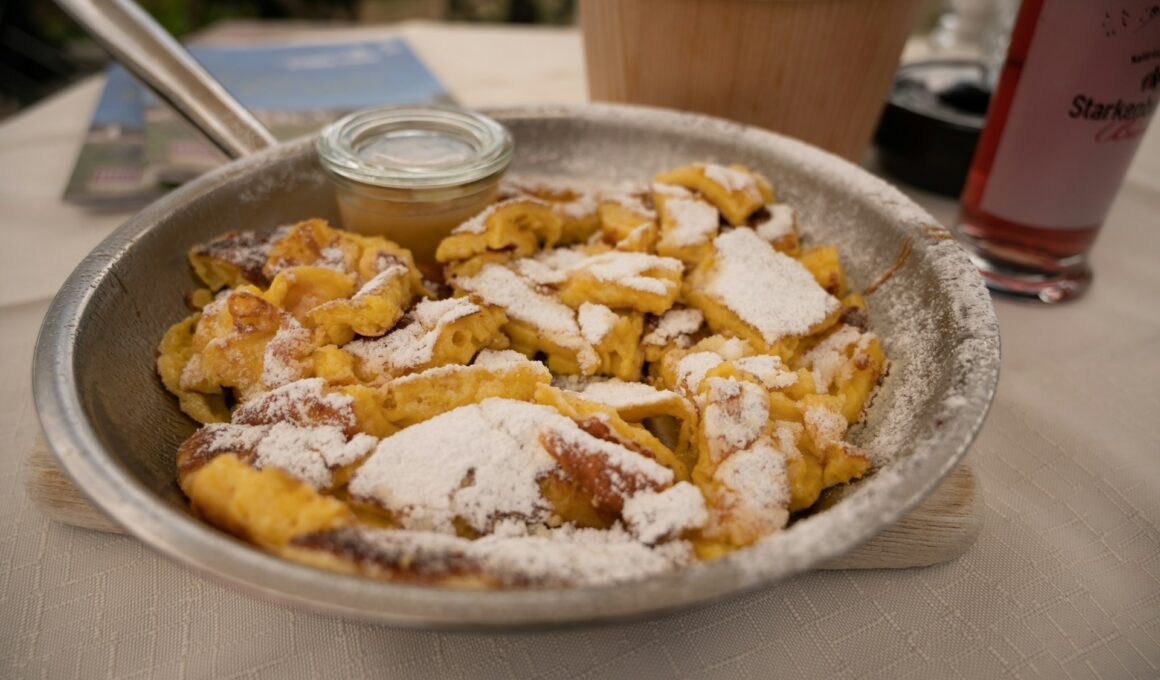
Kaiserschmarrn
The name translates roughly to “Emperor’s Mess” or “Emperor’s Nonsense.” The dish is essentially a thick, sweet pancake made from a rich batter. To achieve its signature texture, cooks whip the egg whites separately before folding them in, which makes the dough exceptionally light and fluffy.
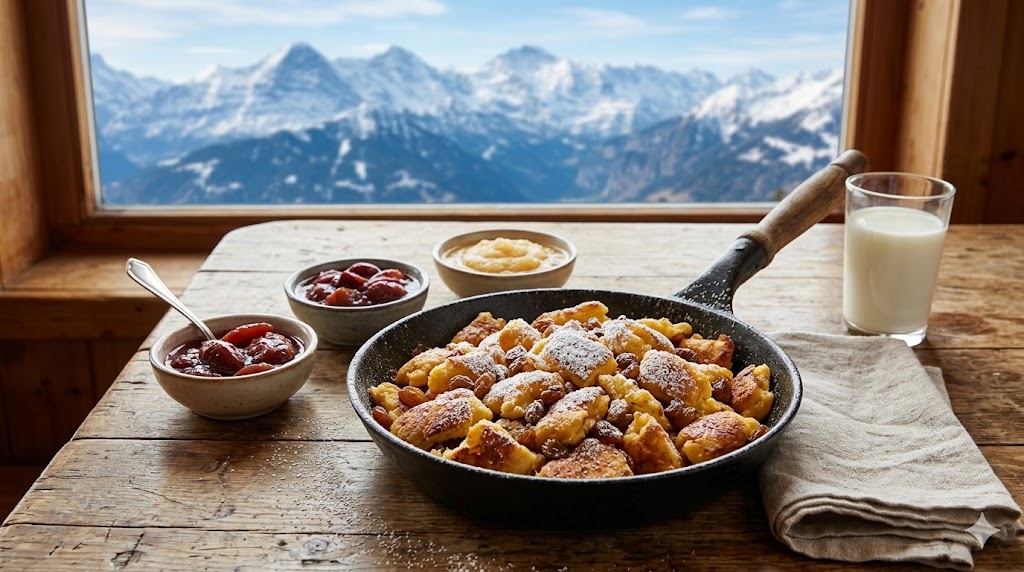
Instead of flipping it perfectly like a traditional pancake, the chef lets it set in a buttered pan and then uses two forks to tear the dough into bite-sized, irregular pieces. These pieces are caramelized in the pan, often tossed with rum-soaked raisins, and then buried under a heavy dusting of powdered sugar.
Austrians traditionally serve Kaiserschmarrn piping hot, straight out of the skillet, alongside a generous helping of Zwetschkenröster (a tart, spiced plum compote) or applesauce to cut through the buttery richness.
English Name: Emperor’s Mess
Topfenstrudel
The star of this dish is Topfen, which is the Austrian word for quark, a type of fresh, slightly tangy curd cheese. To make the filling, bakers mix this creamy cheese with sugar, egg yolks, lemon zest, and often rum-soaked raisins. The result is a rich, fluffy interior that tastes somewhat similar to a delicate, warm cheesecake.
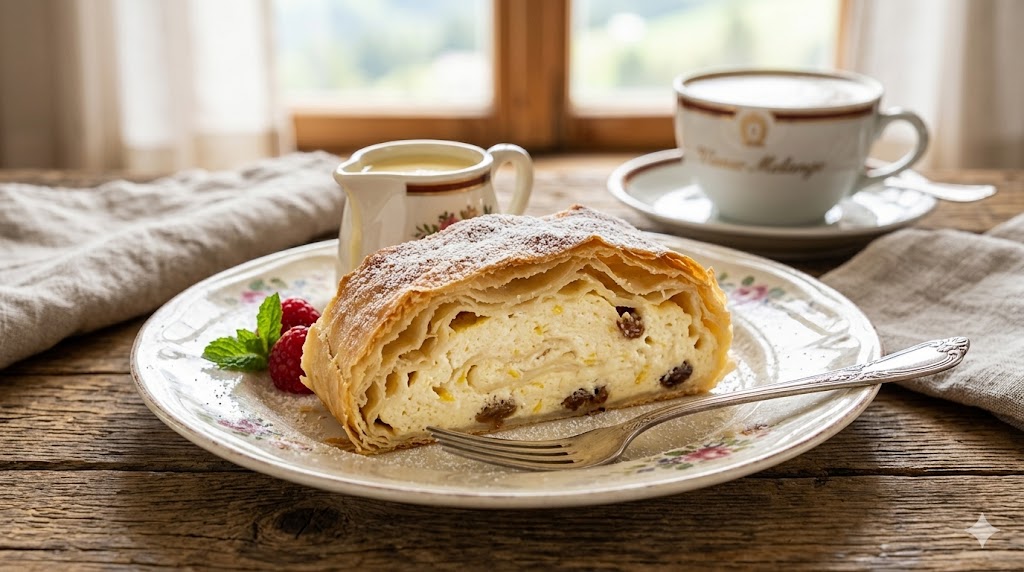
Like its apple counterpart, a true Topfenstrudel is traditionally wrapped in a paper-thin, hand-stretched unleavened dough, though some modern home cooks substitute puff pastry for convenience. The magic of the dessert comes from the contrast between the crispy, golden-brown pastry crust and the soft, warm cheese center.
Austrians almost always serve Topfenstrudel warm, heavily dusted with powdered sugar, and swimming in a generous pool of hot vanilla sauce.
English Name: Curd Cheese Strudel
Marillenknödel
In Austrian German, Marille means apricot, and Knödel means dumpling. This dish perfectly captures the Austrian love for sweet, warm comfort food.
To make them, cooks wrap a whole, fresh apricot in a soft layer of dough. While potato dough is sometimes used, the most traditional and popular wrapper is Topfenteig; a light, fluffy dough made from the same quark cheese used in Topfenstrudel.
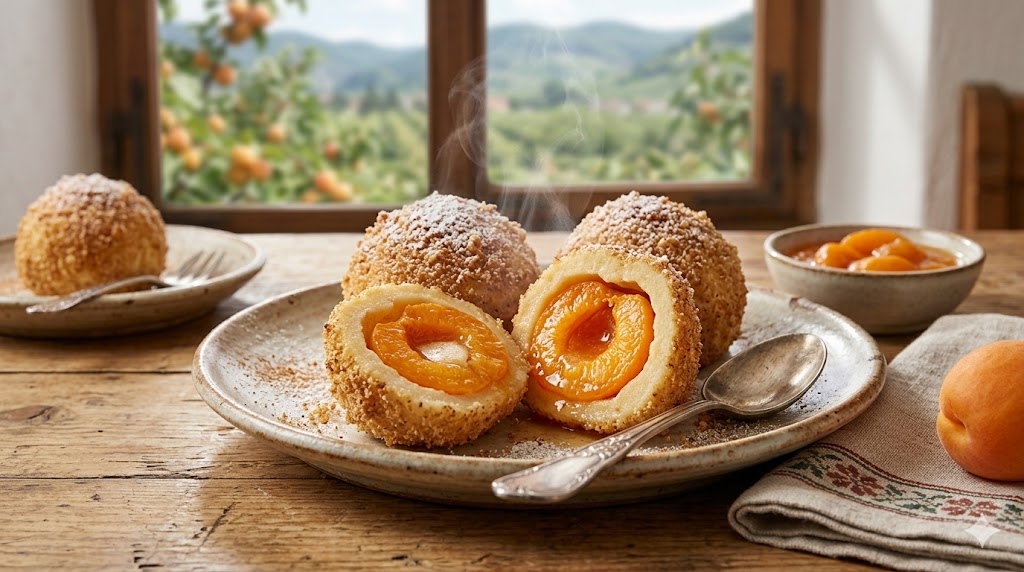
After boiling the stuffed dumplings in gently simmering water, the cook rolls them thoroughly in a pan of hot, butter-toasted breadcrumbs. They are served immediately while still warm, heavily dusted with powdered sugar. The dish is particularly famous in Austria’s Wachau Valley, a region globally renowned for producing incredibly sweet and aromatic apricots.
English Name: Apricot Dumplings
Cremeschnitte
The name translates directly to cream slice, and the dessert perfectly lives up to that title. It consists of a massive, thick block of rich, wobbly vanilla custard sandwiched between two incredibly thin, crispy layers of baked puff pastry. Austrian bakers traditionally lighten the heavy custard by folding in stiffly beaten egg whites while the mixture is still hot, creating a delicate texture that is simultaneously dense and airy.
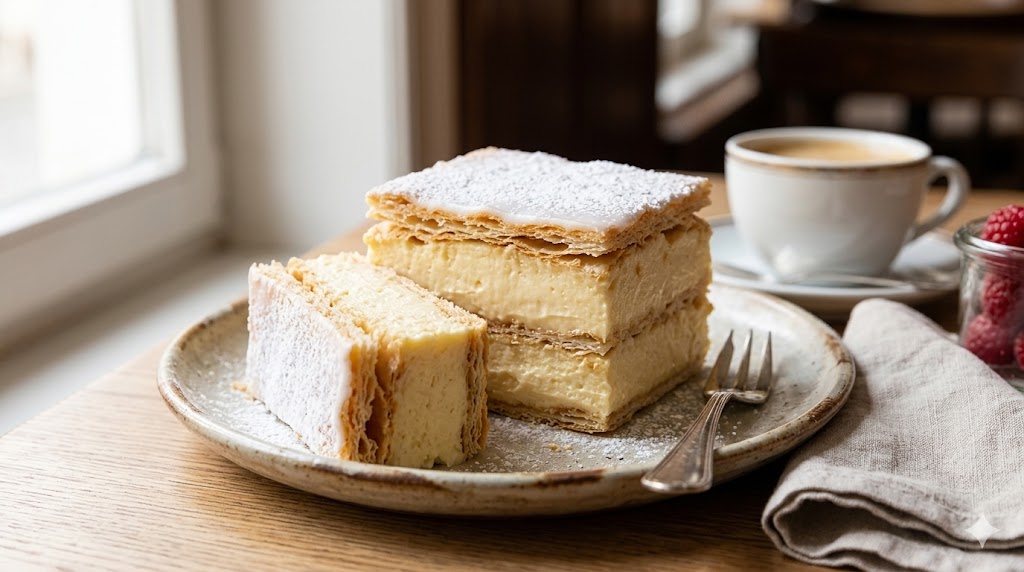
The top layer of puff pastry is usually dusted heavily with powdered sugar, though some traditional bakeries prefer to coat it in a smooth, sweet white fondant glaze.
Because the crisp top pastry resists your fork while the soft cream easily squishes out the sides, eating a Cremeschnitte gracefully in polite company is notoriously difficult. Its widespread popularity across Central Europe means you will also find beloved local variations of this same pastry in neighboring countries like Slovenia, Croatia, and Hungary.
English Name: Vanilla Slice, Custard Slice, Cream Slice
Salzburger Nockerl
Essentially a massive, sweet vanilla soufflé, the dessert is made almost entirely of stiffly whipped egg whites, sugar, and a touch of egg yolk and flour. The batter is baked quickly in a hot oven and must be served immediately at the table before its delicate, airy structure collapses.
The most defining feature of the dish is its unique shape. Bakers deliberately form the meringue-like batter into three distinct, golden-brown mounds. These peaks are designed to represent the three prominent mountains surrounding the city of Salzburg: the Mönchsberg, the Kapuzinerberg, and the Gaisberg.
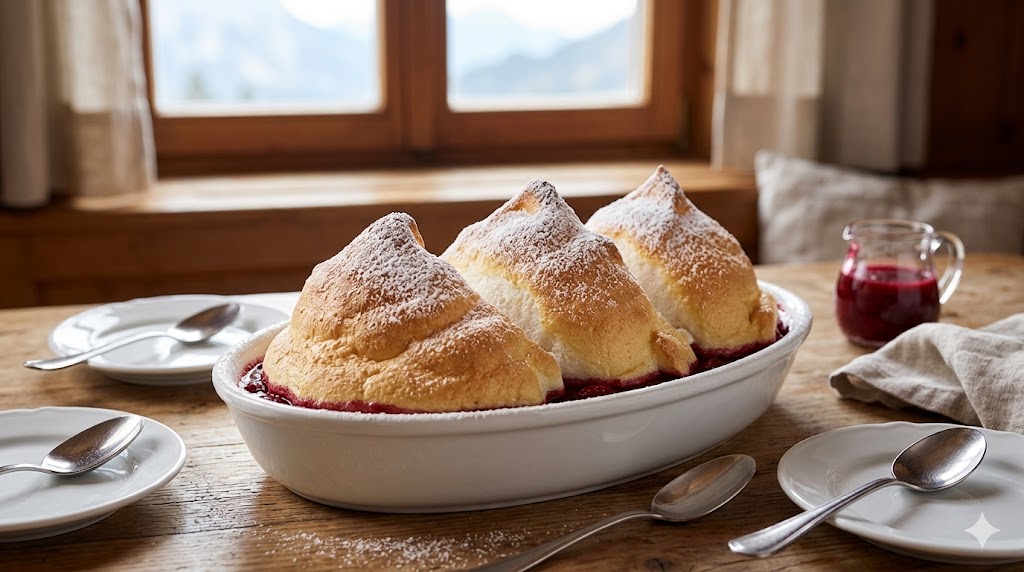
Waiters serve the towering dessert straight in its baking dish, heavily dusted with powdered sugar to represent snow-capped alpine peaks. Because the soufflé itself is incredibly sweet and airy, it is almost always baked over a thin layer of tart raspberry or cranberry sauce at the bottom of the pan to provide a much-needed sharp, fruity contrast.
English Name: Salzburg Soufflé
Buchteln
These sweet treats are soft, pillowy pull-apart yeast rolls. Instead of baking them individually on a flat sheet, cooks place the dough balls closely together in a large casserole dish or pan. As they rise and bake, they fuse together into a single beautiful cluster that diners pull apart by hand at the table.
While they can certainly be baked plain, Austrian bakers traditionally stuff the center of each roll with a generous dollop of sweet filling. The most historic and classic filling is Powidl (a thick, dark, unsweetened plum jam that relies entirely on the fruit’s natural sugars), though bright apricot jam (Marillenmarmelade) is equally popular today.
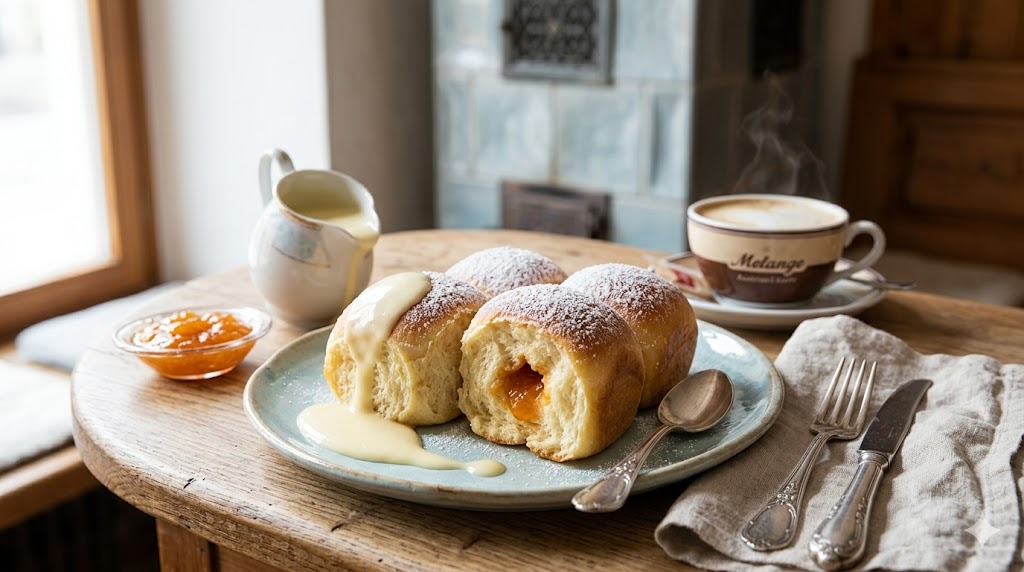
Before they go into the oven, the dough balls are heavily brushed with melted butter. This gives them a rich, golden-brown crust while keeping the inside incredibly light and fluffy. Austrians usually serve Buchteln fresh from the oven, still warm, and entirely drenched in a rich pool of hot vanilla sauce.
English Name: Sweet Yeast Buns, Jam-Filled Buns, Pull-Apart Buns
Germknödel
In Austrian German, Germ means yeast, and Knödel means dumpling. Unlike the German Dampfnudel which is steam-fried in a pan to create a crispy bottom crust, the Austrian Germknödel is a massive, fluffy half-sphere of yeast dough that is gently boiled or steamed in salted water, keeping the entire outside perfectly soft and pillowy.
Before cooking, bakers stuff the center of the dough with a generous spoonful of Powidl; a thick, dark, and slightly tart plum jam that provides a sharp contrast to the sweet dough.
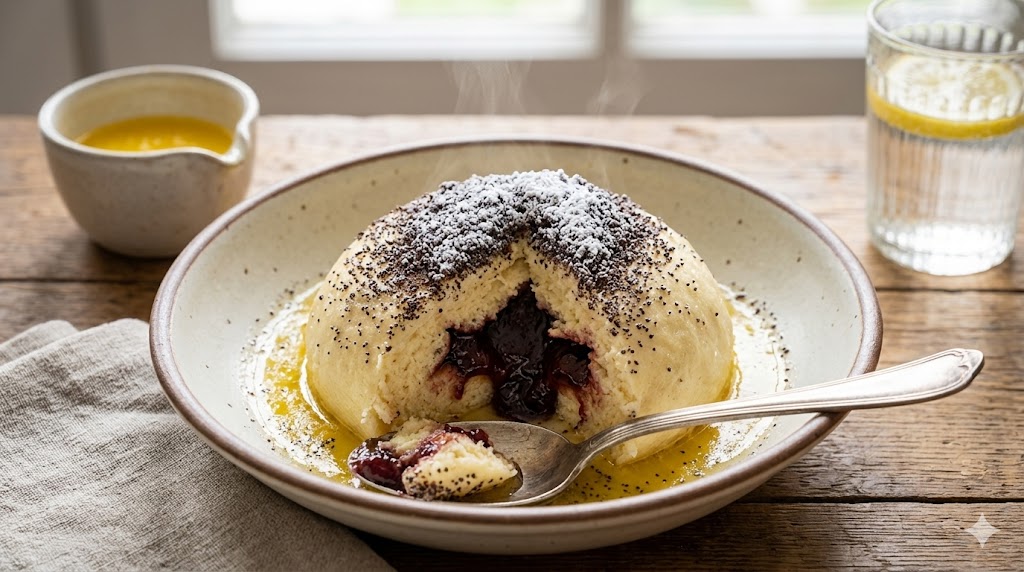
The true magic of a Germknödel lies in its presentation. It is always served piping hot, either swimming in a deep bowl of rich, hot vanilla sauce or smothered in melted butter. To finish, it is generously coated with a thick layer of Mohnzucker (a mixture of finely ground poppy seeds and powdered sugar). Because it is so incredibly heavy and filling, Austrians and tourists frequently eat it as a sweet main course to warm up after a long day of skiing in the mountains.
English Name: Yeast Dumpling
Gugelhupf
While the pastry is also beloved in southern Germany and the Alsace region, it holds a very special place in Austrian history. The defining feature of a Gugelhupf is its shape, it is always baked in a distinctive, tall circular pan with a central tube that creates a hole in the middle, which allows the dense cake to bake evenly.
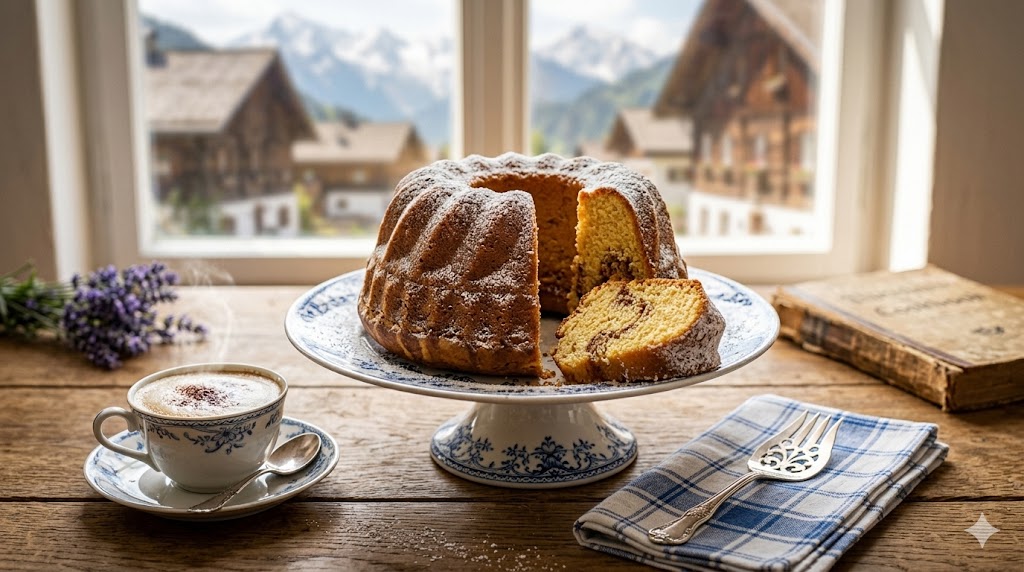
Austrian bakers make several variations, ranging from a rich, bread-like yeast dough studded with rum-soaked raisins and almonds, to a tender sponge cake. However, the most classic everyday Viennese version is the Marmorgugelhupf (marble cake), which features elegant swirls of vanilla and chocolate batter.
Unlike heavily frosted modern cakes, a traditional Gugelhupf is served completely un-iced and simply finished with a heavy dusting of powdered sugar. It famously gained its prestigious reputation in Austria because it was the absolute favorite everyday pastry of Emperor Franz Joseph, who reportedly enjoyed a fresh slice every single morning with his breakfast coffee.
English Name: Bundt Cake, Ring Cake
Desserts are the fairy tales of the kitchen, a happily-ever-after to supper.
~Terri Guillemets