



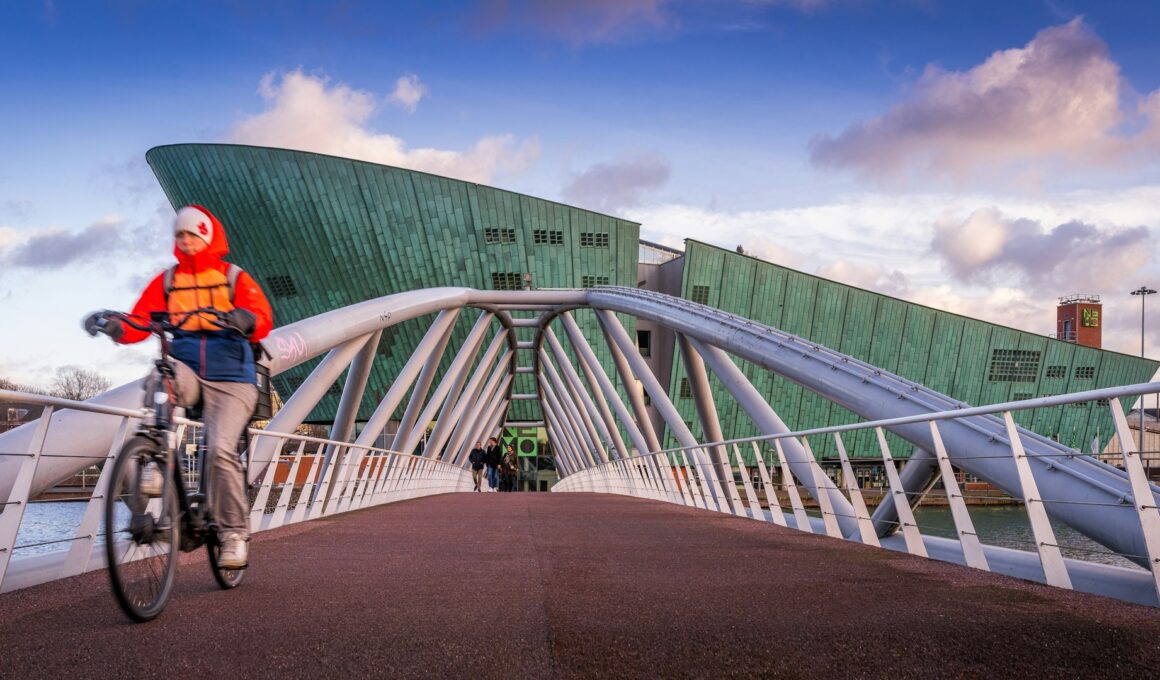
The NEMO Science Museum is a striking green copper landmark rising from the waters of the Oosterdok harbor in Amsterdam. Designed by Renzo Piano to resemble a massive ship, this science center sits directly on top of the IJ Tunnel entrance. It is located just a short walk east of Central Station, acting as the unmistakable centerpiece of the city’s waterfront.
You should visit to explore five floors of hands-on experiments that make complex physics and biology accessible for all ages. The building’s sloping roof serves as a public square, offering the highest panoramic views of the historic city center for free. This architectural masterpiece transformed a former industrial zone into a vibrant cultural hub, proving that science is a vital part of modern Dutch culture.
Did You Know?
Italian architect Renzo Piano designed this striking green landmark to resemble a giant ship rising out of the harbor waters.
History of The Nemo Museum
The roots of this futuristic landmark lie in the humble Museum of Labor, founded in 1923 by artist Herman Heijenbrock. He wanted to show Amsterdam citizens how technology and industry were changing their daily lives. His collection of drawings, tools, and machines moved through various temporary locations for decades. By the 1950s, the institute had evolved into the NINT (Netherlands Institute for Industry and Technology), shifting its focus from manual labor to the rapid advancements of the post-war era.
In the 1990s, the museum directors took a bold risk to build a massive new home directly on top of the IJ Tunnel entrance. They rebranded the institute as “newMetropolis,” hoping to create a cutting-edge science center that would attract a wider international audience. However, the abstract name and initial financial struggles made the early years difficult. The museum needed a stronger identity to connect with the public and the revitalized waterfront.
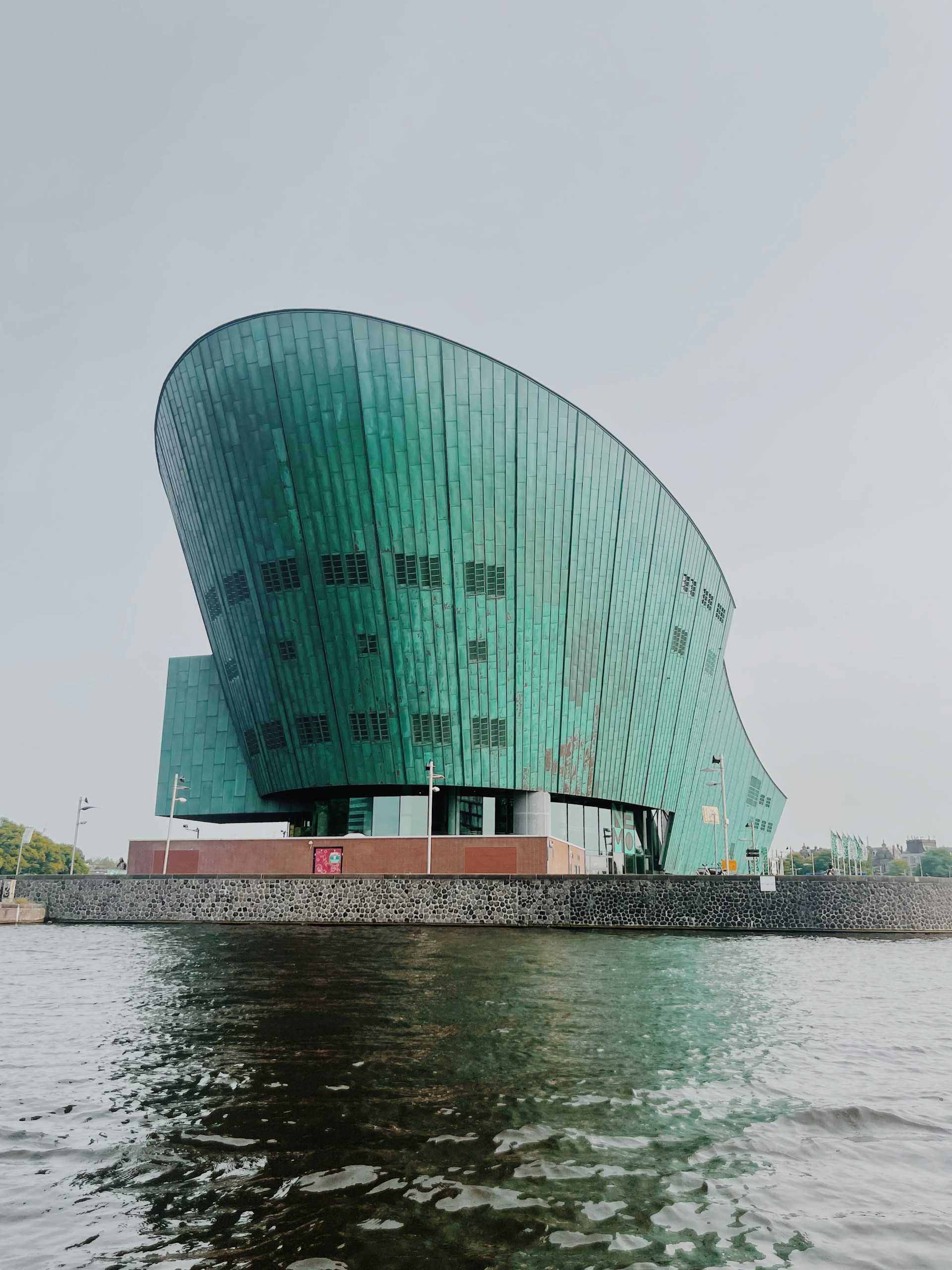
The turning point was the iconic building itself, designed by Italian architect Renzo Piano and opened in 1997. Piano envisioned a “piazza” for the city, creating a structure that rises from the water like the bow of a giant ship. He covered the exterior in pre-oxidized copper, ensuring the green facade would blend perfectly with the historic harbor. Crucially, he designed the sloping roof as a public square, making it the only museum in Amsterdam where you can walk on the ceiling for free.
In 2000, the museum adopted the catchy name NEMO and shifted its philosophy to “forbidden not to touch.” Today, it stands as the largest science center in the Netherlands, acting as a bridge between the old city center and the modern harbor. Its success helped transform the Oosterdok from a neglected industrial zone into a vibrant cultural district, proving that science can be just as engaging as art or history.
Did You Know?
The museum sits directly on top of the IJ Tunnel because the road tunnel acts as a foundation for the structure.
What to Expect
With five floors of bubbling beakers and flashing lights, it is easy to lose track of time inside this massive green hull. Focusing on these key exhibits ensures you experience the best of Renzo Piano’s design and the most engaging scientific demonstrations without getting overwhelmed by the crowds.
The Roof Terrace
Climb the stairs to the highest public square in the Netherlands to enjoy unparalleled views of the Amsterdam skyline. Renzo Piano designed this sloping deck as an open-air piazza where you can relax above the city noise.
Chain Reaction
Watch the spectacular daily show where a falling domino triggers a massive Rube Goldberg machine. This fast-paced demonstration uses flying rockets and popping balloons to explain the power of potential energy and cause-and-effect.
The Laboratory
Put on a white lab coat and safety goggles to become a scientist for the afternoon in this fully functioning chemistry lab. You can conduct real experiments, such as testing everyday food items for vitamin C or analyzing DNA.
Energetica
Explore the outdoor exhibition on the roof to battle the elements and understand renewable energy. You interact with wind islands and water cascades to see how natural forces can be harnessed to power our world.
Fenomena
Head to the first floor to uncover the invisible laws of physics that shape our reality. You can blow giant soap bubbles to study surface tension or manipulate light and sound in hands-on stations.
Humania
Dive into the biology and psychology of your own body in this exhibit centered around a massive handstanding sculpture. It challenges you to understand how your brain works, how you move, and what makes you unique compared to everyone else.
Did You Know?
You can access the sloping roof terrace for free to enjoy panoramic views from the highest public square in the Netherlands.
Image Library
This photo library displays the striking modern architecture of Renzo Piano’s green copper masterpiece. You can view the sloping roof terrace, the highest city square in the Netherlands, and the distinct ship-like silhouette rising from the water. Use these pictures to scout the best angles for architectural photography or to visualize the flow of the five exhibition floors.
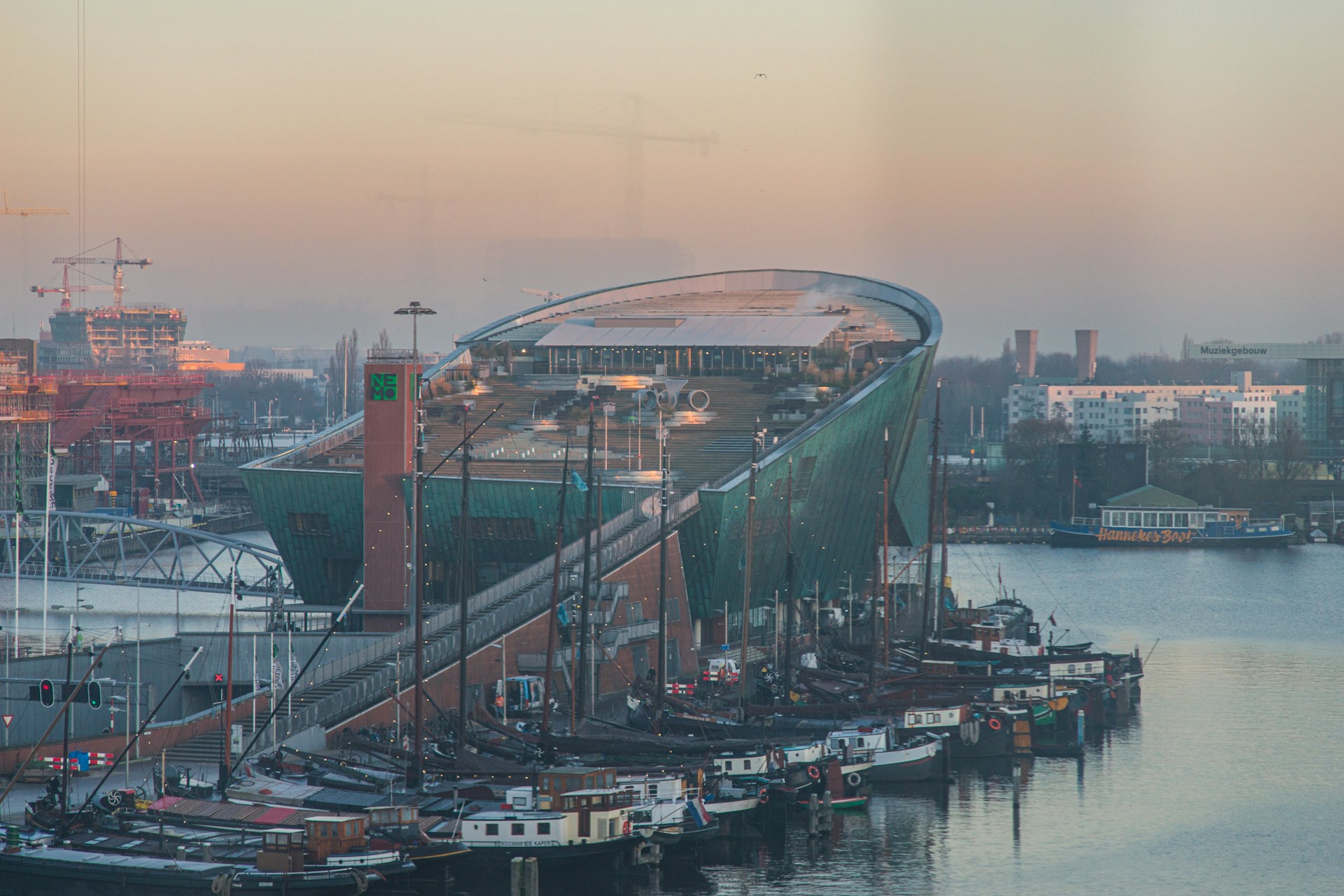
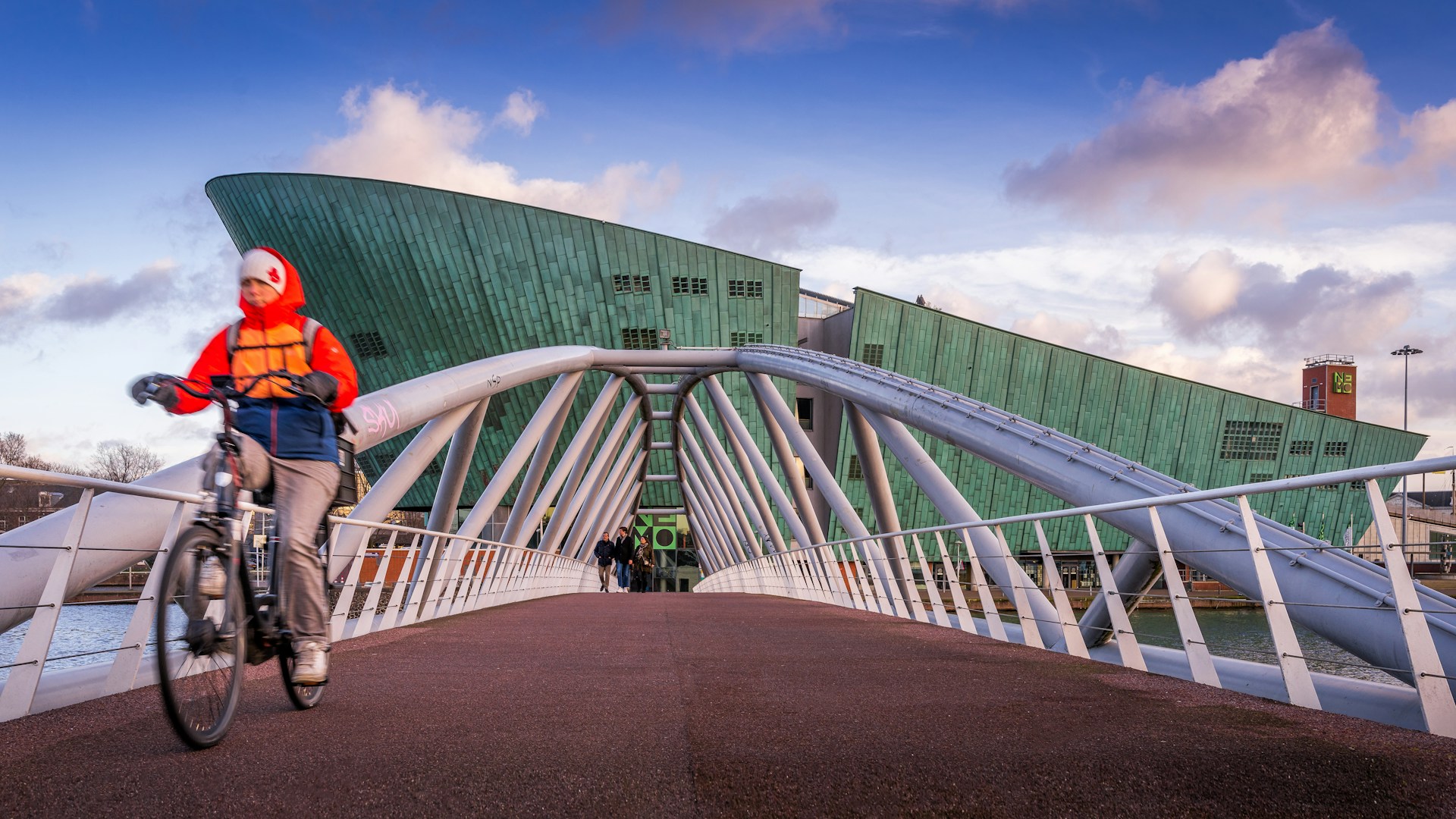
Use these images to understand the layout, interactive details, and energetic atmosphere before your visit or to revisit the experience afterward. They also show how changing light and the surrounding harbor views shape the mood of this futuristic landmark throughout the day.
Did You Know?
The copper facade oxidizes naturally over time to turn green and blend perfectly with the water and historic harbor buildings.
Book Tickets & Activities
The NEMO Science Museum utilizes a time-slot system to manage the high volume of visitors across its five interactive floors. Booking tickets online in advance is essential to secure your preferred entry time and bypass the long queues at the entrance. Securing your admission early ensures a smooth visit and helps you organize your schedule around this iconic green landmark on the Oosterdok waterfront.
Tiqets.com
Tiqets.com is a reliable platform that offers entry tickets and additional packages for a unique experience. It provides options such as skip-the-line tickets, guided tours, or combination deals that include visits to iconic landmarks.
GetYourGuide.com
GetYourGuide.com is an excellent platform for securing your tickets. In addition to standard access, GetYourGuide offers comprehensive packages like private tours, bundled sightseeing passes, and much more.
Did You Know?
A massive chain reaction exhibit demonstrates the power of potential energy using falling dominoes and flying rockets during spectacular shows.
Location & Access
The NEMO Science Museum anchors the Oosterdok waterfront, rising from the harbor waters like the bow of a giant green ship. This striking copper landmark sits directly on top of the IJ Tunnel entrance, making it visible from almost anywhere in the eastern harbor. Its central position makes it the unmistakable playful heart of the district and an easy stop during a tour of the waterfront.
Travelers can easily reach the museum via a scenic walk from the main transport hub. From Central Station, it is a pleasant fifteen-minute stroll across the Oosterdok footbridge, offering great views of the harbor. Alternatively, you can take Bus 22 from the station to the Kadijksplein stop, leaving you a short walk away. Sightseeing boats and water taxis also frequently stop near the entrance.
Driving is manageable, and this location offers the most convenient parking in the city center. The massive Parking Centrum Oosterdok garage is located directly next door, offering reasonable daily rates if booked in advance. Most smart travelers still opt for the train or walking to avoid city traffic. Regardless of how you arrive, booking your ticket online is mandatory to ensure smooth entry, particularly during weekends and school holidays.
Did You Know?
Visitors wear white lab coats in the chemistry laboratory to conduct real experiments like testing everyday items for vitamin C.
Practical Information
Planning a visit to the NEMO Science Museum requires a bit of strategy to navigate the high energy and crowds. As one of the most popular family attractions in Amsterdam, it can get noisy and chaotic, especially during school holidays. A little preparation regarding timing and practicalities will ensure you can focus on the experiments rather than the logistics.
Accessibility & Practical Info
- Wheelchair Access: The museum is fully accessible with elevators reaching all floors. However, note that the accessible toilets are located on every floor except the third.
- Lockers: You can store coats and bags in the lockers located in the main hall. They require a €0.50 coin or a NEMO token to operate, so keep some small change handy.
- Cashless Policy: Be prepared to pay with a debit or credit card at the ticket desk, gift shop, and restaurants. Cash is generally not accepted at the service points inside.
- Food & Drink: You are allowed to bring your own food and drinks to consume in designated snack spots or on the roof terrace. Eating is strictly prohibited inside the exhibition galleries.
Tips & Warnings
- Beat the Crowds: The museum is loudest and busiest on weekends and during school holidays. For a calmer experience, visit on a weekday morning or after 14:00 when school groups often leave.
- Age Suitability: While the museum is fantastic for children aged 6–12, toddlers may find the exhibits too high to reach, and teenagers might find some sections too simplistic.
- Ticket Timing: You must book a start time online even if you have a city pass. Slots fill up days in advance during peak season, so do not rely on buying tickets at the door.
- Roof Access: The sloping roof terrace is accessible for free via the stairs on the street level. You don’t need a museum ticket to visit the rooftop bar or enjoy the view.
Photography Tips
- Architecture: To capture Renzo Piano’s ship-like design, cross the water to the Oosterdokskade. This vantage point allows you to frame the entire green copper curve against the sky.
- Rooftop Panorama: The best shot is from the very top of the stepped roof looking back towards the city center. Go at sunset to capture the silhouette of the Nicholas Church against the fading light.
- Action Shots: Use “burst mode” on your camera to capture the exact moment of the chain reaction show or the splashing water in the Energetica exhibit.
- Lighting: The interior lighting is often dim or colored to suit the displays. Avoid using flash, as it reflects off the glass cases; instead, raise your ISO setting for clearer indoor photos.
Did You Know?
The sustainable rooftop garden supports local biodiversity with over seventeen thousand individual plants and two large beehives housing docile bees.
Contact Details
For general information about the museum, the collection, our program and activities:
E-mail: info@e-nemo.nl
Phone: (020) 531 32 33
Website: https://www.nemosciencemuseum.nl/
Address:
Oosterdok 2
1011 VX
Amsterdam
The Netherlands
Opening Hours: The NEMO Science Museum is open Tuesday through Sunday. During school holidays and the summer months (April to September), the museum is also open on Mondays. Please check the official website for specific dates, as hours may vary on public holidays.
- Daily: 10:00 to 17:30
Did You Know?
The name Nemo translates to nobody in Latin which references the famous Captain Nemo from Jules Verne’s classic adventure novels.