



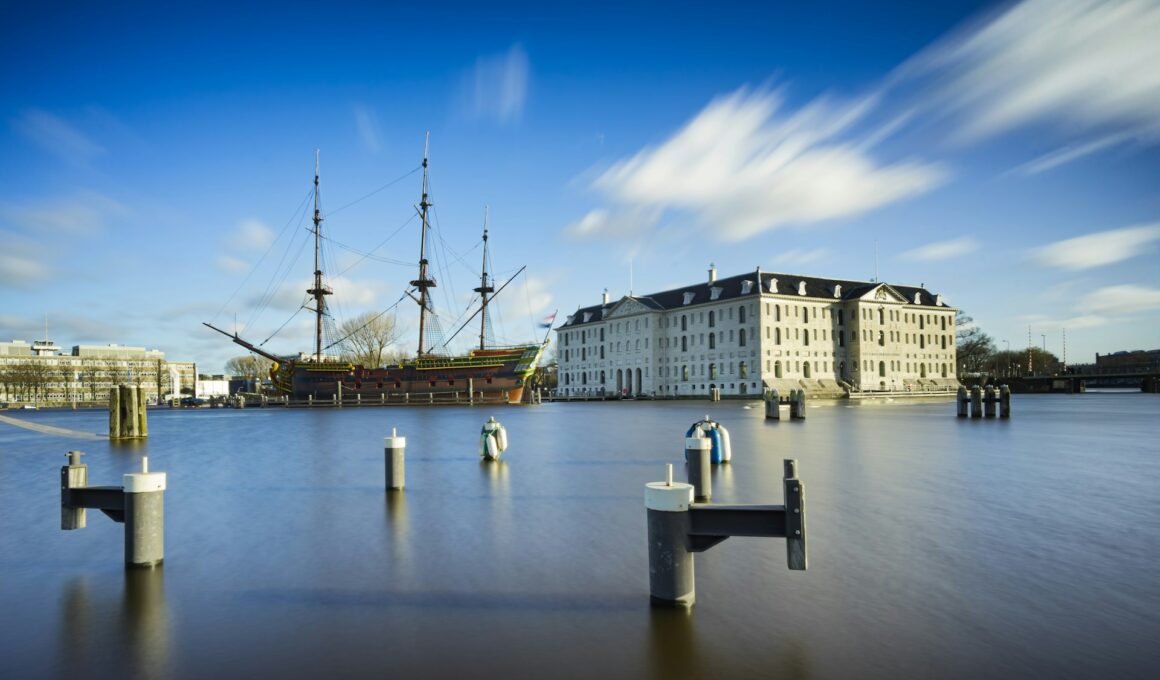
The National Maritime Museum resides in a colossal 17th-century naval storehouse on the eastern edge of the historic harbor. It dominates the Kattenburgerplein and overlooks the open water near the NEMO Science Museum. You can easily reach this fortress-like landmark by walking along the waterfront from Central Station.
This former arsenal once stored the cannons and gunpowder for the powerful Dutch war fleet during the Golden Age. You should visit to board the full-scale replica of the East India Company ship Amsterdam docked outside on the pier. Inside, the spectacular glass-roofed courtyard leads to world-class exhibits of rare maps and golden royal barges.
Did You Know?
The massive building served as the main arsenal for the Dutch navy in 1656 to store cannons and gunpowder for warships.
History of The Maritime Museum
The story begins in 1656 when the Dutch Admiralty constructed this colossal building on 18,000 wooden piles. Known then as the Lands Zeemagazijn, it served as the central arsenal for the powerful Dutch navy. Workers stored cannons, sails, gunpowder, and ropes here to equip the war fleet rapidly. The fortress-like design protected these valuable supplies from enemy raids and theft.
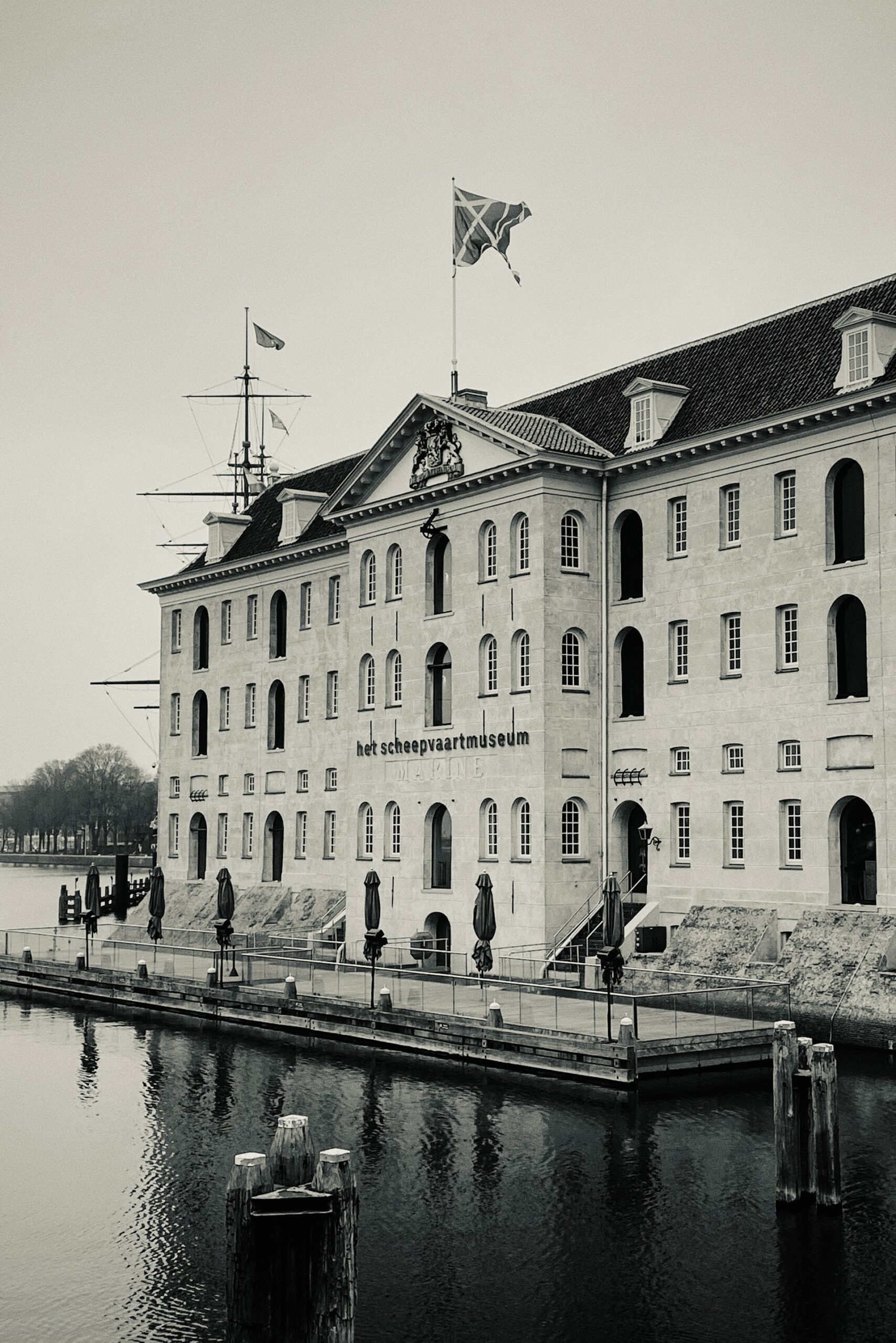
The building stood as a symbol of the Dutch Golden Age, when the small republic dominated global trade and the seas. It survived a devastating fire in 1791 that destroyed the interior but left the sturdy brick walls standing. For centuries, this site remained the logistical heart of naval operations, supporting the ships that traveled to Asia and the Americas.
The structure lost its military function in the 1970s and transformed into the home for the National Maritime Museum. The collection of paintings, maps, and weapons moved into the spacious warehouse galleries in 1973. A significant addition arrived in 1990, when the full-scale replica of the VOC ship Amsterdam docked at the pier to show visitors the reality of 18th-century sea travel.
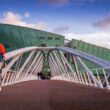
A massive renovation in 2011 modernized the museum and added the spectacular glass roof over the inner courtyard. The design features thousands of steel pieces that mimic the lines of a compass rose. Today, the museum preserves the nation’s seafaring identity and connects the history of exploration with modern themes of trade and climate change.
Did You Know?
The original architect constructed this colossal warehouse on eighteen thousand wooden piles driven deep into the harbor mud to support the heavy weight.
What to Expect
Navigating this massive arsenal can be overwhelming, as the collection spans five centuries of exploration and war. You need to look beyond the famous ship docked outside to find the rare treasures hidden within the brick walls. Prioritizing these highlights ensures you understand how this small nation managed to map and conquer the world’s oceans.
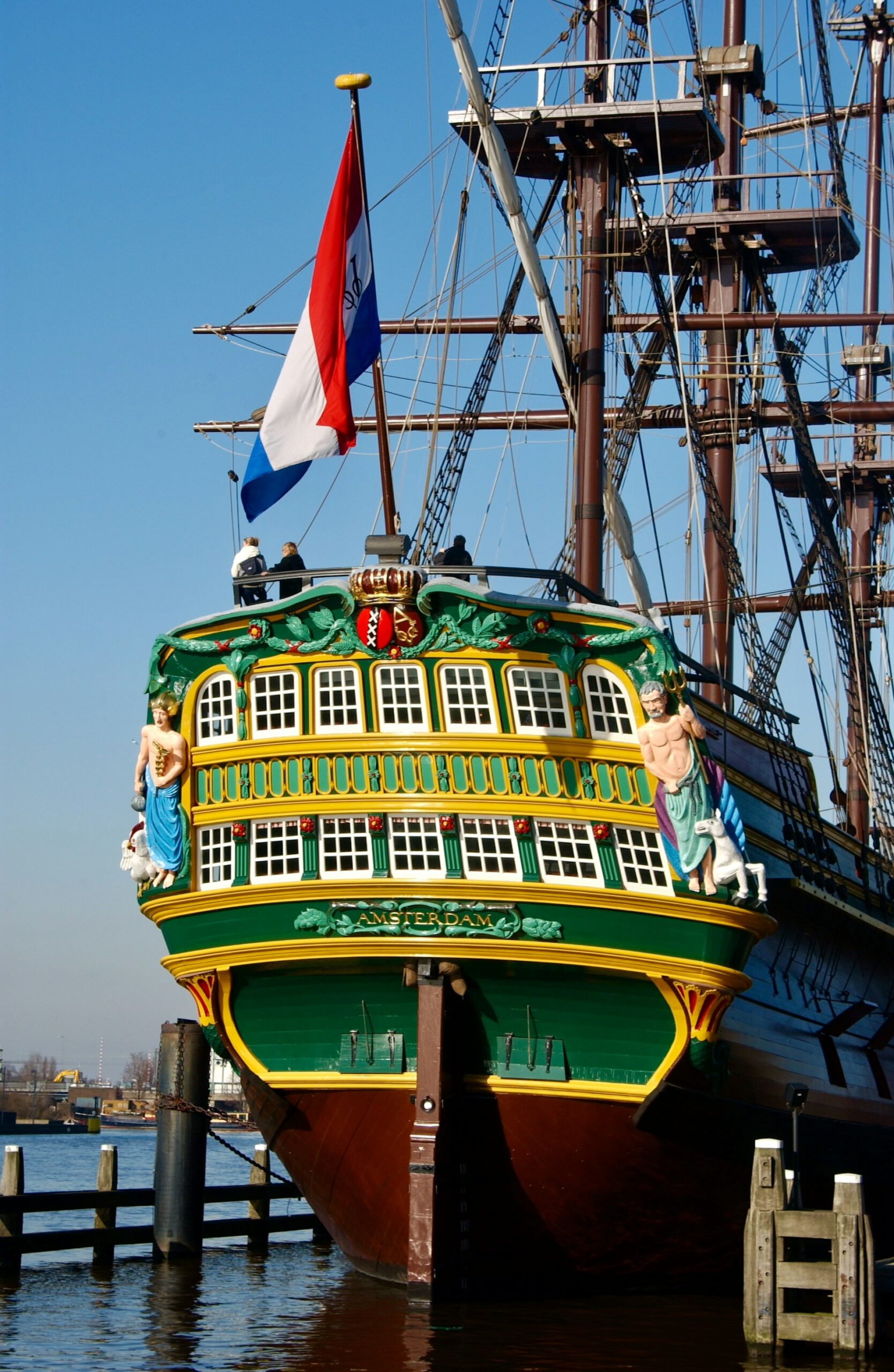
The VOC Ship Amsterdam
Board the full-scale replica of an 18th-century East Indiaman docked at the museum jetty. You can crawl through the cramped cargo hold and stand at the helm to imagine the harsh reality of life at sea.
The Royal Barge
Admire the golden vessel built in 1818 for King William I and used for state occasions. The intricate wood carvings and gold leaf statues of Neptune make it the opulent crown jewel of the collection.
Cartography & Curiosities
Visit the map room to view rare globes and charts created by the famous Blaeu family. These delicate masterpieces show exactly how Dutch explorers charted the unknown world during the 17th century.
Dare to Discover (VR)
Put on a headset for a virtual flight over the harbor of Amsterdam during the Golden Age. You witness the bustling activity of the shipyard and the city skyline as it appeared in 1650.
Republic at Sea Gallery
Walk through the main gallery to see dramatic large-scale paintings of famous naval battles against the English and Spanish. Portraits of admirals like Michiel de Ruyter highlight the military power that protected the Dutch trade routes.
The Glass Courtyard
Look up from the central square to appreciate the self-supporting glass roof inspired by maritime maps. Thousands of glass pieces form a compass rose design that floods the former warehouse with natural light.
Did You Know?
The large sailing ship docked outside is an exact replica of an eighteenth-century vessel that sank off the English coast during its maiden voyage.
Image Library
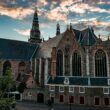
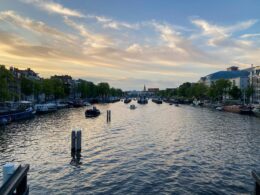
This photo library displays the monumental 17th-century architecture of the former national naval arsenal. You can view the spectacular glass roof covering the courtyard and the towering masts of the replica East Indiaman ship docked outside. Use these pictures to scout the best angles for architectural photography or to visualize the scale of this massive warehouse.
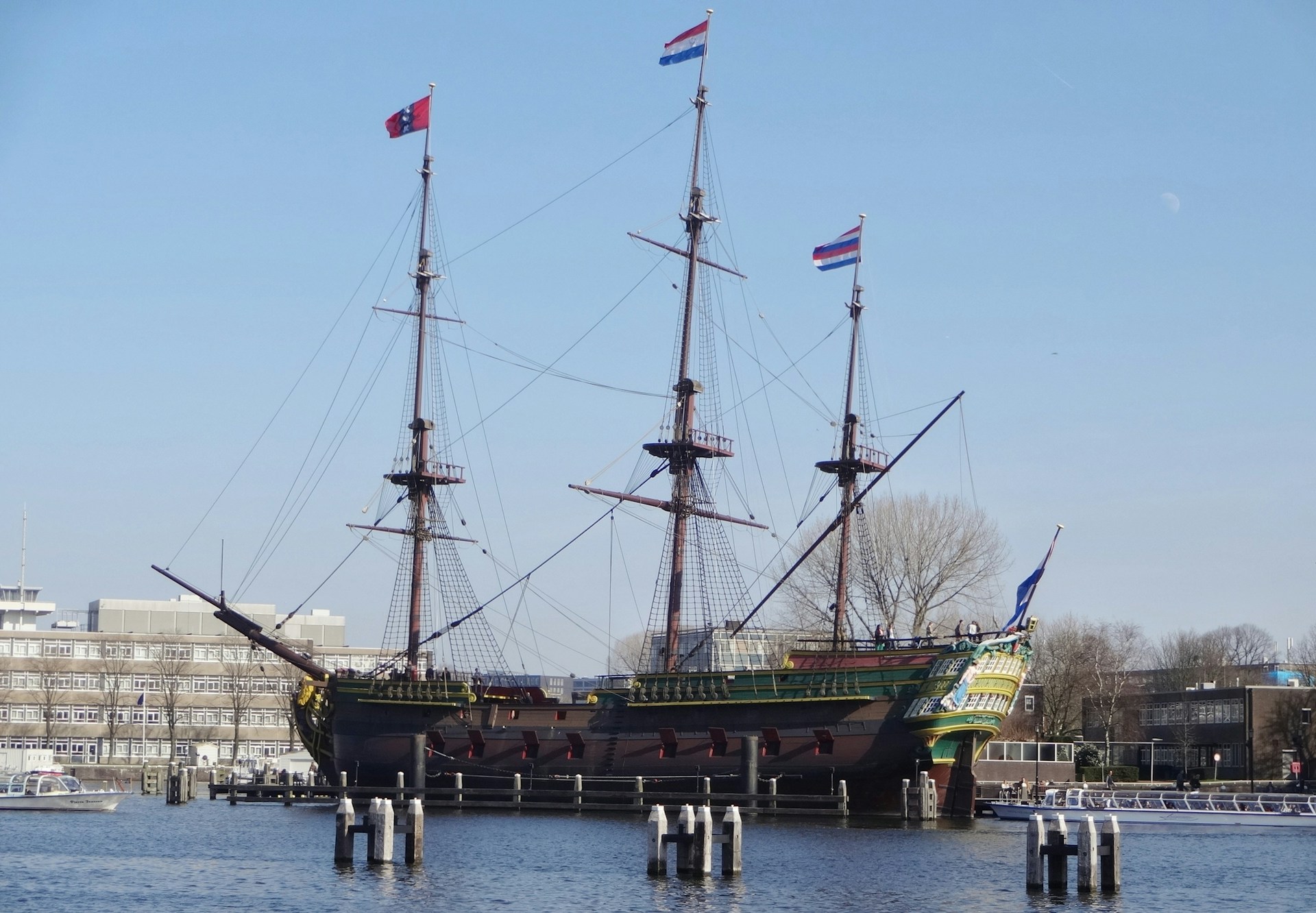
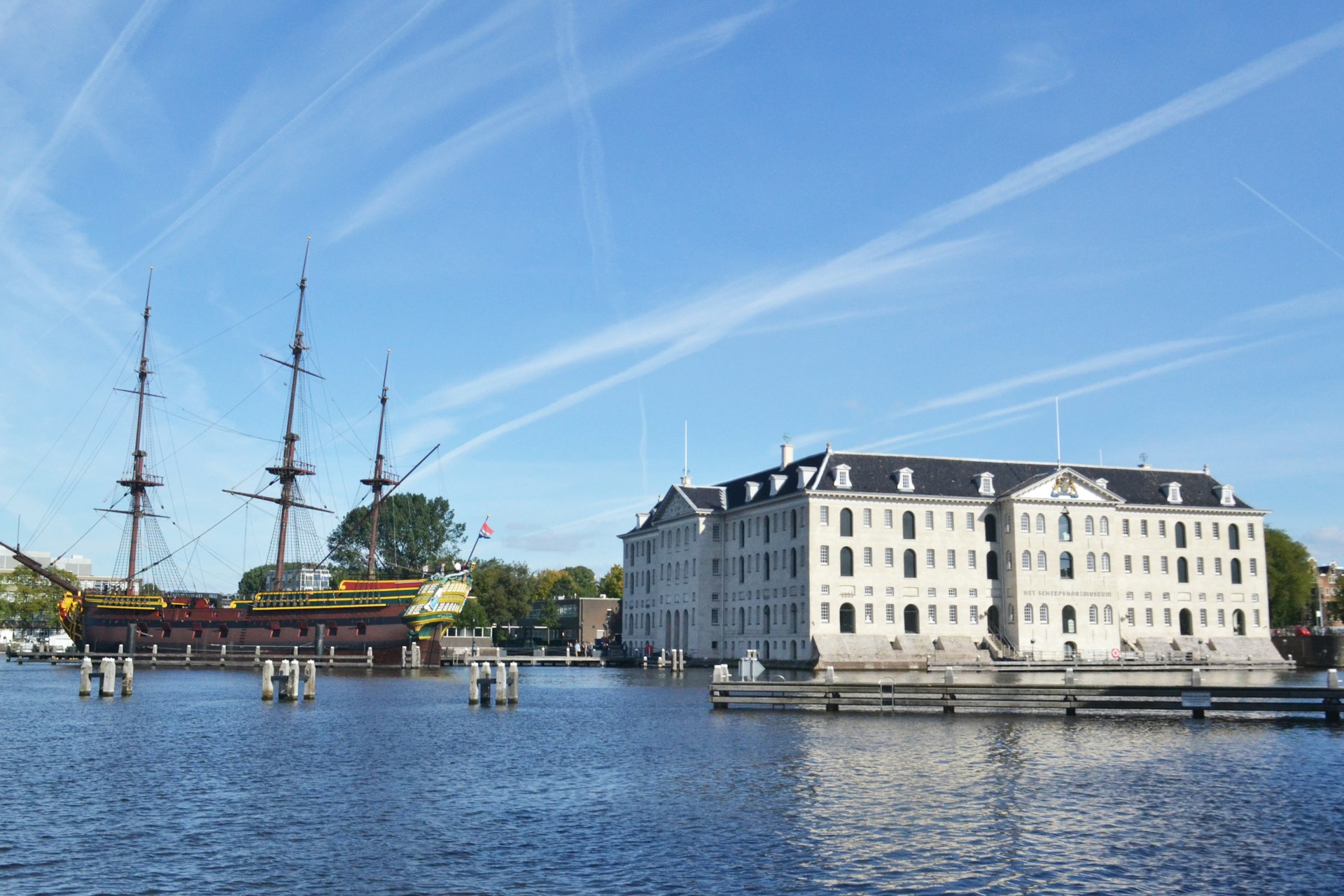
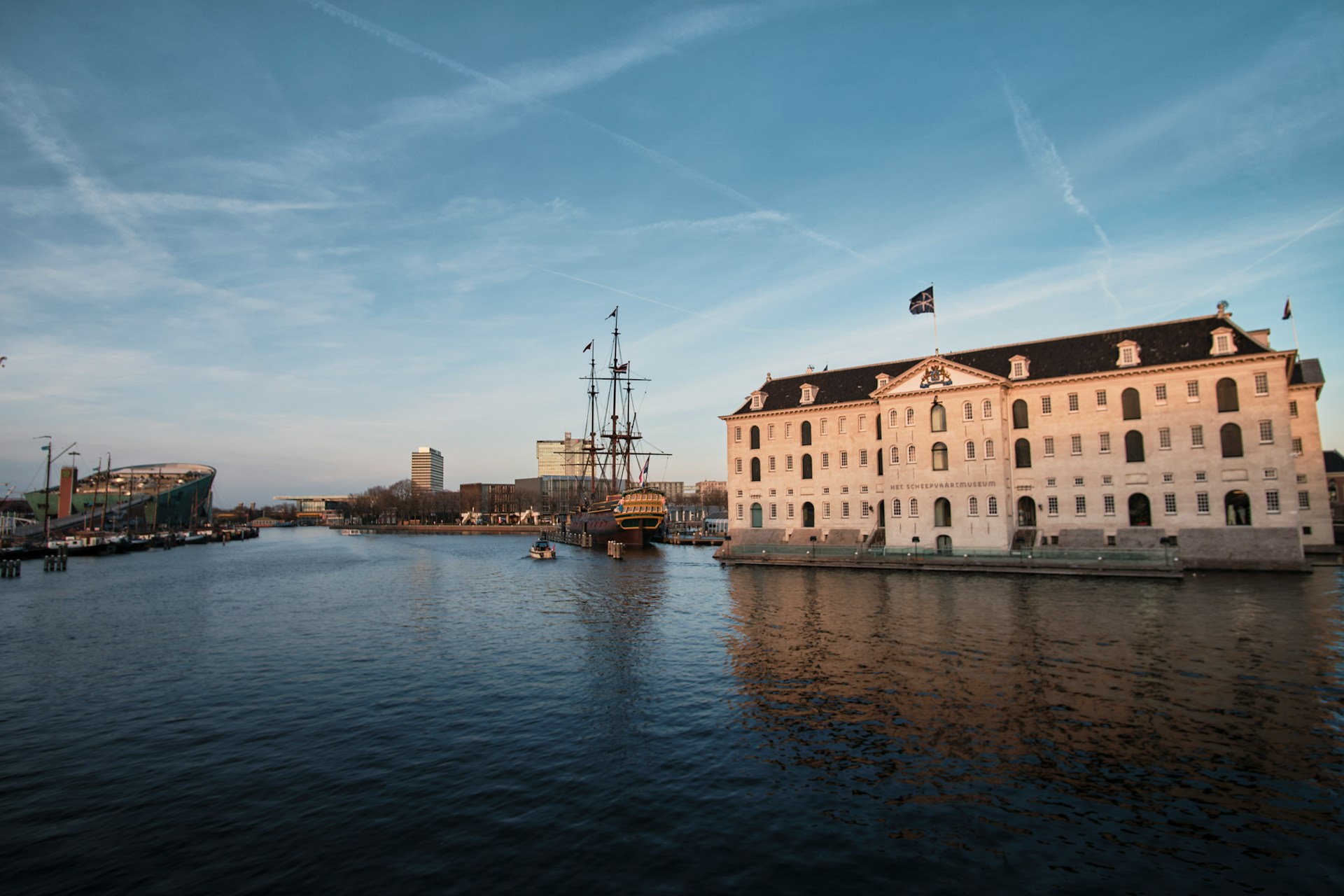
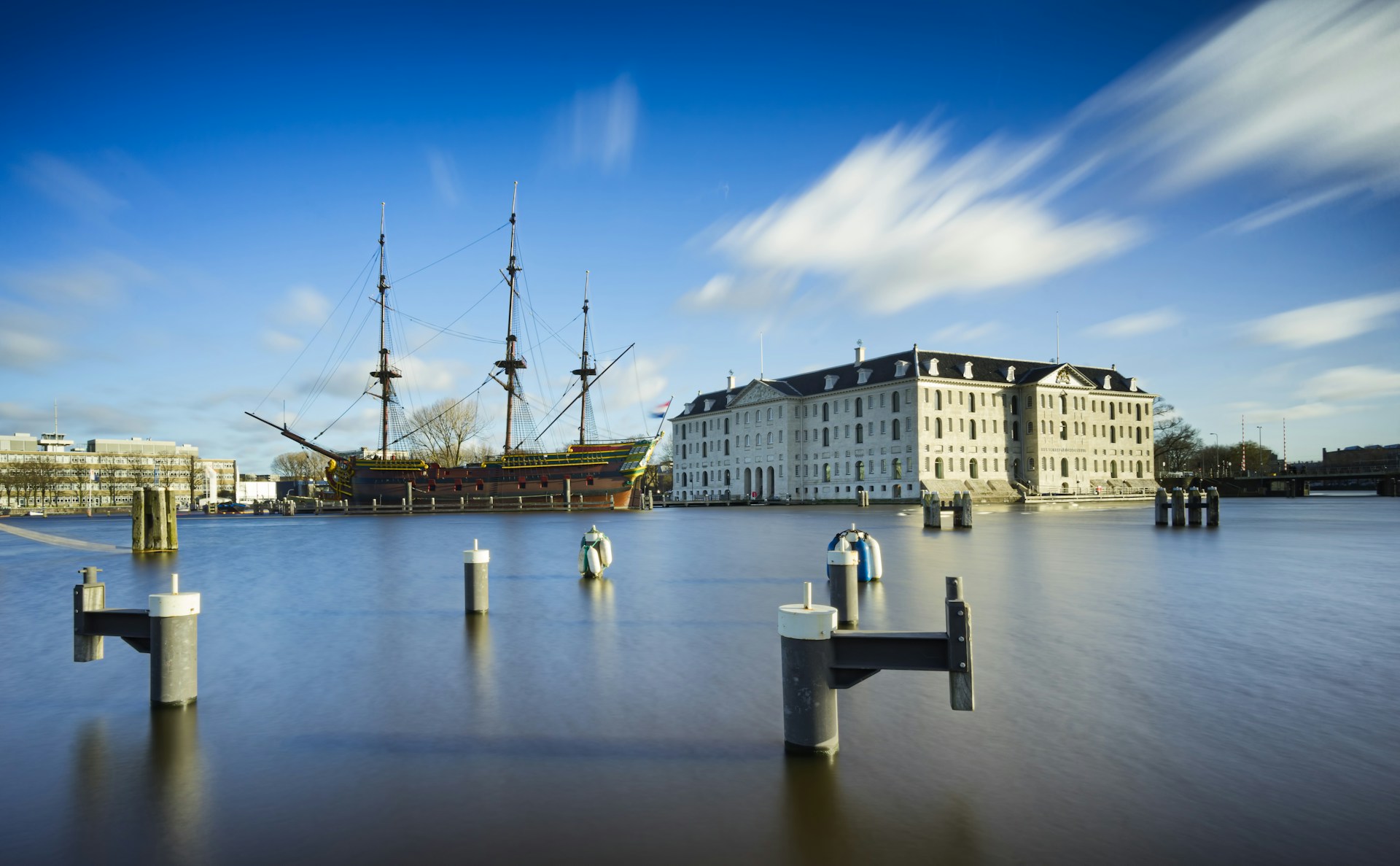
Use these images to understand the layout, maritime details, and adventurous atmosphere before your visit or to revisit the experience afterward. They also show how changing light and the surrounding harbor views shape the mood of the waterfront landmark throughout the day.
Did You Know?
Four hundred volunteers built the replica East Indiaman using traditional tools and methods over five years to ensure historical accuracy in every detail.
Book Tickets & Activities
The National Maritime Museum utilizes a time-slot system to manage visitor numbers across its extensive galleries and the replica ship. Booking tickets online in advance is recommended to secure your preferred entry time and bypass the ticket desk queues. Securing your admission early ensures a smooth visit and helps you organize your schedule around this prominent attraction on the eastern waterfront.
Did You Know?
The museum houses the opulent Royal Barge featuring gold leaf decorations and Neptune figures that carried Dutch monarchs during their official inaugurations for centuries.
Location & Access
The National Maritime Museum dominates the Kattenburgerplein on the eastern edge of the historic harbor, looking out over the open water of the Oosterdok. The imposing 17th-century arsenal stands as a fortress of history near the distinct green shape of the NEMO Science Museum. Its waterfront position makes it a striking landmark in the Plantage district and a logical stop during a tour of the eastern docklands.
Travelers can easily reach the museum via a scenic walk or the city’s bus network. From Central Station, it is a pleasant twenty-minute walk along the Prins Hendrikkade past the historic ships. Alternatively, you can take Bus 22 or 43 from the station to the Kattenburgerplein stop, which drops you directly in front of the entrance. Sightseeing boats and Hop-on Hop-off canal cruises also frequently dock at the museum jetty.
Driving is easier here than in the medieval center, though street parking remains limited and expensive. The nearest large garage is Parking Centrum Oosterdok, located a short walk away, which offers reasonable daily rates if booked in advance. Most smart travelers still opt for public transport or Park + Ride facilities to avoid traffic. Regardless of how you arrive, booking your ticket online is recommended to ensure smooth entry, particularly during school holidays.
Did You Know?
A spectacular glass roof covers the inner courtyard using thousands of steel pieces designed to resemble the rhumb lines on early navigational charts.
Practical Information
Visiting the National Maritime Museum requires some planning to balance the indoor galleries with the outdoor ship experience. The museum is spacious and modern, making it one of the most comfortable visits in Amsterdam, but the sheer size of the arsenal means you will do a lot of walking. Be prepared for a mix of climate-controlled rooms and potential wind or rain on the open deck of the replica ship.
Accessibility & Practical Info
- Wheelchair Access: The main building is fully accessible with elevators to all floors. The main deck of the replica ship is accessible via a lift, but the lower cargo holds are reached only by steep, narrow stairs.
- Audio Guide: A free audio tour is available for visitors. It provides essential context for the paintings and artifacts, with a special version designed specifically for children.
- Cashless Payment: The museum ticket desk, shop, and restaurant are completely cashless. You must use a debit or credit card for all purchases inside the venue.
- Storage: Free lockers are available in the basement level for coats and bags. Large suitcases are generally not accepted, so store luggage at the station before arriving.
- Food & Drink: The museum houses a cafe and restaurant, Het Lagerhuys, located off the courtyard. It is a good spot for lunch, but you cannot take food or drink into the galleries.
Tips & Warnings
- VR Restrictions: The “Dare to Discover” VR flight is a highlight, but it has strict height and age restrictions (usually 8+ years). It can also cause motion sickness, so skip it if you are sensitive to dizziness.
- Weather Watch: The replica ship Amsterdam is docked outside. Visit this section first if the weather is dry, as the decks can get slippery and unpleasant during rain.
- Transport Choice: The walk from Central Station takes about 20 minutes and can feel long in bad weather. Save your energy for the museum and take Bus 22 or 43, which stop right outside.
- Family Focus: This is one of the most kid-friendly museums in the city. If you are with adults only, avoid the “Tale of the Whale” exhibit during school holidays as it gets very crowded with toddlers.
Photography Tips
- Golden Hour: The view from the ship’s deck towards the city center is excellent at sunset. The light reflects off the water of the Oosterdok, creating a perfect backdrop for portraits.
- The Glass Roof: The inner courtyard offers the best architectural shot. Use a wide-angle lens and lie on the floor (if not crowded) or shoot straight up to capture the geometric “compass rose” pattern against the sky.
- No Flash: Flash photography is strictly prohibited in the map rooms and art galleries to protect the fragile paper and centuries-old pigments.
- Ship Angles: For the best photo of the Amsterdam, walk to the end of the jetty. This angle captures the full hull and masts with the NEMO Science Museum in the background.
Did You Know?
The library contains one of the world’s finest collections of early maps and globes including rare works by the famous seventeenth-century cartographer Willem Blaeu.
Contact Details
For general information about the museum, the collection, our program and activities:
E-mail: info@hetscheepvaartmuseum.nl
Phone: (020) 523 22 22
Website: https://www.hetscheepvaartmuseum.nl/
Address:
Kattenburgerplein 1
1018 KK
Amsterdam
The Netherlands
Opening Hours: The National Maritime Museum is open 365 days a year, except for major public holidays. Please check the official website for more details, since opening hours may vary on public holidays and over December.
- Daily: 10:00 to 17:00
Did You Know?
The warehouse functioned as a fortress during times of war to protect the valuable naval supplies stored inside from enemy raids and looting.