



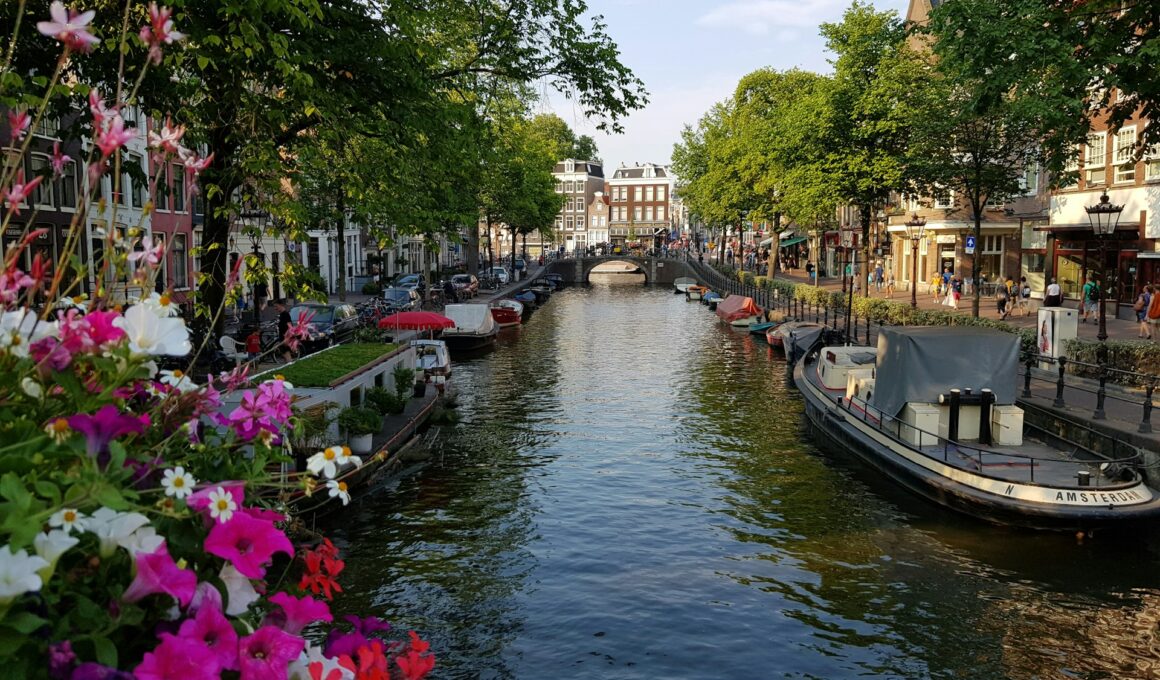
Amsterdam’s intricate network of waterways is the beating heart of the city, offering visitors a unique window into its rich history and vibrant culture. With over a hundred kilometers of water weaving through the capital, narrowing down the absolute best spots to explore can be a daunting task for any traveler.
To help you navigate, we have curated a guide to the top 10 must-see canals, ranging from the opulent, Golden Age mansions of the Grachtengordel to the ancient, bustling corridors of the Red Light District.
In Amsterdam, the water is the mistress and the land the vassal.
~ Félix Martí Ibáñez
Groenburgwal Canal
Tucked away in the historic center, the Groenburgwal is a short, peaceful canal that offers a quiet escape near the bustling Amstel River. It is celebrated for providing one of Amsterdam’s most perfectly framed views, looking straight down the tree-lined water toward the Renaissance tower of the Zuiderkerk.
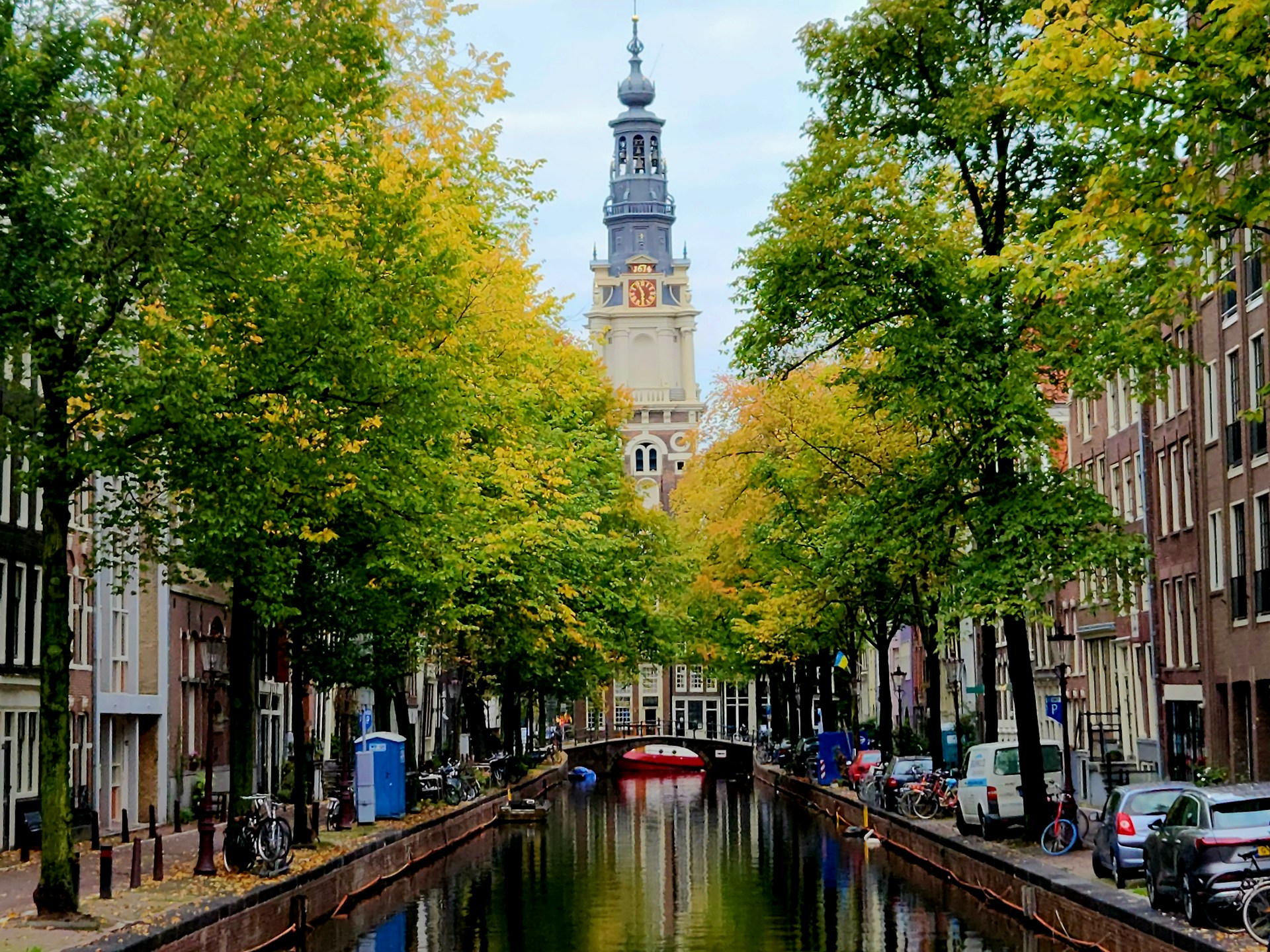
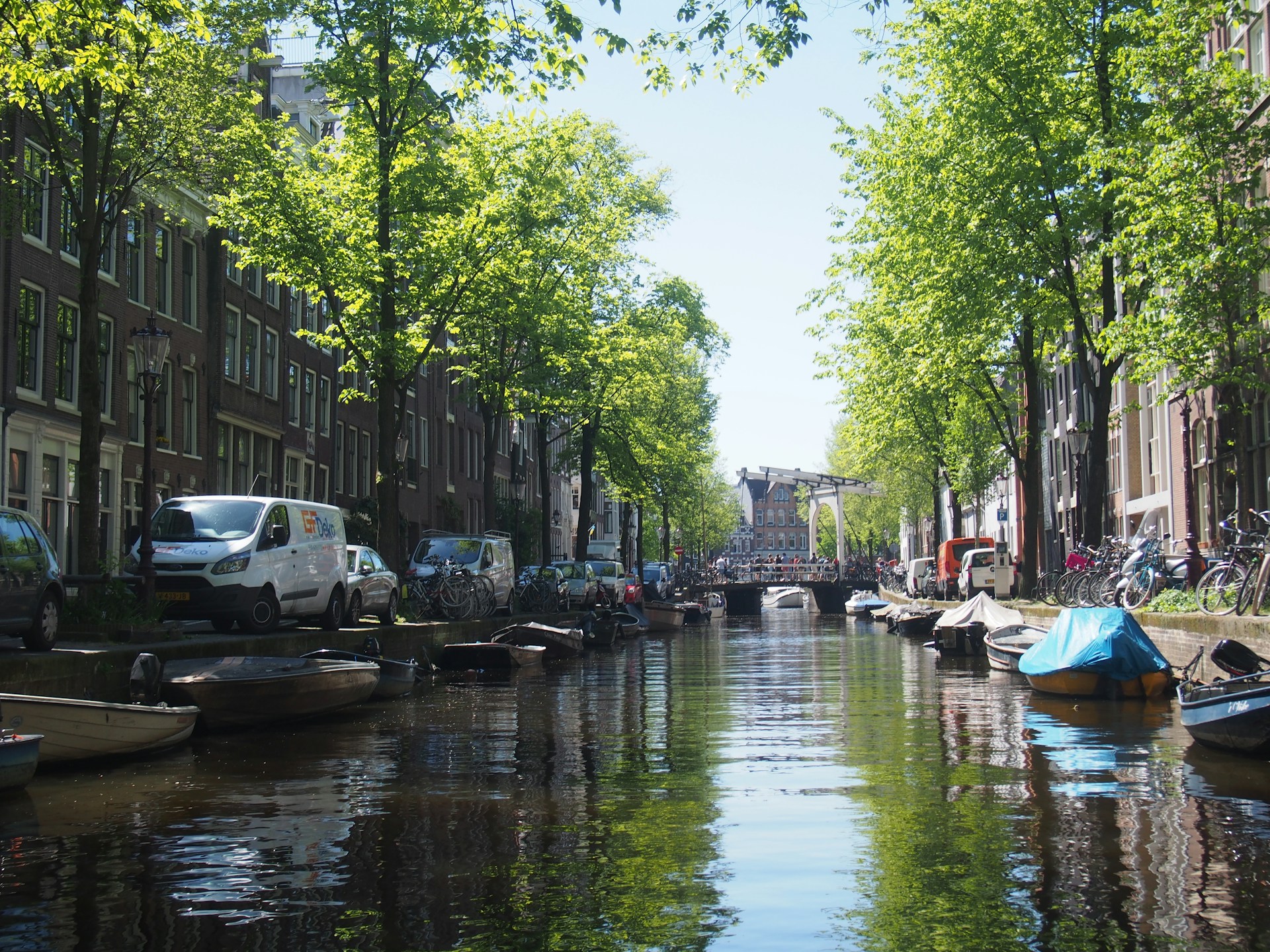
This remarkably picturesque vantage point is so striking that it was famously immortalized by the French Impressionist painter Claude Monet during his 1874 visit. Travelers should pause on the nearby wooden Staalmeestersbrug drawbridge to capture this classic, postcard-worthy scene before exploring the surrounding neighborhood.
Prinsengracht Canal
Serving as the vibrant boundary between the central ring and the Jordaan neighborhood, the Prinsengracht is the longest of Amsterdam’s three primary waterways. Originally constructed during the Dutch Golden Age as a hub for middle-class merchants and workshops, it now buzzes with lively cafes and independent boutiques.
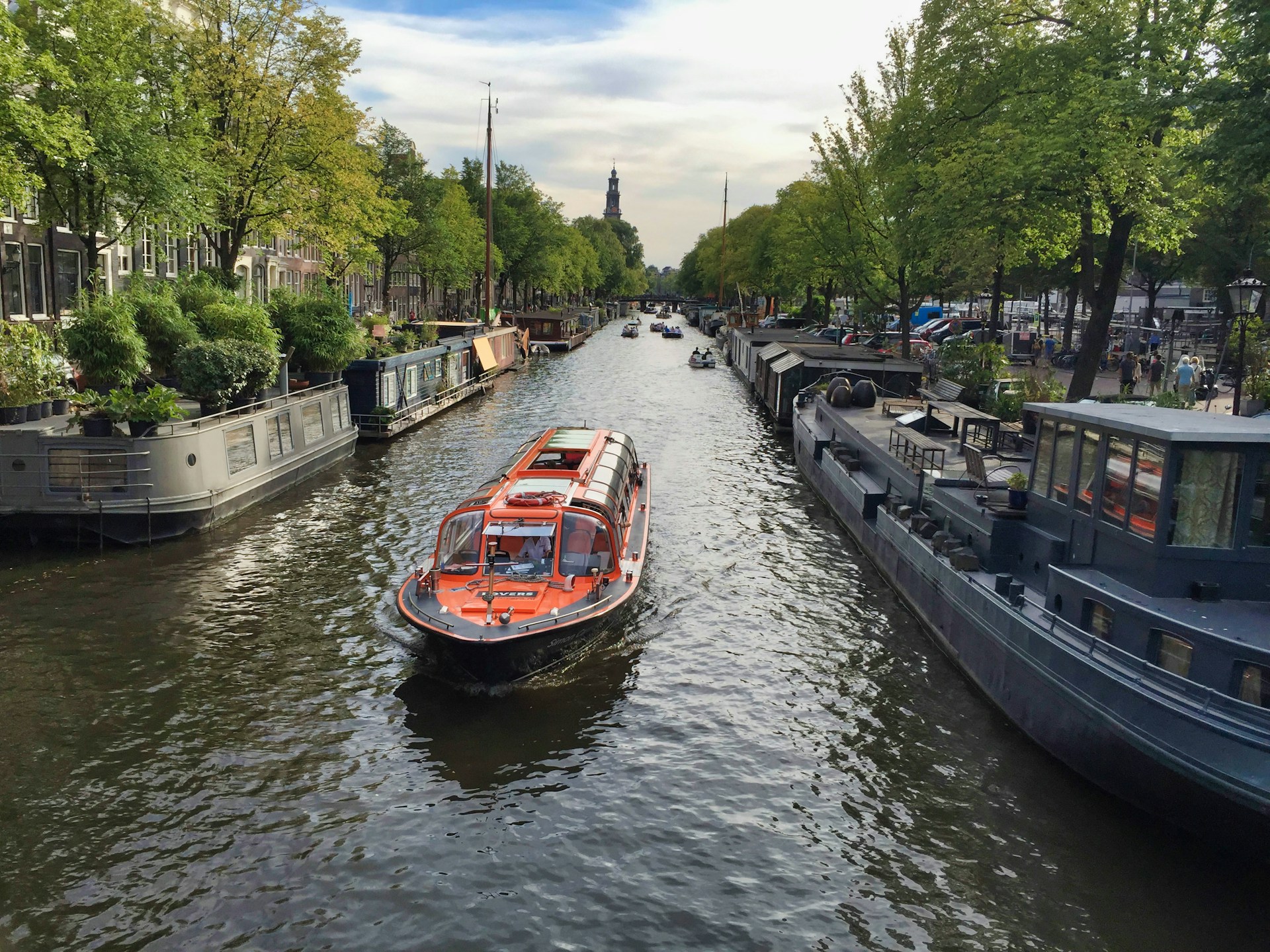
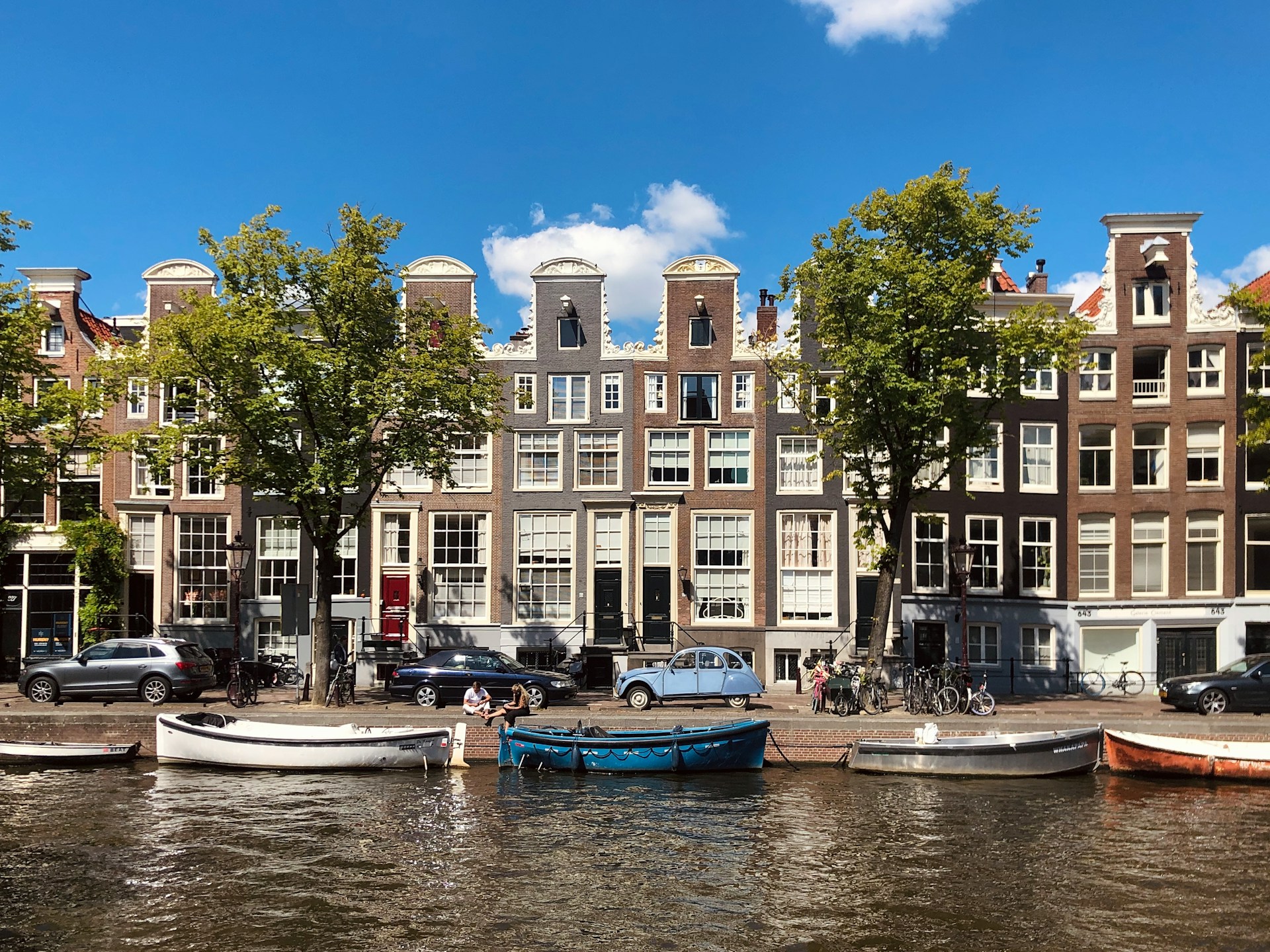
A stroll along its historic, brick promenades takes you past significant city landmarks, most notably the Anne Frank House and the towering Westerkerk. Visitors can best experience this bustling UNESCO World Heritage site by taking a scenic boat tour or simply admiring the countless houseboats moored along the banks.
Keizersgracht Canal
Named in honor of the Holy Roman Emperor Maximilian I, the Keizersgracht is the central and widest waterway of the famous 17th-century Grachtengordel. This magnificent stretch is lined with grand patrician houses, monumental architecture, and leafy elm trees that create a serene atmosphere in the heart of the city.
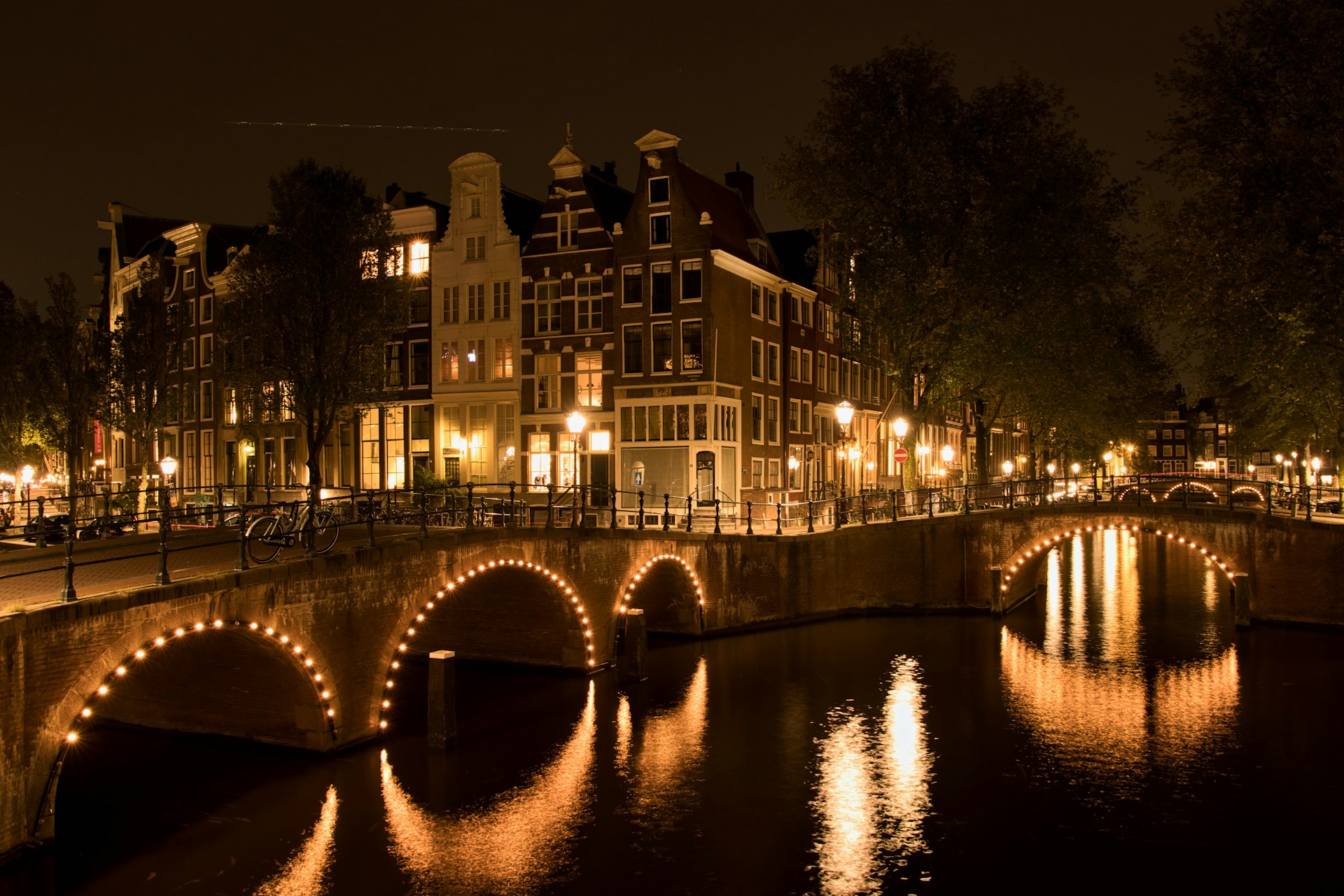
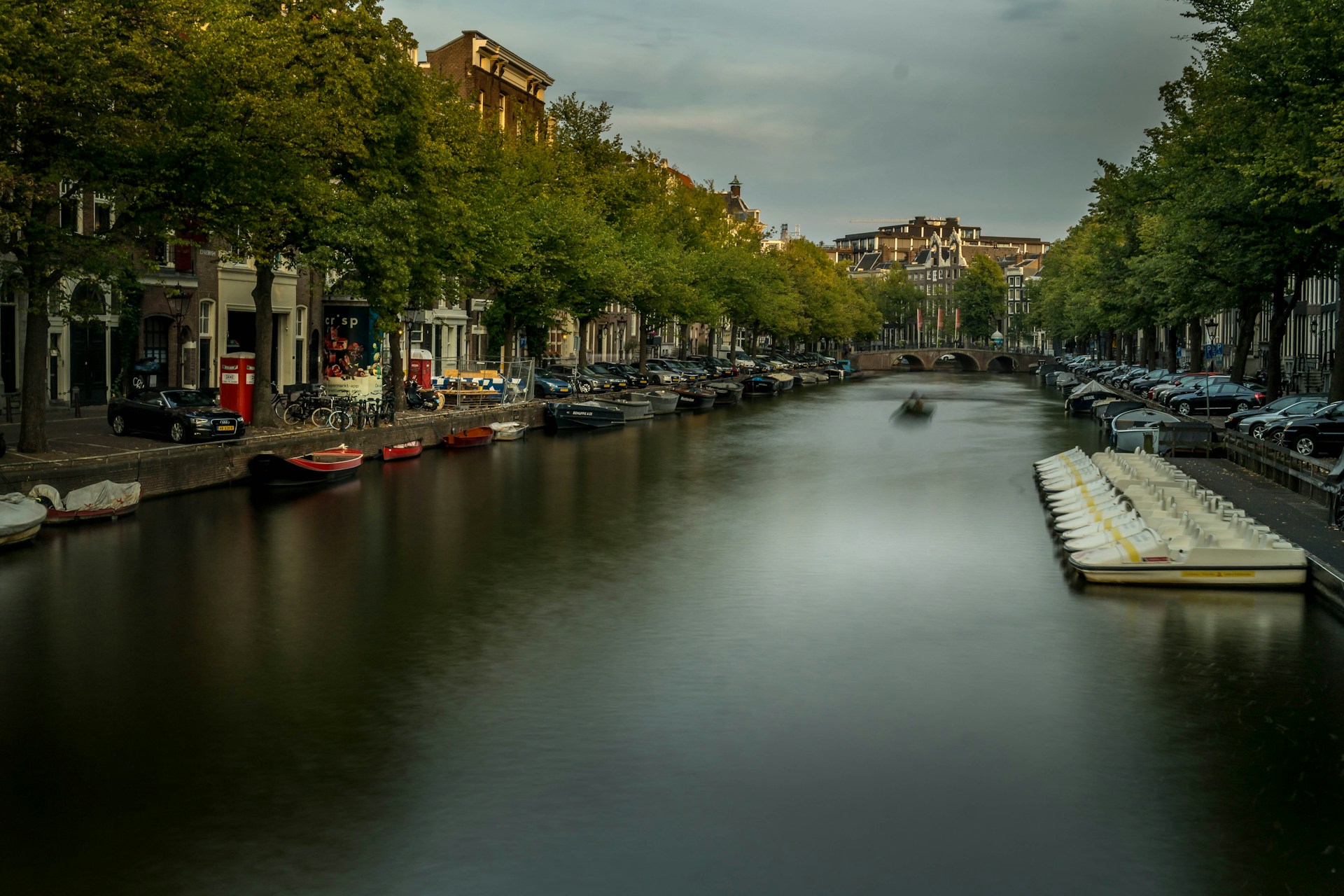
During particularly cold winters, the water here traditionally becomes the city’s primary location for natural ice skating, drawing crowds of locals to the frozen surface. Walking along its quiet quays allows visitors to discover elegant cultural institutions, such as the Museum Van Loon and the FOAM photography museum.
Herengracht Canal
The Herengracht, or Gentlemen’s Canal, is the innermost of the three major rings and was historically the most prestigious address in the Dutch capital. During the 17th century, the city’s wealthiest merchants, mayors, and ruling elite built their incredibly opulent mansions along these prominent banks.
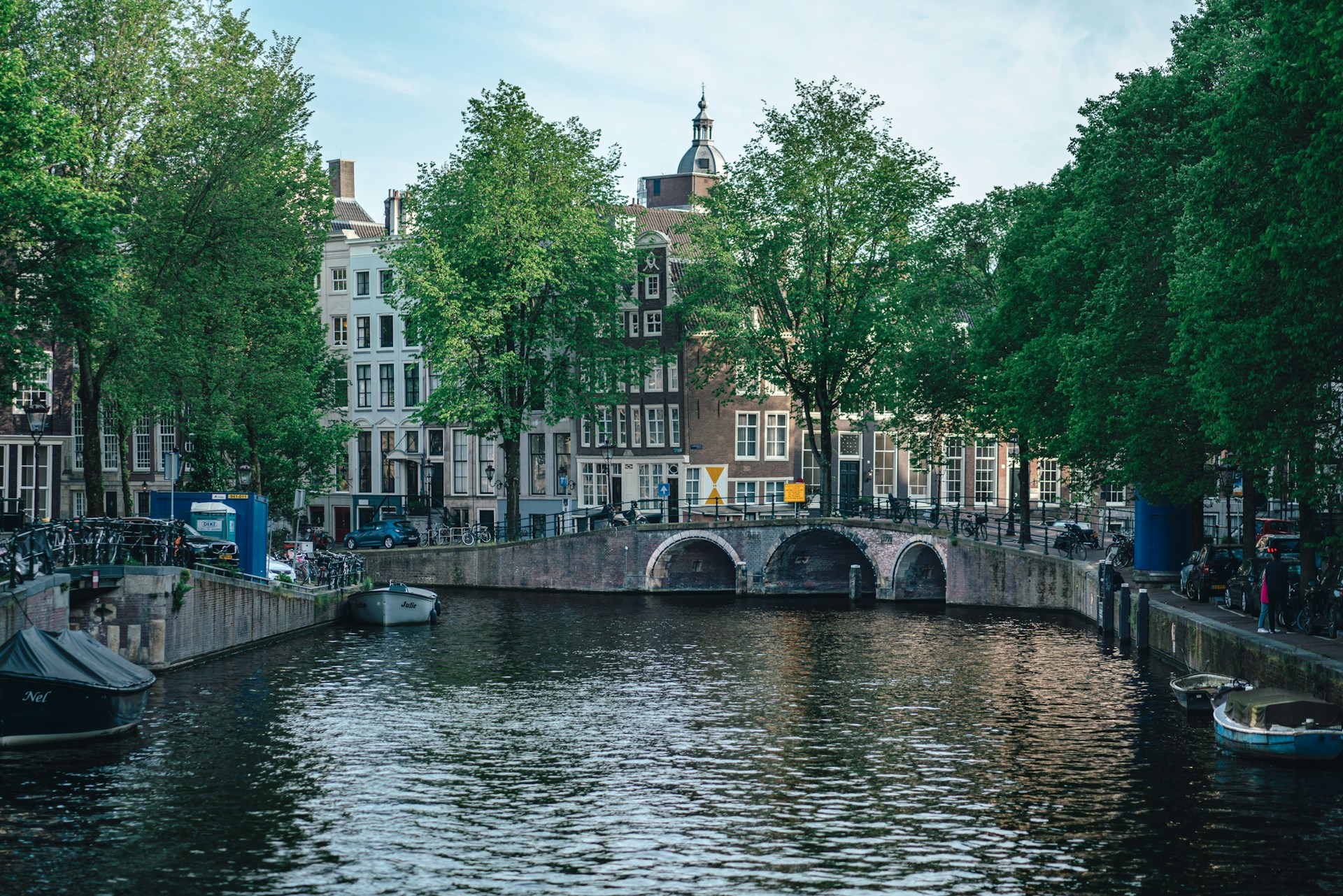
The most spectacular display of this wealth is found at the “Golden Bend” (Gouden Bocht), where the double-wide, intricately decorated facades reach their absolute peak. Today, architecture enthusiasts can marvel at these perfectly preserved historical homes, which now house high-end offices, boutique hotels, and the official residence of the Amsterdam mayor.
Singel Canal
Originally serving as the outer defensive moat of the medieval city until 1585, the Singel now forms the innermost ring of Amsterdam’s semi-circular layout. This bustling waterway is most famous for hosting the Bloemenmarkt, the world’s only floating flower market, where vendors sell colorful tulips from permanently moored barges.
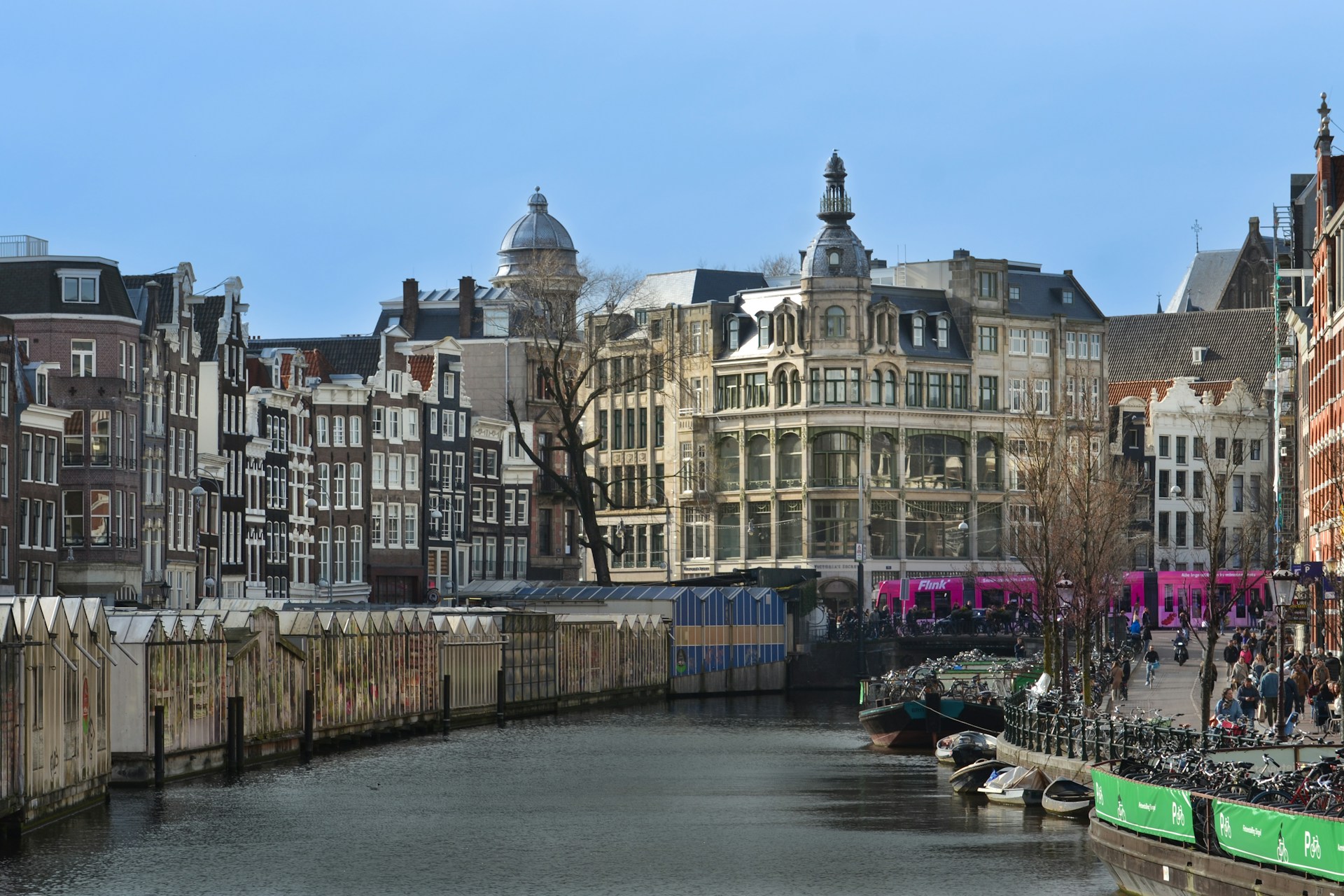
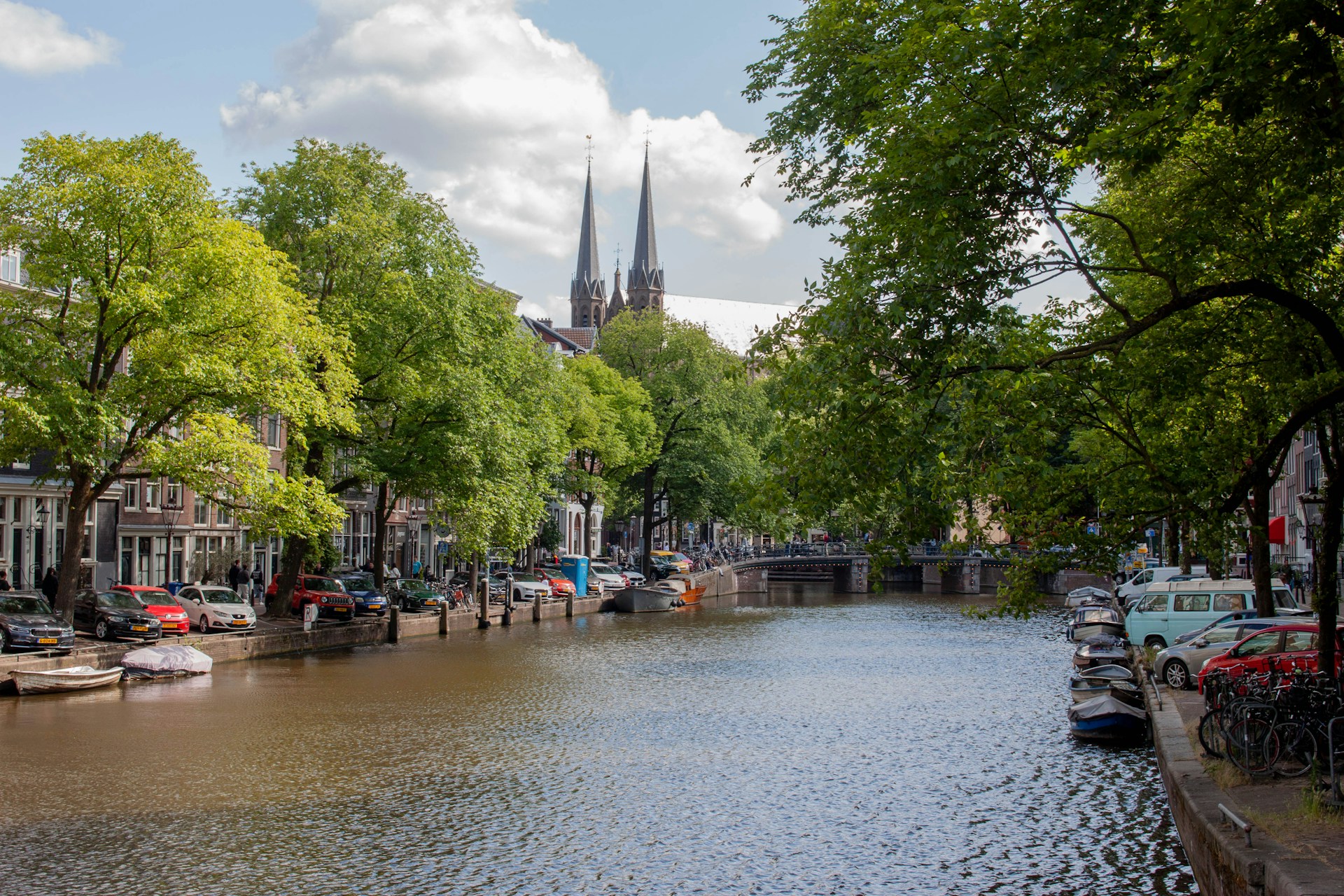
The eastern stretch features a highly varied architectural landscape, including the soaring neo-Gothic spires of De Krijtberg church and the famously narrow house at number 7. Animal lovers will also want to seek out the unique Poezenboot, a floating animal sanctuary entirely dedicated to housing the city’s stray and abandoned cats.
Bloemgracht Canal
Tucked away in the charming Jordaan district, the Bloemgracht or “Flower Canal” is widely regarded as one of the most picturesque and tranquil waterways in the city. Laid out in the early 17th century, its peaceful banks are lined with an exceptionally high concentration of classic, step-gabled houses that once belonged to local craftsmen and artisans.
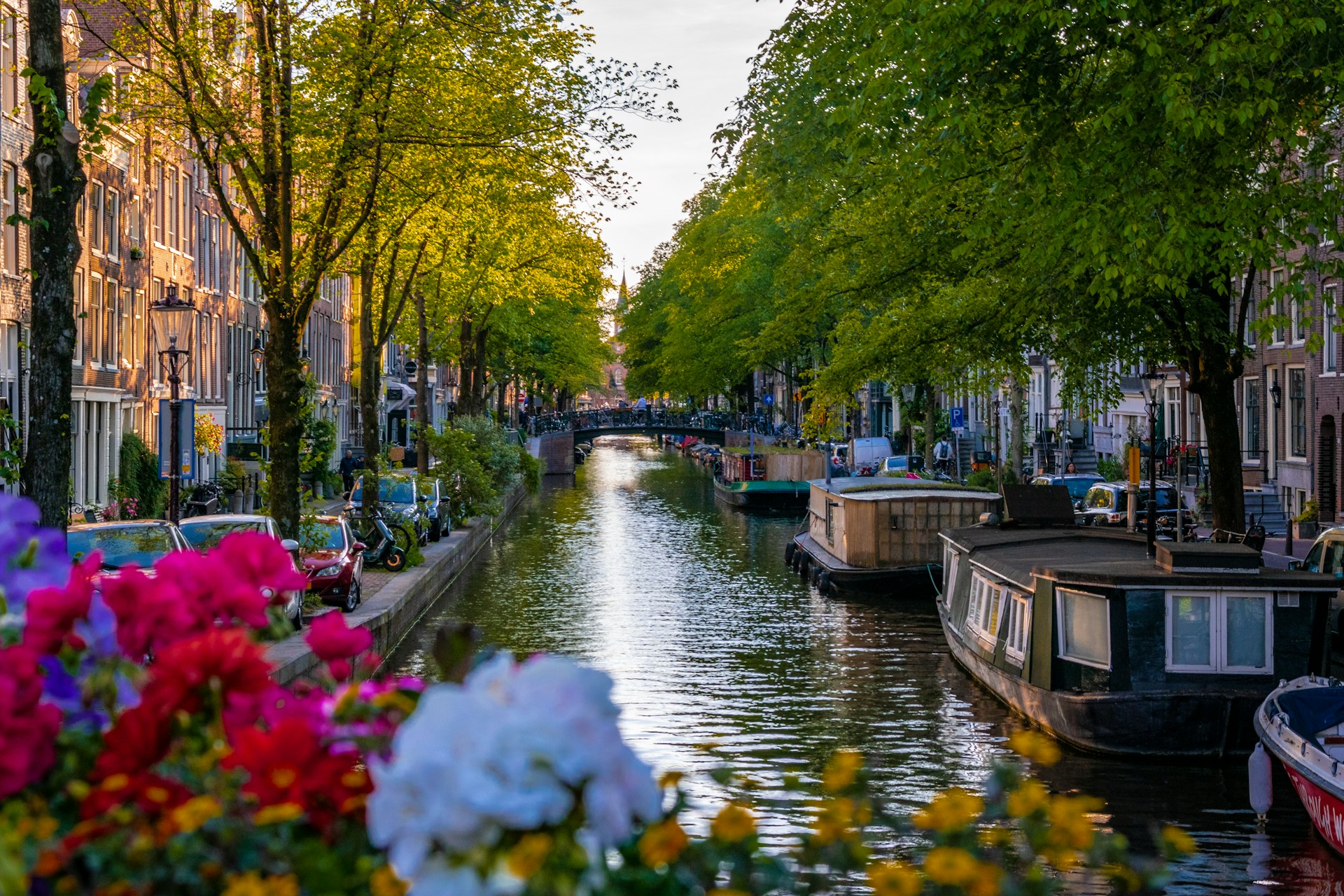
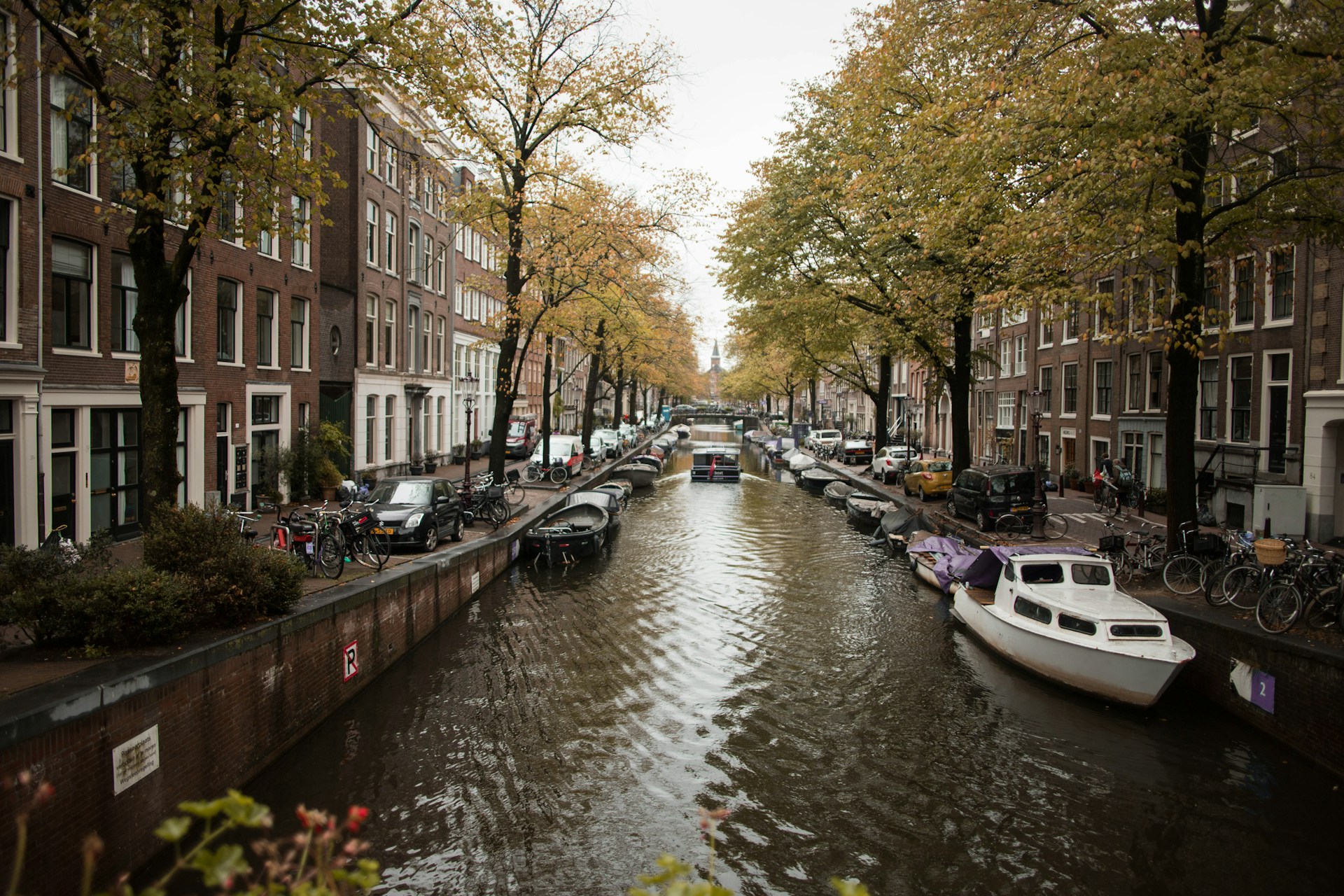
Unlike the grand merchant mansions of the central rings, this historic neighborhood offers an intimate, village-like atmosphere perfect for a quiet afternoon stroll away from the bustling crowds. Visitors should keep an eye out for beautifully preserved architectural details, such as the colorful, historic stone tablets (gevelstenen) that originally indicated the specific trades of the buildings’ first inhabitants.
Brouwersgracht Canal
Marking the northern border of the historic Jordaan district, the Brouwersgracht derives its name from the numerous breweries that operated here in the 16th and 17th centuries. The street is visually defined by its striking rows of massive former storage warehouses, distinguished by large, brightly painted wooden shutters and heavy lifting hooks.
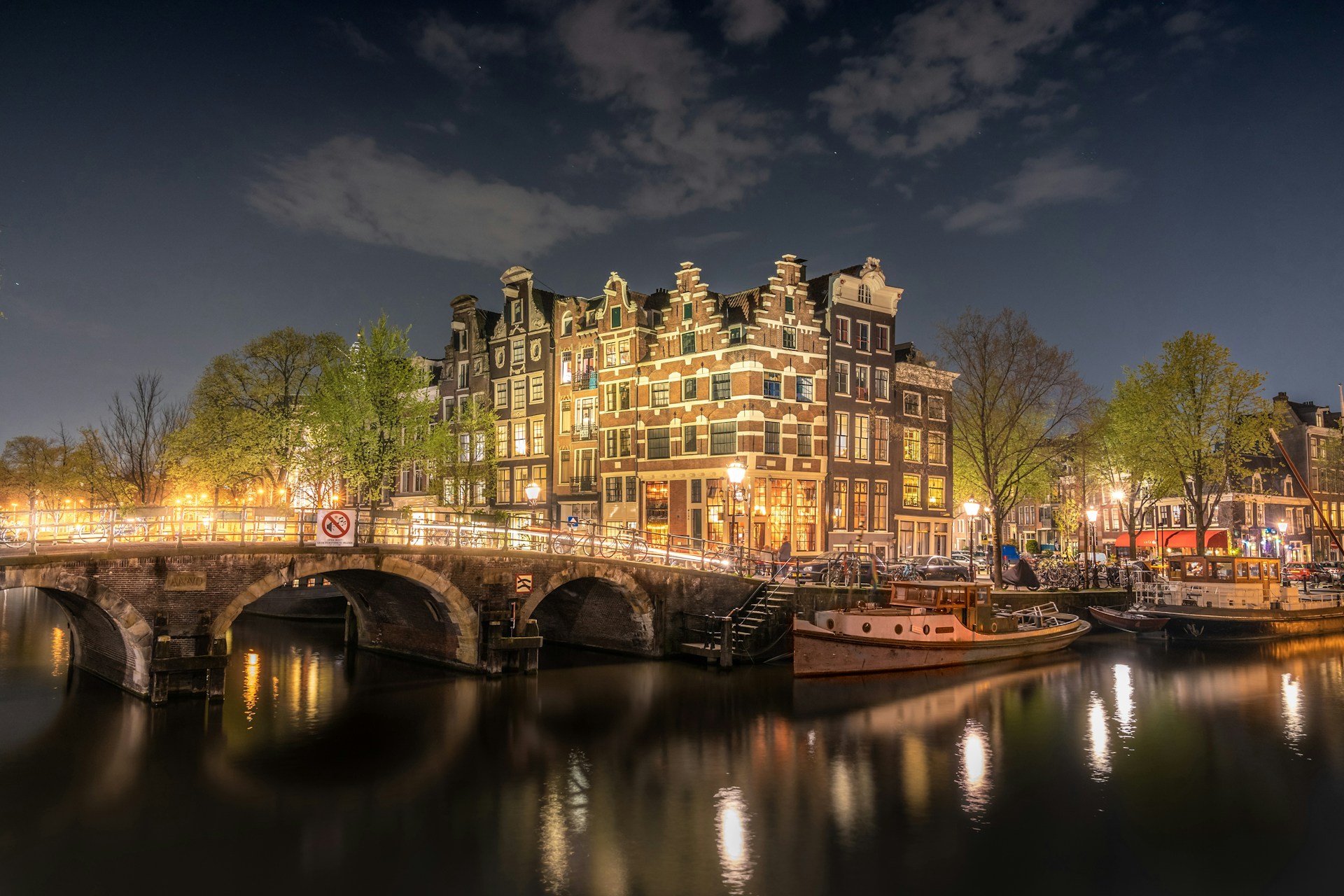
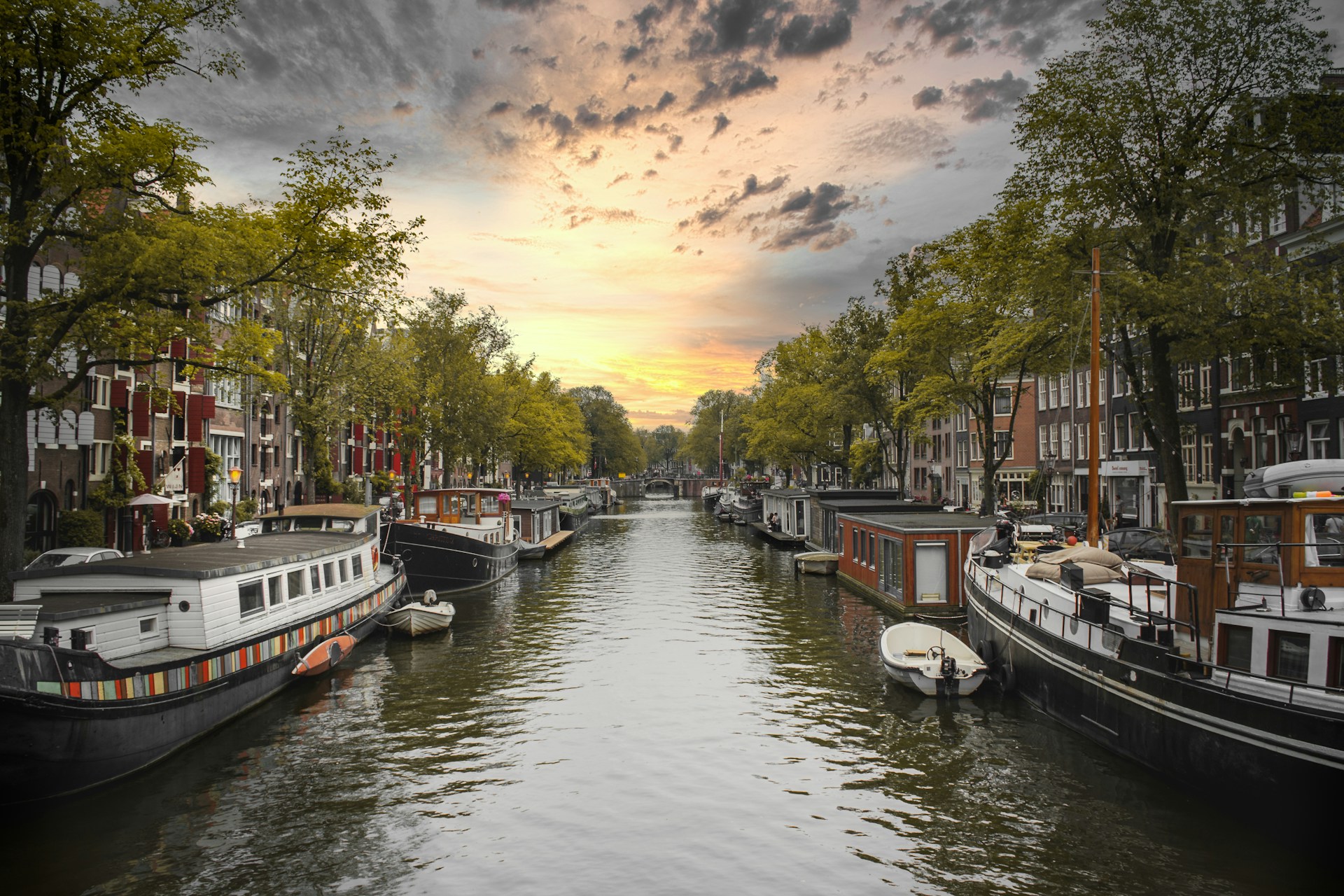
These rugged, industrial buildings have since been converted into some of the most highly sought-after and expensive residential loft apartments in the Netherlands. Frequently voted by locals as the most beautiful street in Amsterdam, it offers a deeply photogenic mix of historic commercial architecture, shady trees, and quirky houseboats.
Singelgracht Canal
Not to be confused with the inner Singel, the Singelgracht acts as the zigzagging outer boundary of the entire historical center, originally dug as a 17th-century defensive moat. Because it was designed to accommodate city walls and bastions, it is significantly wider than the inner waterways and is bordered by major transit roads rather than quiet residential paths.
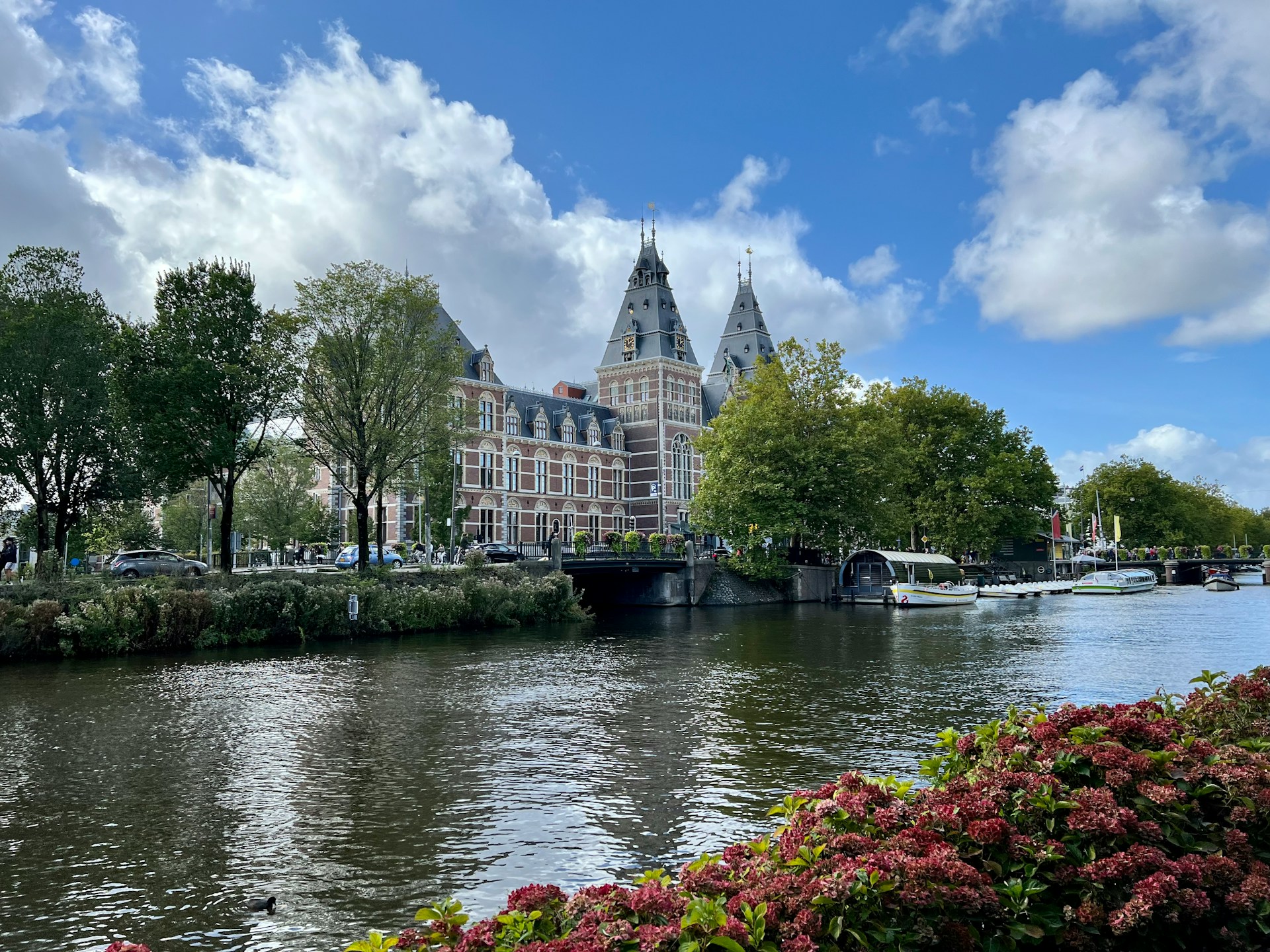
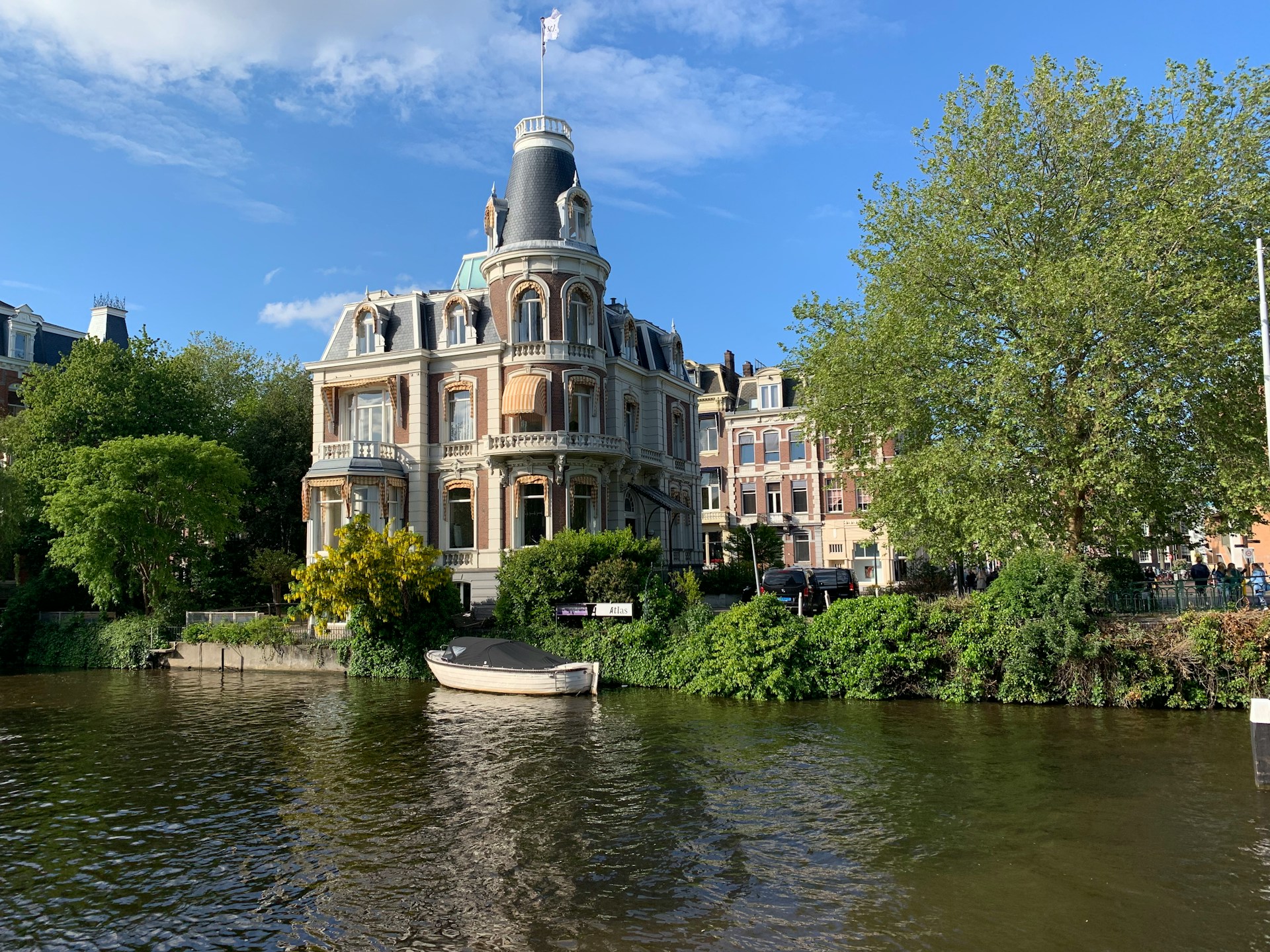
Some of Amsterdam’s most prominent cultural institutions sit proudly along its shores, including the monumental Rijksmuseum and the legendary Paradiso music venue. Travelers will frequently interact with this expansive body of water when renting pedal boats, catching a canal cruise, or crossing over to explore the vibrant De Pijp neighborhood.
Oudezijds Voorburgwal Canal
Slicing directly through the heart of the De Wallen neighborhood, the Oudezijds Voorburgwal is one of the absolute oldest and most intensely vibrant canals in Amsterdam. Its banks are dominated by the imposing presence of De Oude Kerk, an 800-year-old parish church that stands out as the oldest surviving building in the entire city.
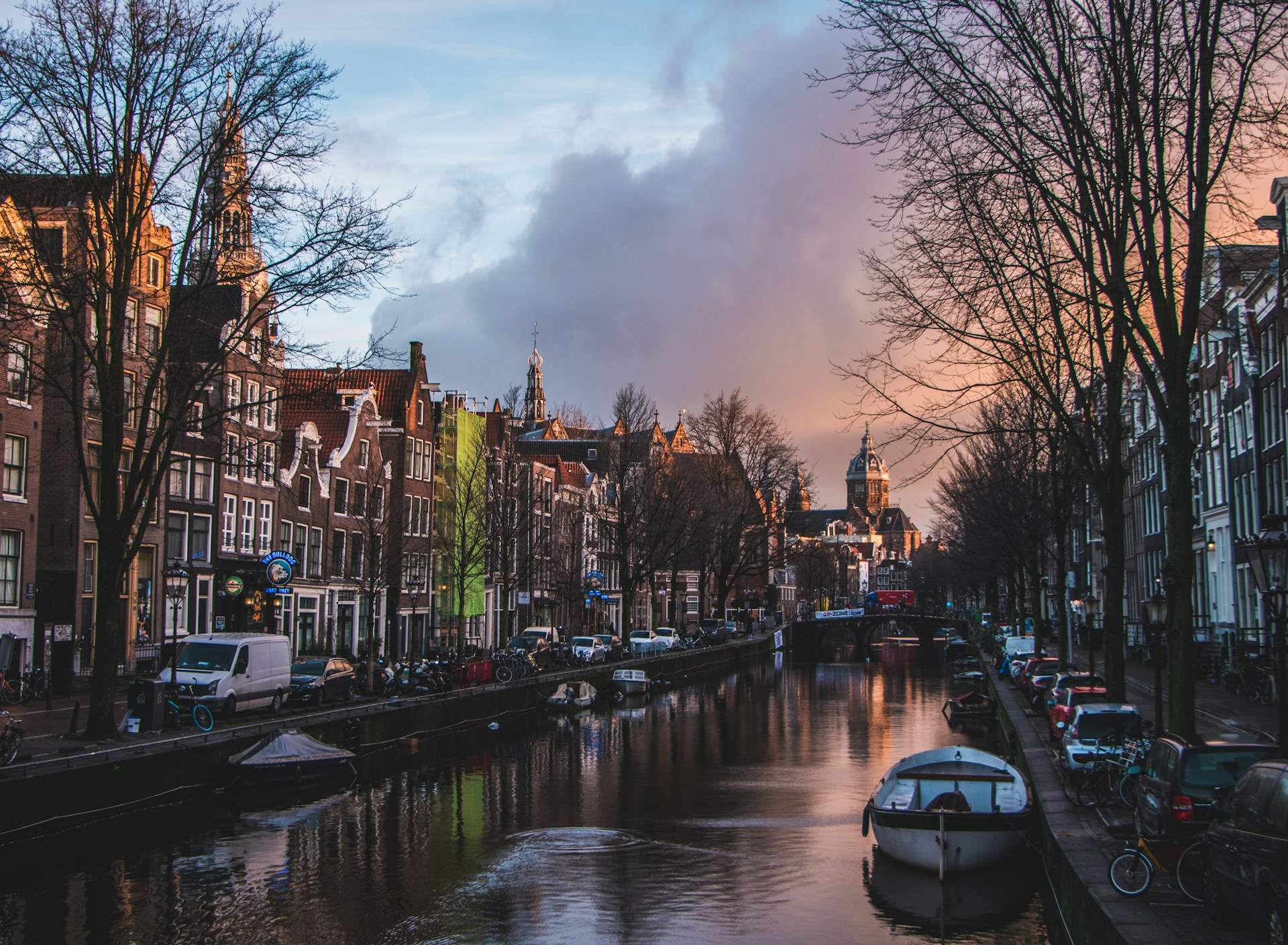
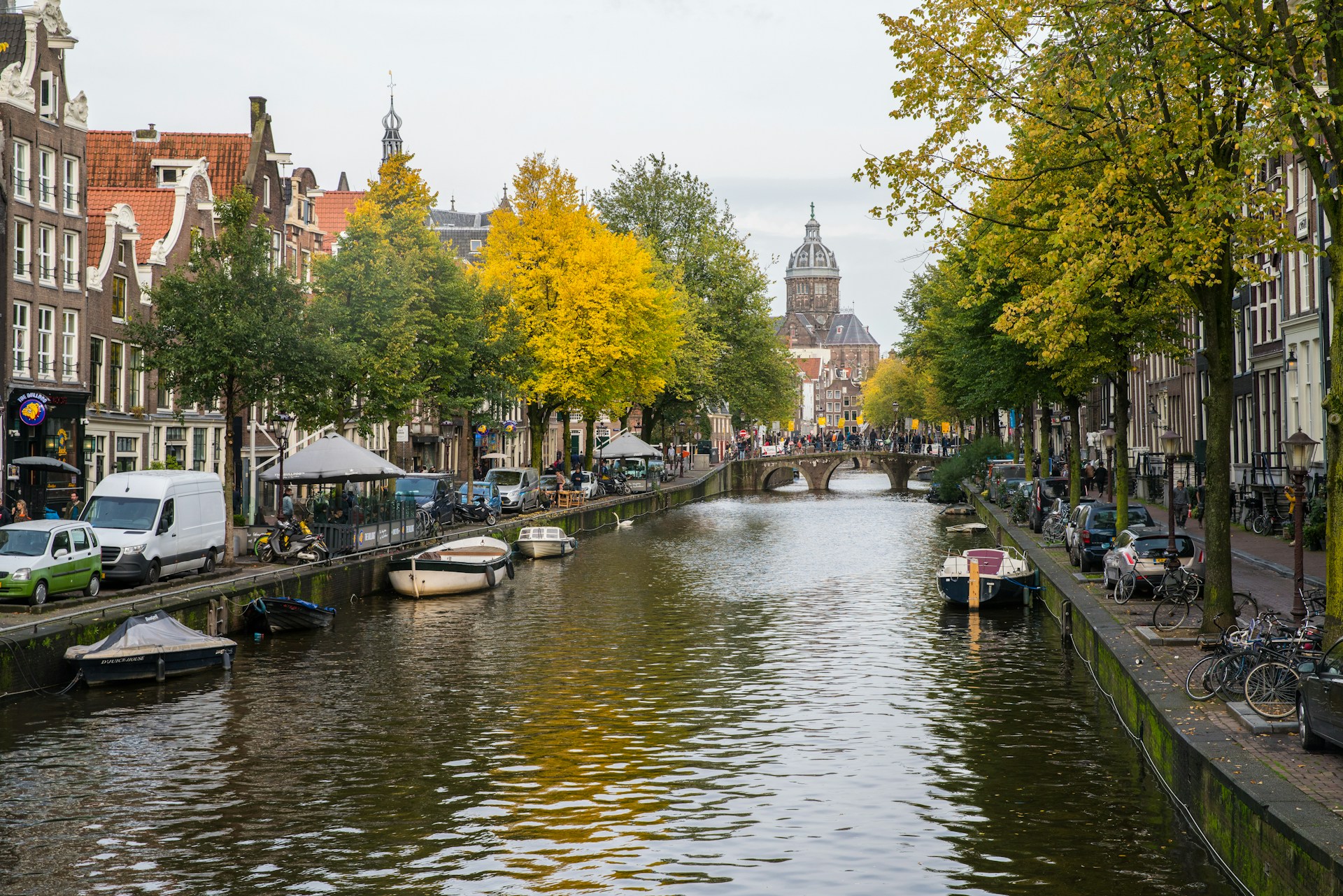
The waterway serves as the main artery of the famous Red Light District, creating a surreal juxtaposition of ancient architecture, neon-lit windows, and crowded cafes. Despite its rowdy modern reputation, history buffs can still spot hidden gems here, such as Ons’ Lieve Heer op Solder, a fascinating clandestine Catholic church concealed within a canal house.
Oudezijds Achterburgwal Canal
Running directly parallel to the Voorburgwal, the Oudezijds Achterburgwal was originally the rear defensive moat of the medieval city before the eastern expansion. While it still falls firmly within the bustling boundaries of the Red Light District, it maintains a marginally narrower and slightly more subdued atmosphere than its neighboring thoroughfare.
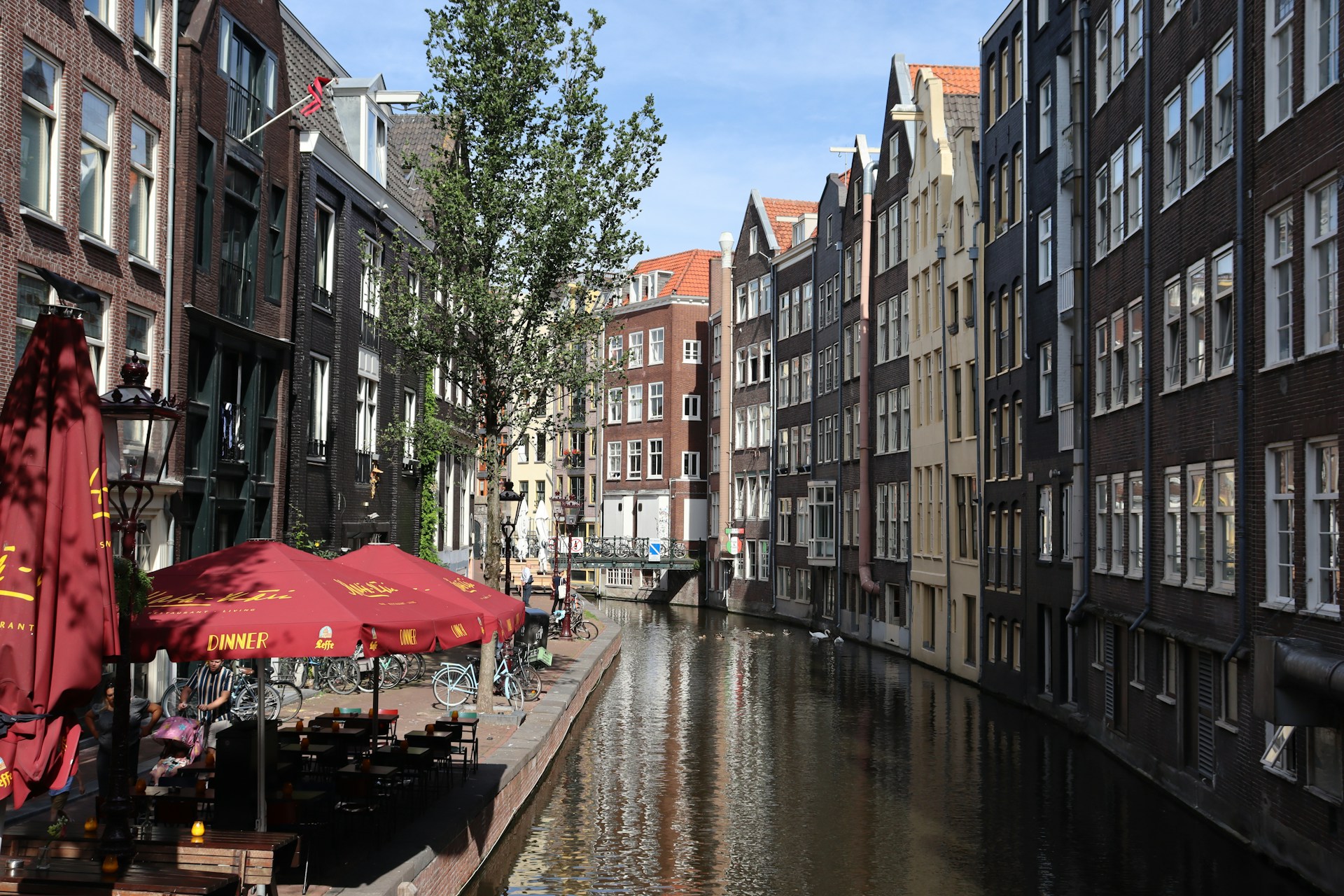
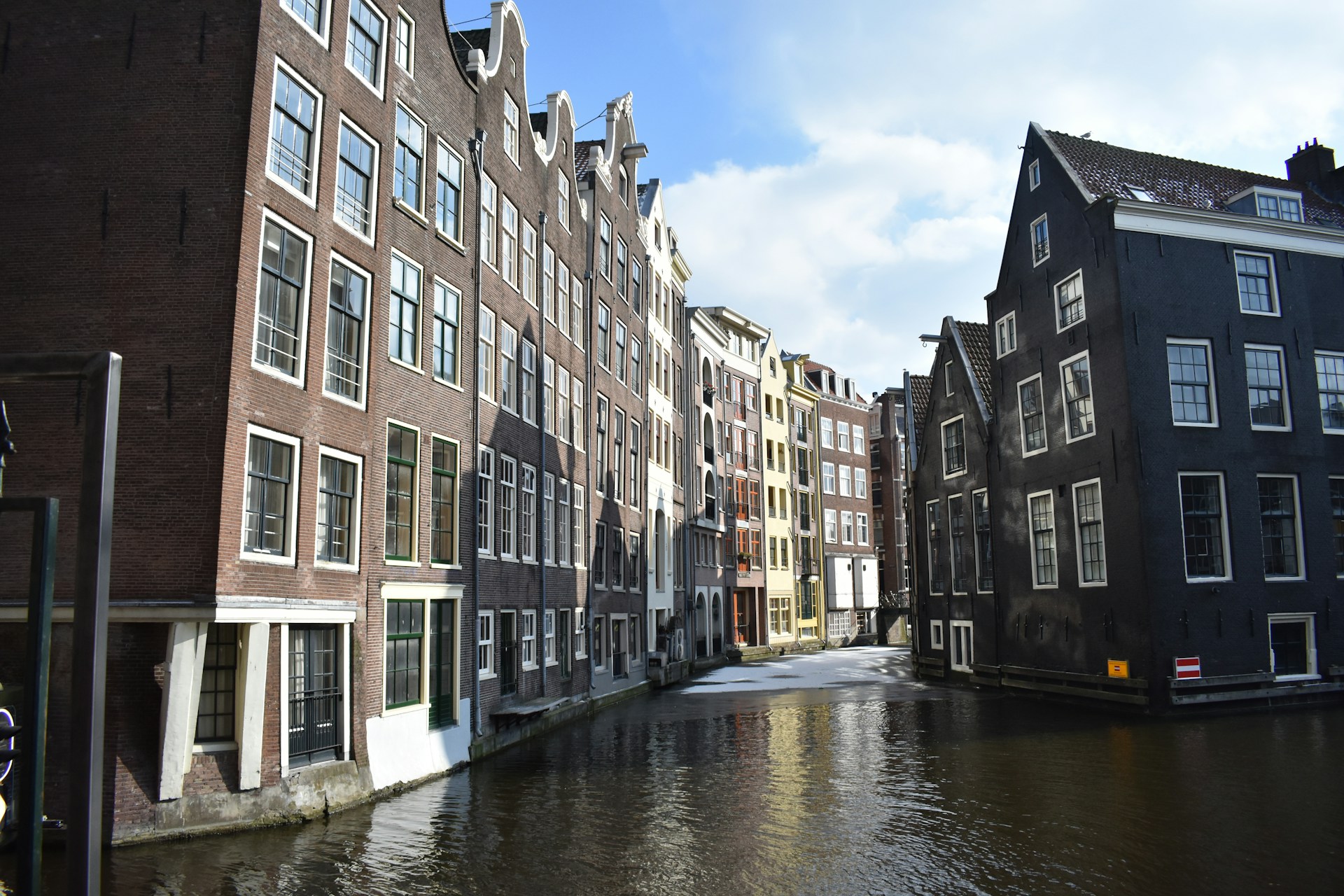
The southern end of this canal takes on a distinctly academic character, seamlessly blending into the historic campus buildings of the University of Amsterdam. A walk along this route provides a fascinating glimpse into the city’s dual nature, where quiet courtyards and scholarly institutions sit just steps away from lively late-night entertainment.
Google Maps
This interactive map pinpoints the ten most beautiful canals of Amsterdam, helping you easily navigate from the grand Golden Age rings to the quiet corners of the Jordaan. Use it to plan your perfect route and ensure you don’t miss any of these iconic, postcard-worthy waterways.
Google Maps
Navigate this interactive map by dragging to move and scrolling to zoom, or click any icon to reveal specific location details. To view the full legend or toggle different layers, select the menu icon in the top-left corner, or use the bracket in the top-right to expand the view to full-screen.
In Amsterdam, the river and canals have been central to city life for the last four centuries.
~Janet Echelman