



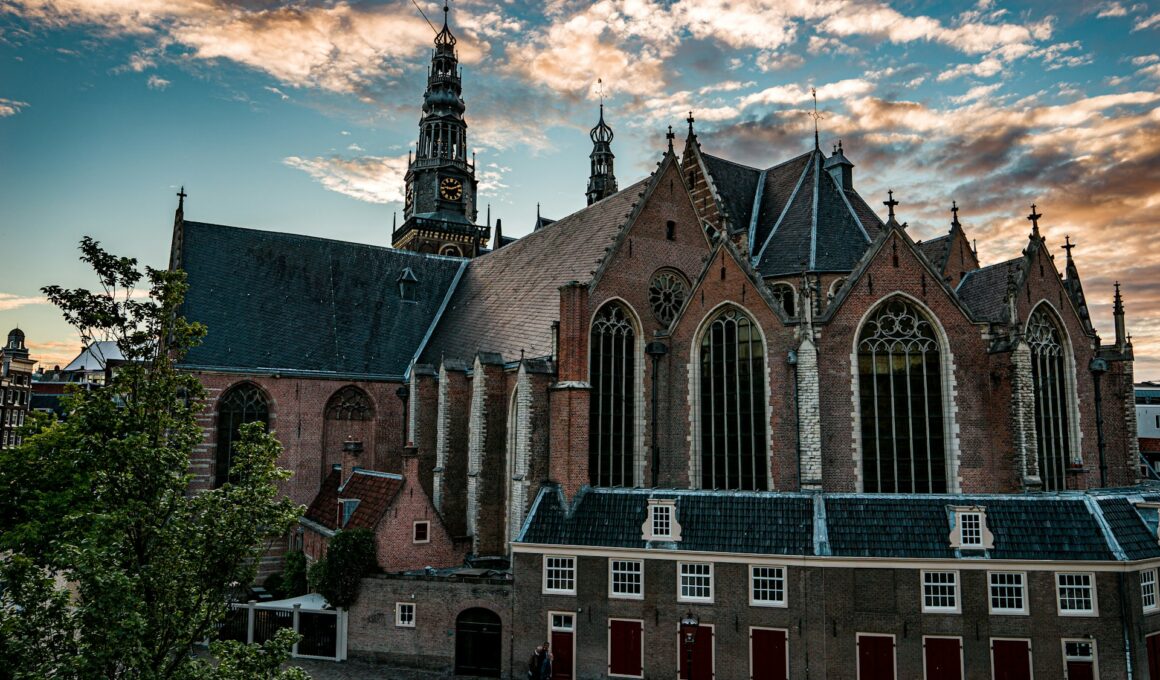
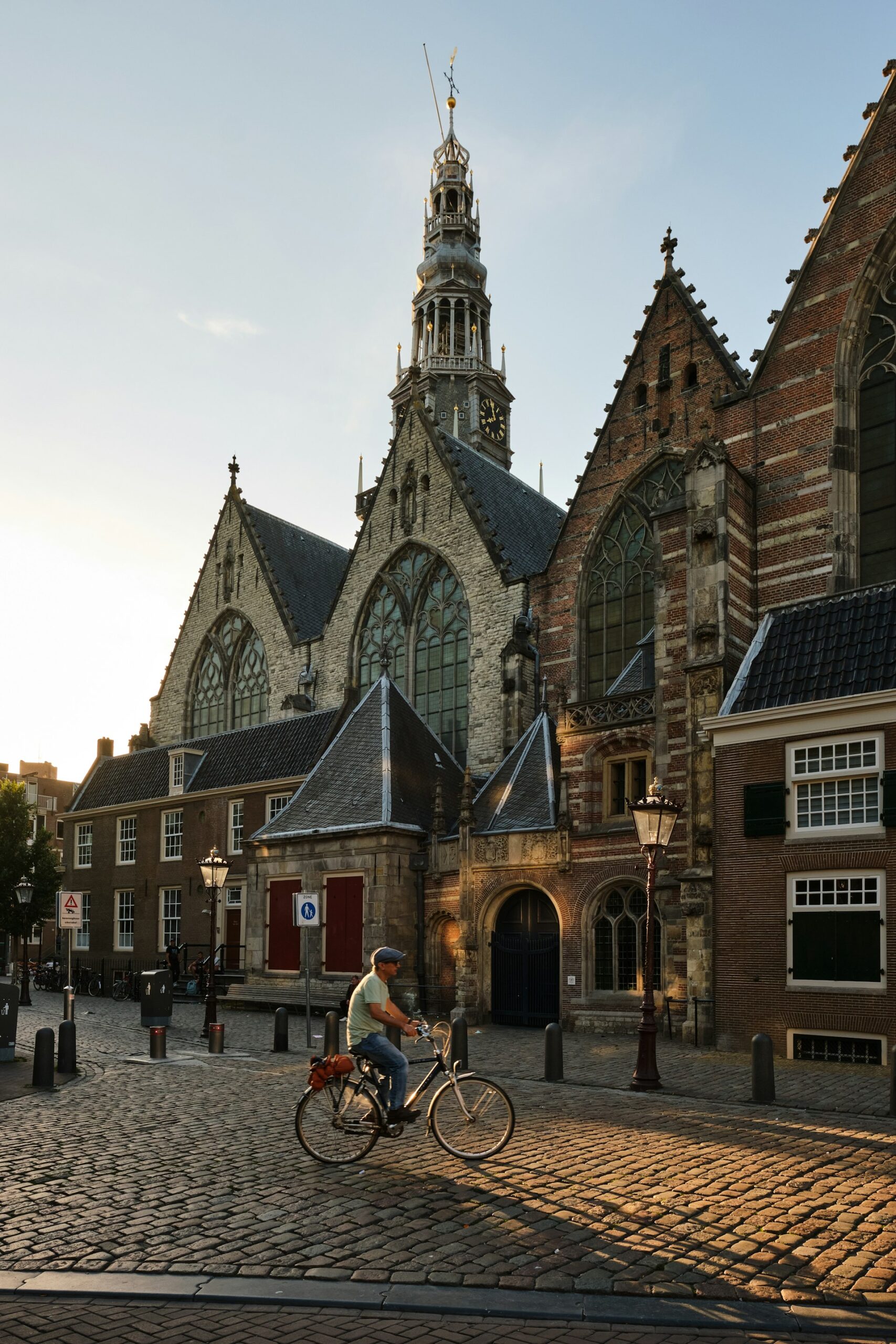
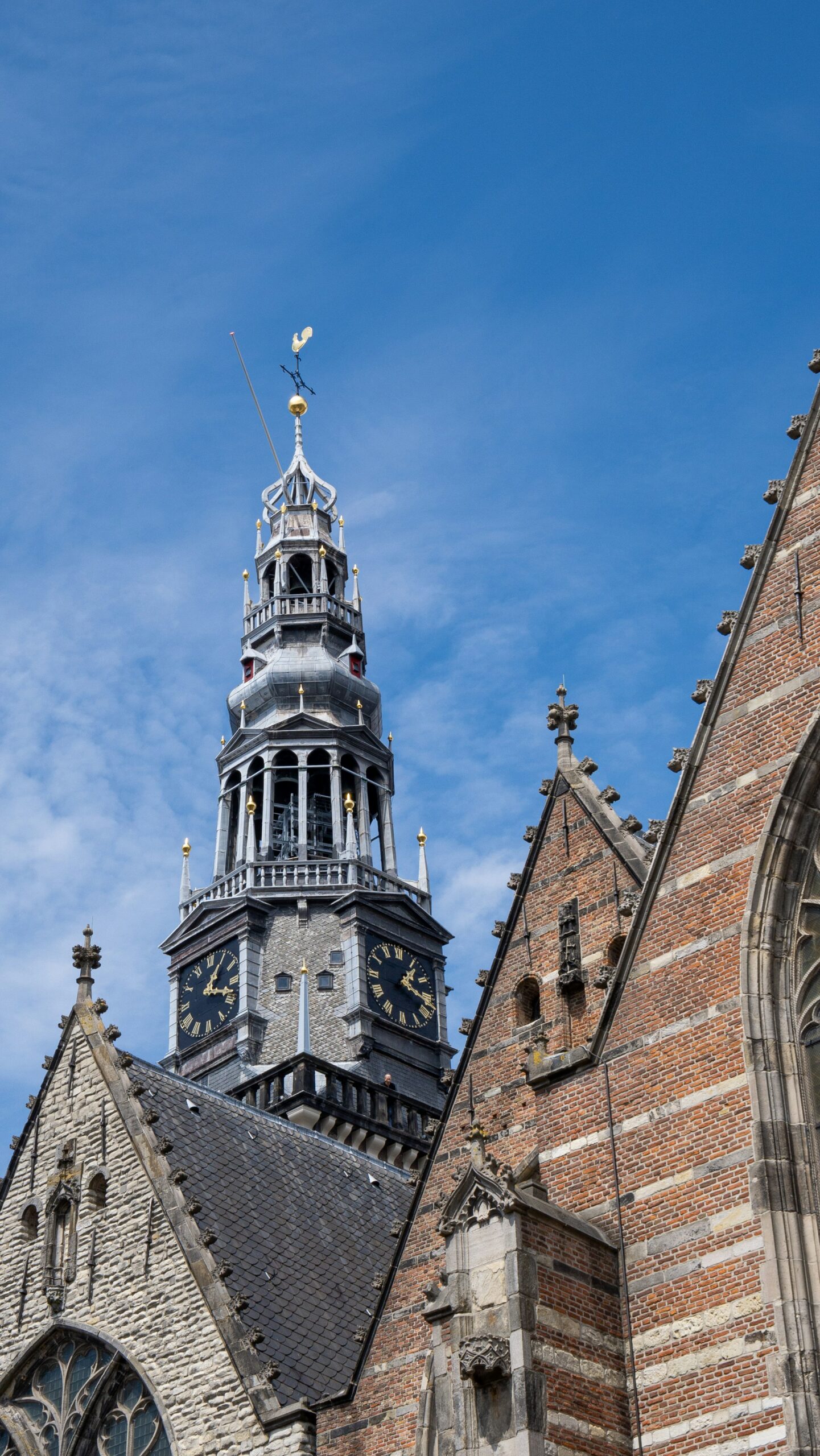
The Oude Kerk stands as the oldest building in Amsterdam and remains a functioning parish church today. It is located squarely in the center of the Red Light District, surrounded by narrow alleys and canal houses. You can easily find its massive bell tower rising above the medieval rooftops of the De Wallen neighborhood.
You should visit to admire the largest medieval wooden vault in Europe, which spans the entire nave. This historic monument holds the grave of Rembrandt’s wife, Saskia van Uylenburgh, among thousands of other local citizens. The interior offers a peaceful atmosphere with impressive stained glass windows and two world-class pipe organs.
Did You Know?
This ancient structure stands as the oldest building in Amsterdam and dates back to the early fourteenth century as a replacement for a wooden chapel.
History of The Oude Kerk
The story of Amsterdam begins here, on a sand ridge where the river Amstel flowed into the IJ. Originally a modest wooden chapel for fishermen, the Oude Kerk was consecrated as a stone structure in 1306 and dedicated to Saint Nicholas, the patron saint of sailors. As the settlement grew into a bustling trading port, this church became the spiritual anchor where merchants prayed for safe voyages and families buried their dead. It stands today as the oldest building in the city, a survivor of the fires and floods that claimed much of medieval Amsterdam.
During the Dutch Golden Age, the church expanded into a massive hall structure to match the city’s exploding wealth. Shipwrights constructed the soaring timber roof, which remains the largest medieval wooden vault in Europe and offers incredible acoustics. The interior changed forever in 1566 during the “Iconoclasm” (Beeldenstorm), when Protestant mobs stripped the Catholic statues and altars to create a sober Calvinist meeting place. For centuries afterward, the nave functioned as a public living room where citizens strolled, gossiped, and even conducted business.
The floor beneath your feet tells the personal history of these Amsterdam residents. The entire surface is paved with over 2,000 gravestones that cover the remains of more than 10,000 citizens, ranging from naval heroes to wealthy regents. The most famous resident is Saskia van Uylenburgh, the beloved wife of Rembrandt, who was laid to rest here in 1642. While the graves were cleared long ago, the worn inscriptions and dates still connect visitors directly to the people who walked these streets centuries ago.
Today, the Oude Kerk serves as a striking oasis of silence in the heart of the frantic Red Light District. It has reinvented itself as a leading institute for contemporary art, hosting site-specific installations that challenge the historic architecture and invite quiet contemplation. This unique blend of sacred heritage and modern creativity ensures the church remains a living, breathing part of the city rather than just a dusty monument to the past.
Did You Know?
Thousands of worn gravestones form the uneven church floor and cover the remains of over ten thousand Amsterdam citizens buried here across several centuries.
What to Expect
While the Oude Kerk may look austere at first glance, its true treasures are hidden in the details that survived centuries of religious upheaval. Missing these highlights means missing the stories of the sailors, bishops, and artists who transformed this wooden chapel into Amsterdam’s most important living room.
The Medieval Wooden Vault
Look up to see the largest medieval wooden roof in Europe, which still bears original 15th-century paintings of biblical scenes. These rare artworks were hidden under layers of blue paint for centuries, saving them from destruction during the Protestant Reformation.
Saskia van Uylenburgh’s Grave
Locate the humble gravestone marked “29 K” near the Weitkoperskapel to pay respects to Rembrandt’s beloved wife. She was buried here in 1642, and her death marked the beginning of the artist’s financial and emotional decline.
The Vater-Müller Organ
Dominating the west wall, this massive oak instrument from 1724 is famous for its deep, resonant sound. It replaced an earlier organ played by the legendary composer Jan Pieterszoon Sweelinck, whose own grave is hidden elsewhere in the church floor.
The Misericords
Walk into the choir area and peek underneath the folding wooden seats to find these hidden medieval carvings. The woodworkers created humorous and sometimes naughty figures to entertain the clergy who had to stand during long services.
The Stained Glass of the Lady Chapel
Admire the vibrant stained glass windows in the Mariakapel, particularly the “Death of the Virgin” by Dirck Crabeth from 1555. These are some of the few Catholic treasures that survived the iconoclasm, offering a rare glimpse of the church’s pre-Protestant glory.
The Iron Chapel (IJzeren Kapel)
Spot the heavy, armor-plated door that protects this small room, once the city’s most secure treasury. For centuries, this fireproof vault guarded Amsterdam’s most important charters, privileges, and secrets behind its complex system of locks.
Did You Know?
The massive wooden barrel vault ranks as the largest of its kind in Europe and still displays original medieval paintings from the fifteenth century.
Image Library
This photo library displays the magnificent Gothic architecture of Amsterdam’s oldest building. You can view the soaring wooden barrel vault, the largest in Europe, and the worn texture of the gravestone floor. Use these pictures to scout the best angles for architectural photography or to visualize the vast open space of the nave.
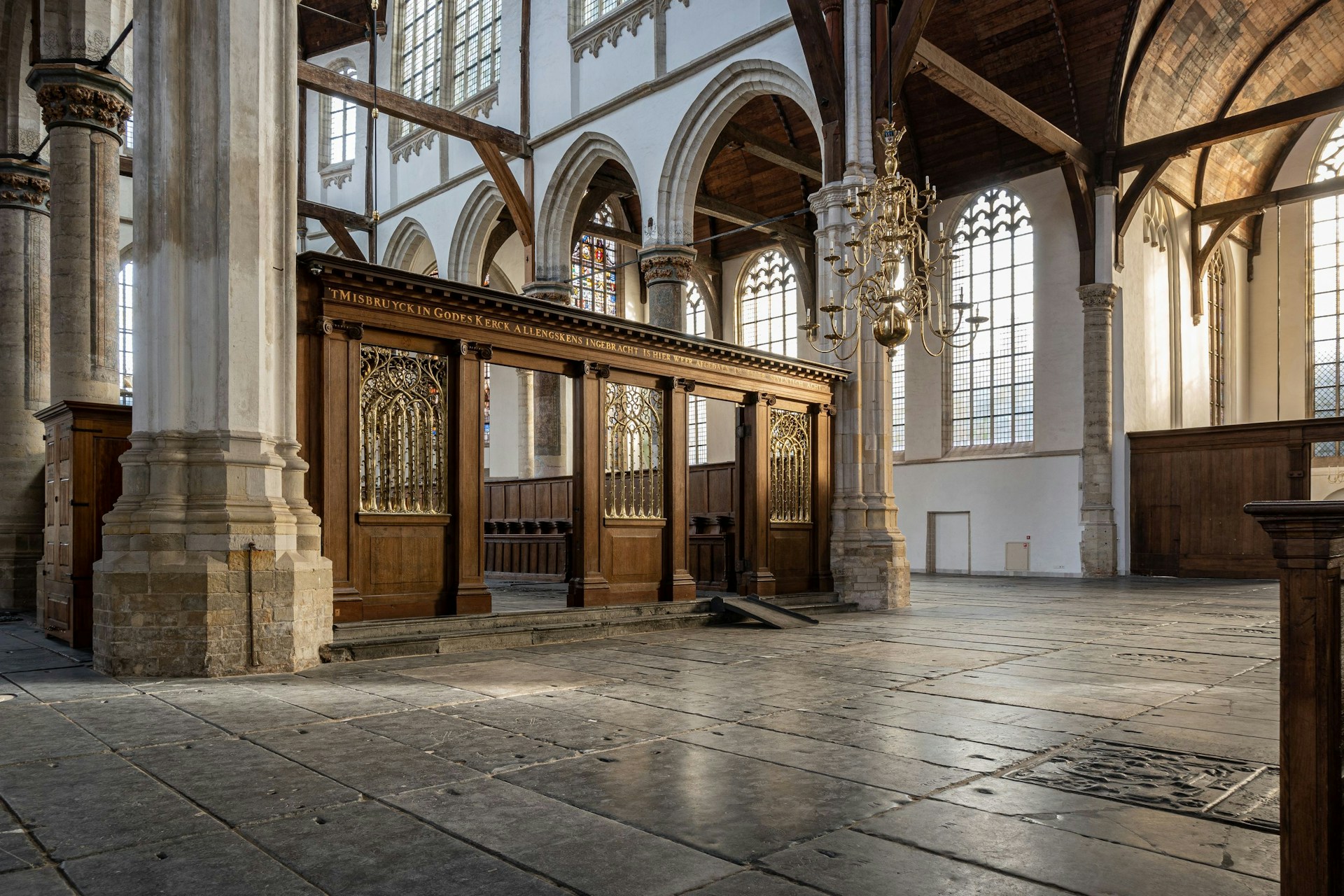
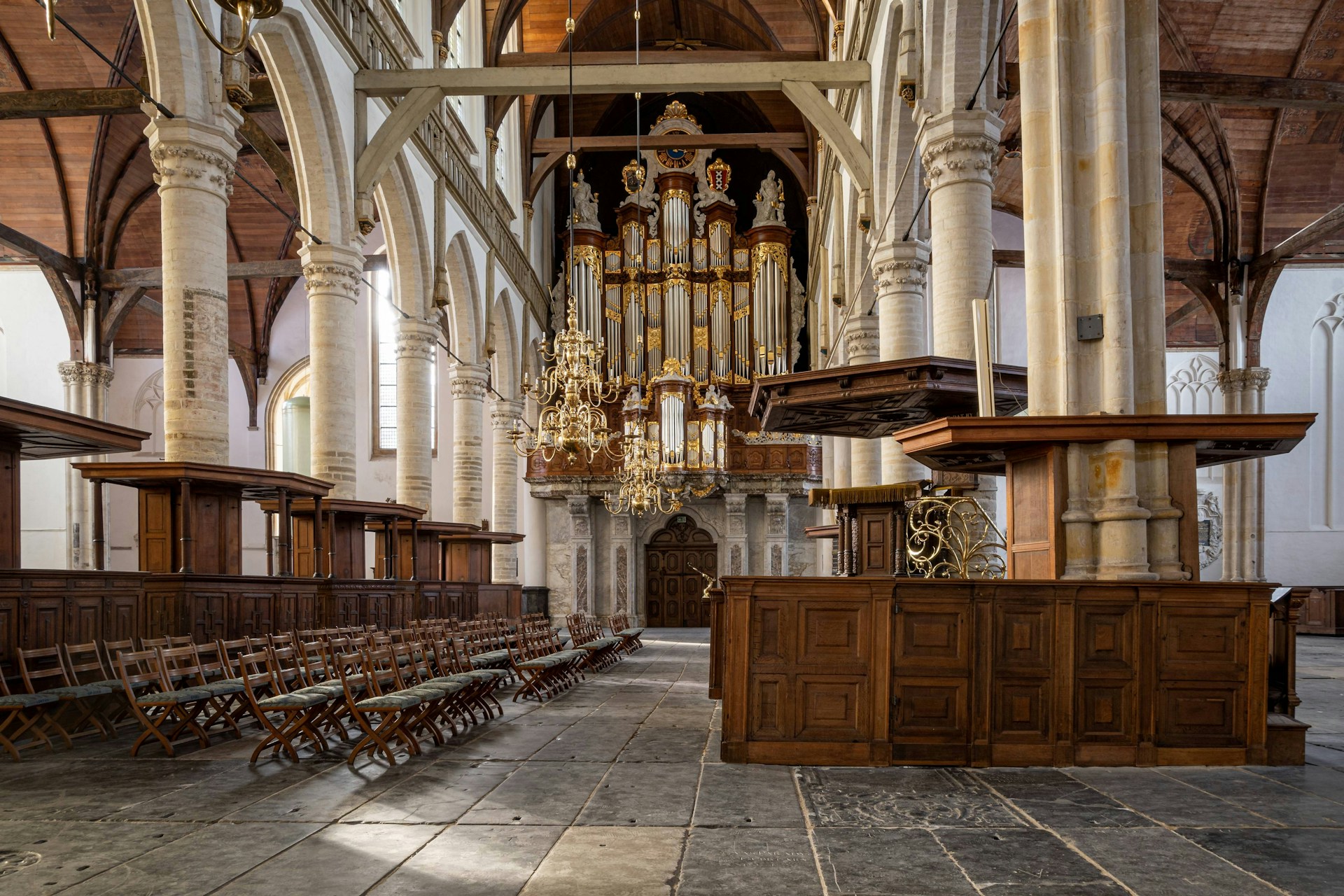
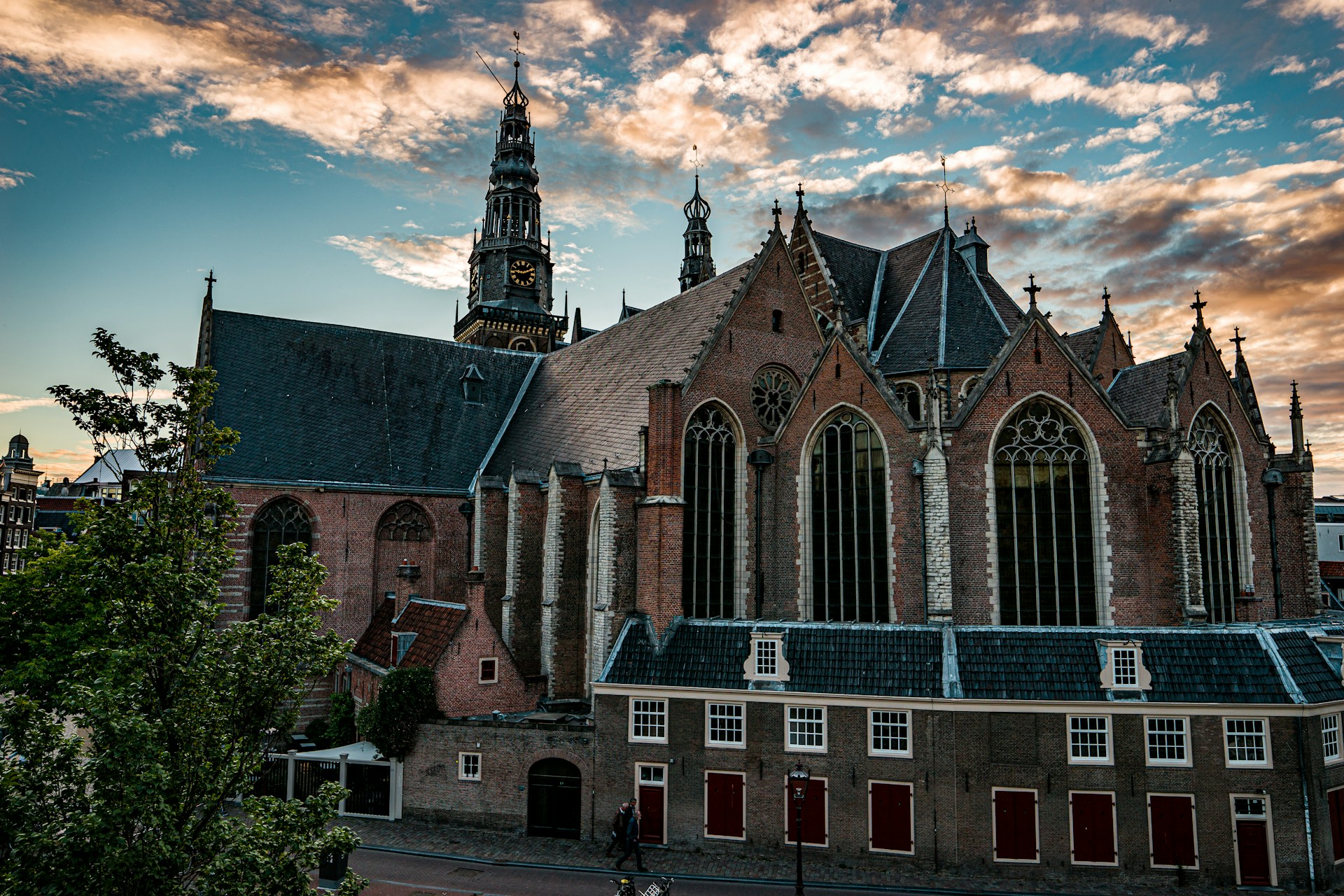
Use these images to understand the layout, historical details, and contemplative atmosphere before your visit or to revisit the experience afterward. They also show how changing light and the bustling Red Light District outside shape the mood of the ancient interior throughout the day.
Did You Know?
Rembrandt van Rijn buried his beloved wife Saskia here in 1642 within a shared grave location under the church floor near the small organ.
Book Tickets & Activities
The Oude Kerk utilizes a time slot system to maintain the building’s serene atmosphere and protect the historic interior. Booking tickets online in advance is recommended to secure your preferred entry time and bypass the ticket desk queues. Securing your admission early ensures a smooth visit and helps you organize your schedule around this serene sanctuary in the bustling Red Light District.
Tiqets.com
Tiqets.com is a reliable platform that offers entry tickets and additional packages for a unique experience. It provides options such as skip-the-line tickets, guided tours, or combination deals that include visits to iconic landmarks.
GetYourGuide.com
GetYourGuide.com is an excellent platform for securing your tickets. In addition to standard access, GetYourGuide offers comprehensive packages like private tours, bundled sightseeing passes, and much more.
Did You Know?
Medieval woodcarvers hid humorous and naughty figures called misericords under the folding choir seats to entertain the clergy during long and boring church services.
Location & Access
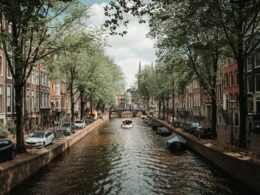
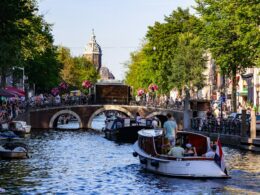
The Oude Kerk commands the cobblestoned Oudekerksplein in the heart of the De Wallen district, towering over the surrounding canals and alleyways. The medieval gothic structure stands as a silent sanctuary amidst the bustle of the Red Light District. Its central position makes it the historical anchor of Amsterdam’s oldest neighborhood and a convenient stop during a walking tour of the city center.
Travelers can easily reach the church via a short walk or the city’s public transport network. From Central Station, it is just a ten-minute walk through the historic streets to the entrance. Alternatively, you can take the Metro to Nieuwmarkt station or the North-South line to Rokin, both leaving you a brief stroll away. Trams stopping at Dam Square also put you within easy reach.
Driving is effectively impossible in this pedestrian-heavy zone, and street parking is non-existent. The nearest large garage is Q-Park de Bijenkorf, though fees are steep. Most smart travelers opt for Park + Ride facilities on the city outskirts to avoid the stress of navigating the narrow canal streets. Regardless of how you arrive, booking your ticket online is recommended to ensure smooth entry, even if it does not sell out as quickly as the major art museums.
Did You Know?
Protestant mobs stripped the interior of Catholic art in 1566 but failed to reach the ceiling paintings due to the extreme height of the roof.
Practical Information
Visiting the Oude Kerk requires a shift in mindset, as you are stepping from the chaotic Red Light District into a fragile, medieval monument. The building functions as both a museum and an art institute, meaning rules can shift depending on the current exhibition. Because the church is unheated and the floor is composed of uneven gravestones, your choice of clothing and footwear matters more here than in modern museums.
Accessibility & Practical Information
- Wheelchair Access: The church is accessible via a special ramp at the side entrance. Be aware that the floor consists of worn, uneven gravestones which can make maneuvering slightly bumpy.
- Cards Accepted: The Museumkaart (Museum Card) and I amsterdam City Card are both valid for entry. You must scan them at the desk to receive your ticket.
- Cashless Venue: The ticket desk and gift shop do not accept cash. Ensure you have a debit or credit card ready for payments.
- Audio Guide: A free audio tour (Soundwalk) is often available. Bring your own earphones and a fully charged smartphone to access the web-based player.
- Tower Access: Climbing the Oude Kerk tower is a separate experience run by a different organization. It requires a separate ticket and is not accessible for those with mobility issues due to steep, narrow stairs.
Tips & Warnings
- Mind Your Step: The floor is literally a carpet of gravestones that have shifted over centuries. Wear flat, comfortable walking shoes; high heels are dangerous and difficult to walk in here.
- Dress Warmly: The church is a massive stone cavern with very little heating. If you visit between October and April, keep your coat on—it is often colder inside than outside.
- Surroundings: The church is located in the center of the Red Light District. While the square itself is safe, be mindful of your pockets in the crowded alleyways leading to the entrance.
- Toilet Facilities: There are toilets available inside, but they are often located down a flight of stairs. Check for an accessible toilet near the entrance if needed.
- Sunday Hours: As it is still a consecrated church with an active congregation, it opens later on Sundays (usually after 13:00) to accommodate morning services.
Photography Tips
- Architecture: For the best shot of the wooden vault, lie your phone or camera on a bench (if permitted) or the floor looking straight up to capture the symmetry.
- Interior Light: The high windows provide beautiful natural light, but the corners can be dark. Increasing your ISO is better than using flash, which is generally prohibited.
- Respect the Art: When temporary art installations are present, check signage for specific photography restrictions, as some artists enforce a “no photo” policy.
- Strict Exterior Warning: Do not take photos of the red-lit windows or sex workers in the alleyways surrounding the church. This is strictly enforced by locals and police, and you risk a confrontation or a fine.
Did You Know?
The city government stored important charters and privileges for centuries inside the heavily armored Iron Chapel protected by a door with multiple intricate locks.
Contact Details
For general information about the church, the building, our program and activities:
E-mail: info@oudekerk.nl
Phone: (020) 625 82 84
Website: https://www.oudekerk.nl/
Address:
Oudekerksplein 23
1012 GX
Amsterdam
The Netherlands
Opening Hours: The Oude Kerk is open daily. Please check the official website for more details, since opening hours may vary on public holidays, during church services, and over December.
- Sunday: 13:00 to 17:30
- Monday to Saturday: 10:00 to 18:00
Did You Know?
The church sits directly in the center of the Red Light District causing a sharp contrast between the sacred silence inside and the neon windows outside.