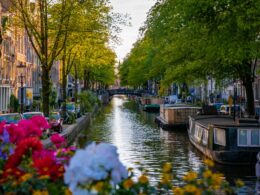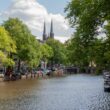



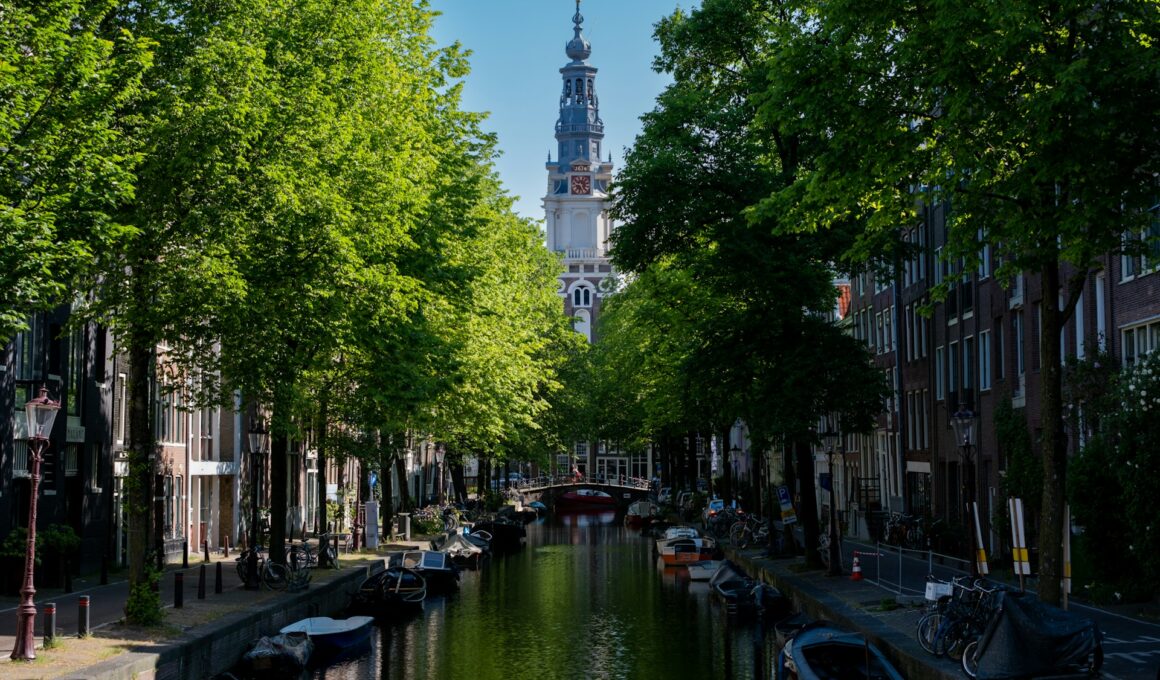
The Groenburgwal Canal is a peaceful canal located in the old city center, connecting the Raamgracht to the Amstel River. It sits quietly behind the bustling Zuiderkerk, offering a serene escape just steps away from the busy Nieuwmarkt district. The waterway is lined with historic brick houses and features a direct view of the elegant church spire rising above the trees.
French Impressionist Claude Monet famously painted this exact view in 1874, capturing the reflection of the tower in the calm water. Originally dug as a defensive moat and used by textile dyers, the canal now offers one of the most romantic and photogenic spots in Amsterdam. You should stand on the southern wooden drawbridge to see the perfect alignment of the spire, the water, and the classic Dutch architecture.
Did You Know?
French Impressionist Claude Monet visited this specific canal in 1874 to paint the famous view of the Zuiderkerk tower reflecting in the water.
History of the Canal
This quiet waterway offers one of the most painted views in Amsterdam, yet it began as a defensive moat outside the city walls. Originally dug in the late 16th century to protect the city, the canal was incorporated into Amsterdam during the expansion of 1593.
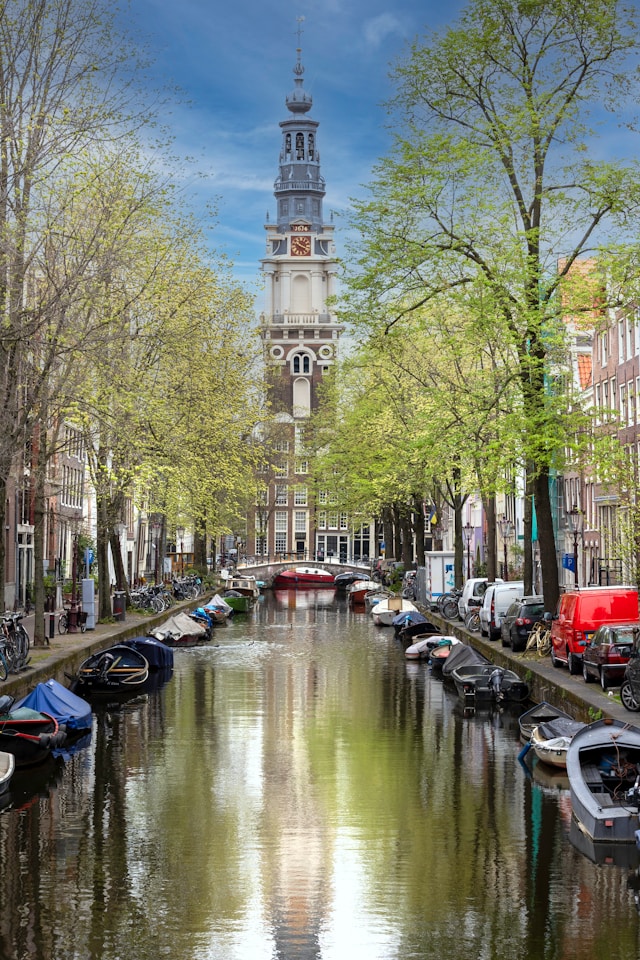
It served as a functional harbor for timber merchants and textile dyers, industries that gave the water a distinct, often colorful, character compared to the patrician canals nearby.
The canal owes its name to the Groene Burg (Green Rampart), referencing the grassy earthen walls that once fortified this edge of the city. As the textile industry moved out in the 17th century, the Groenburgwal transformed into a residential area for artists and merchants. Its relatively wide water and lower quays distinguish it from the tighter, busier canals of the Red Light District just a few blocks away.
The view looking north towards the Zuiderkerk tower is the canal’s claim to fame. This perfectly framed perspective captivated the French Impressionist Claude Monet, who immortalized it in his 1874 painting The Zuiderkerk, Amsterdam. Today, it remains a favorite spot for photographers who want to capture the graceful spire reflecting in the calm water without the obstruction of parked houseboats.
Unlike the grand Grachtengordel, the Groenburgwal retains a peaceful, village-like atmosphere. It survived the tumultuous history of the surrounding Jewish Quarter during World War II and the threatened metro construction of the 1970s. Modern visitors come here to escape the crowds and experience a silent, scenic pocket of the old city that looks almost exactly as it did in Monet’s time.
Did You Know?
Locals originally called this waterway the Verversgracht because textile workers washed and dyed their wool in these waters during the seventeenth century.
What to Expect
This quiet canal is easy to overlook as you rush between the Amstel and Nieuwmarkt, but it hides one of the most celebrated views in art history. You need to pause at specific bridges and look back to catch the perfect alignment of water and architecture. Ignoring these details means missing the scene that captivated French Impressionists and defines the romantic image of the city.
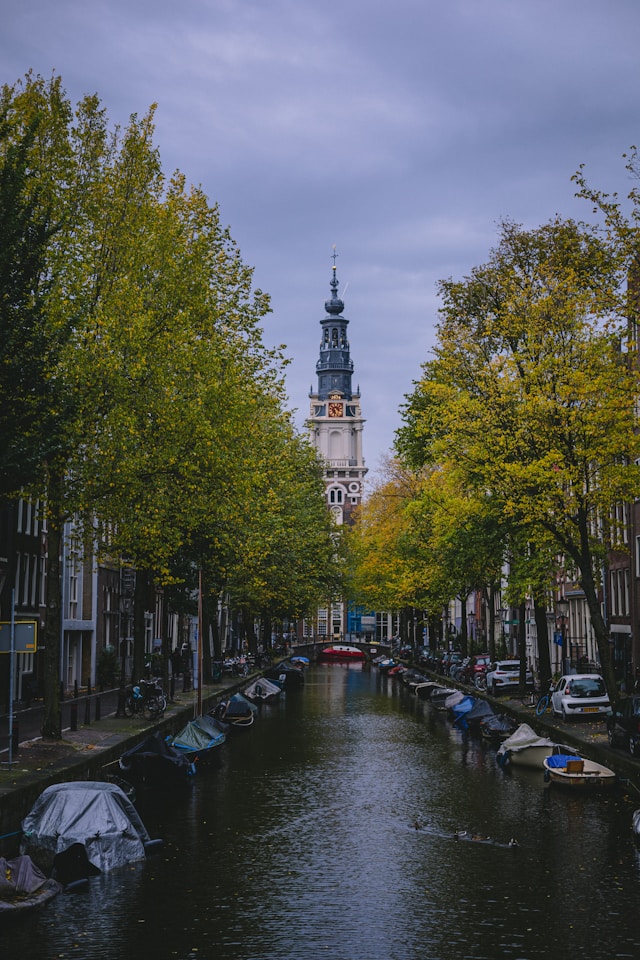
The Monet View
Walk to the wooden drawbridge on the southern end to see the Zuiderkerk tower rise directly above the water. This is the exact perspective Claude Monet painted in 1874 to capture the shimmering reflections of the spire.
Staalmeestersbrug
Inspect the railings of this bridge to see thousands of padlocks left by couples from around the world. The romantic setting and quiet water make this a popular spot for lovers to leave a permanent mark on the city.
Raamgracht Junction
Look for the corner where the Groenburgwal meets the Raamgracht to understand the area’s industrial past. Textile workers once used the “ramen” (wooden frames) on these quays to stretch and dry their dyed cloth in the open air.
Walking in Monet’s Footsteps
Claude Monet arrived in Amsterdam in 1874, seeking new inspiration away from the French countryside. He was fascinated by the interplay of light and water in the Dutch capital, a theme that defined his emerging Impressionist style. During this prolific trip, he produced twelve paintings that captured the city’s unique atmosphere, focusing less on grand monuments and more on the shimmering reflections in the canals.

The Groenburgwal, with its calm water and perfect framing of the skyline, offered the ideal subject for his study of light and color.
In his painting The Zuiderkerk, Amsterdam (1874), Monet positioned himself near the Staalstraat to look down the length of the Groenburgwal. He used loose, rapid brushstrokes to depict the towering spire of the Zuiderkerk rising above the dark canal houses.
The water takes center stage in the composition, acting as a rippling mirror that distorts the architecture into a haze of yellows and greys.
Rather than painting every brick with precision, he captured the mood of a clouded Dutch day, where the pale sky and the canal seem to merge into one fluid scene.
Did You Know?
The name Groenburgwal refers to the grassy earthen ramparts that protected the city limits before the massive expansion of the canal ring began.
Image Library
This photo library displays the quiet beauty of one of Amsterdam’s most painted waterways. You can view the famous Zuiderkerk tower reflecting perfectly in the canal, exactly as Claude Monet captured it in 1874. The images showcase the historic brick houses and wooden drawbridges that give this neighborhood a village-like atmosphere.
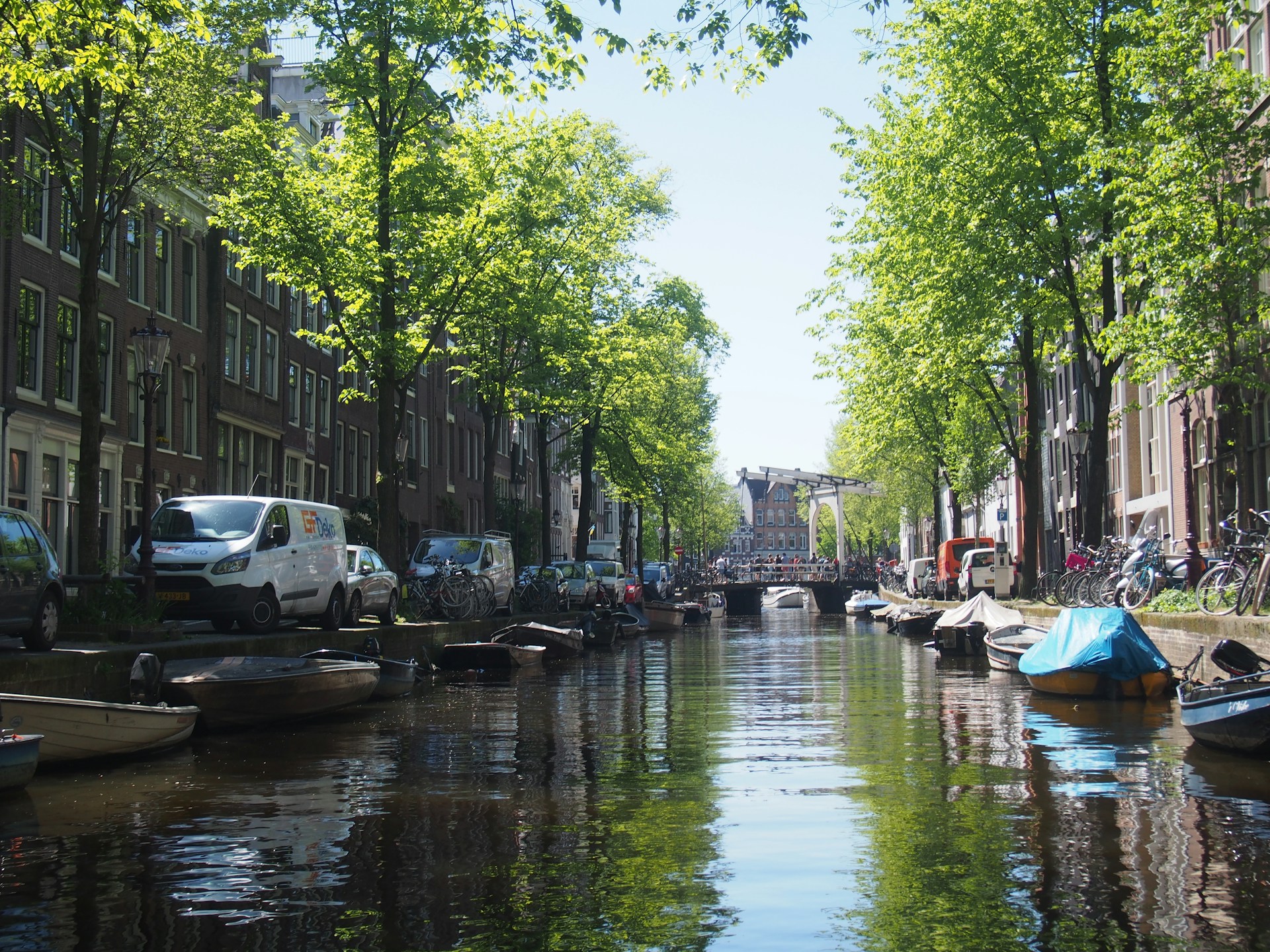
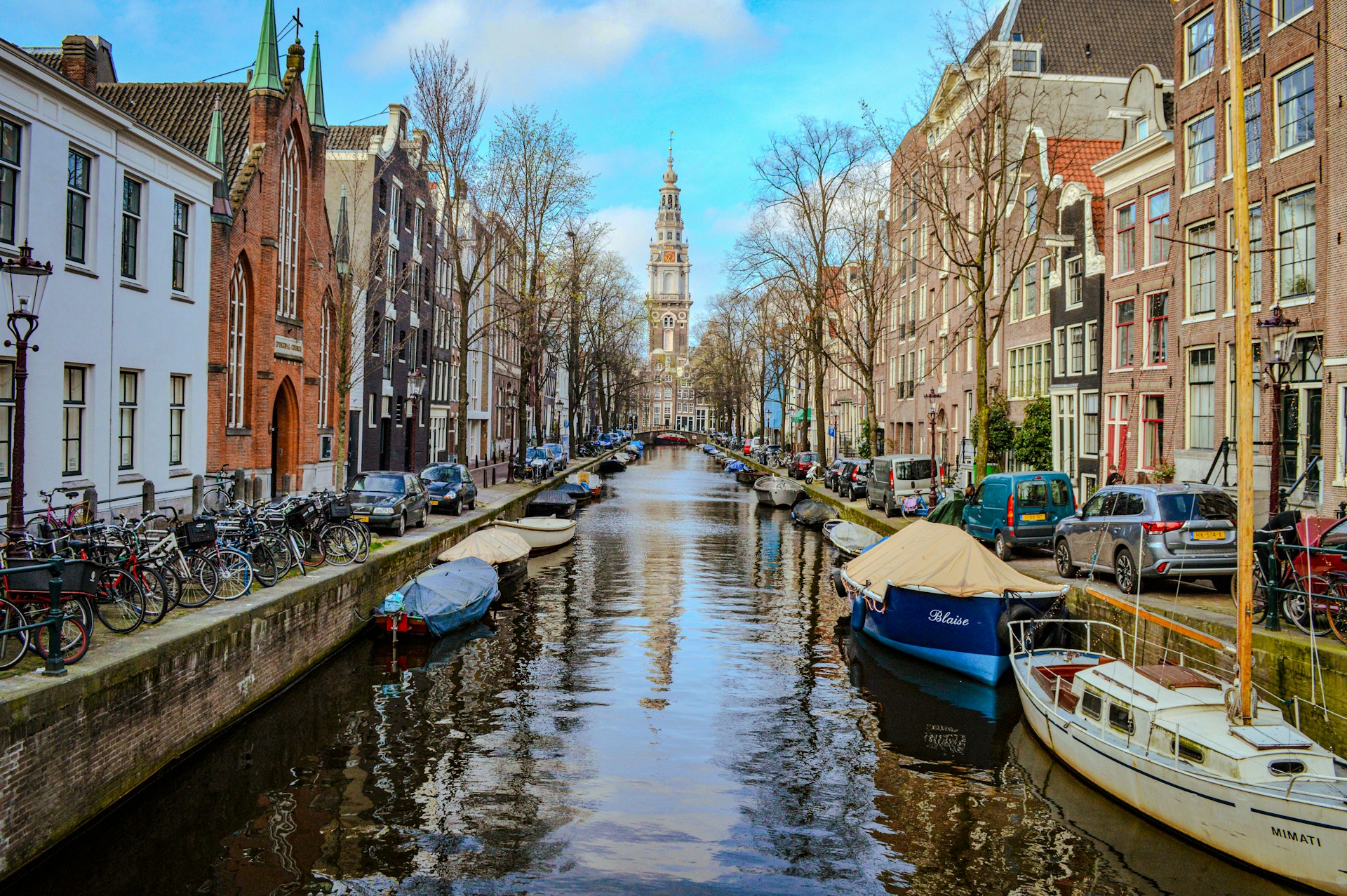
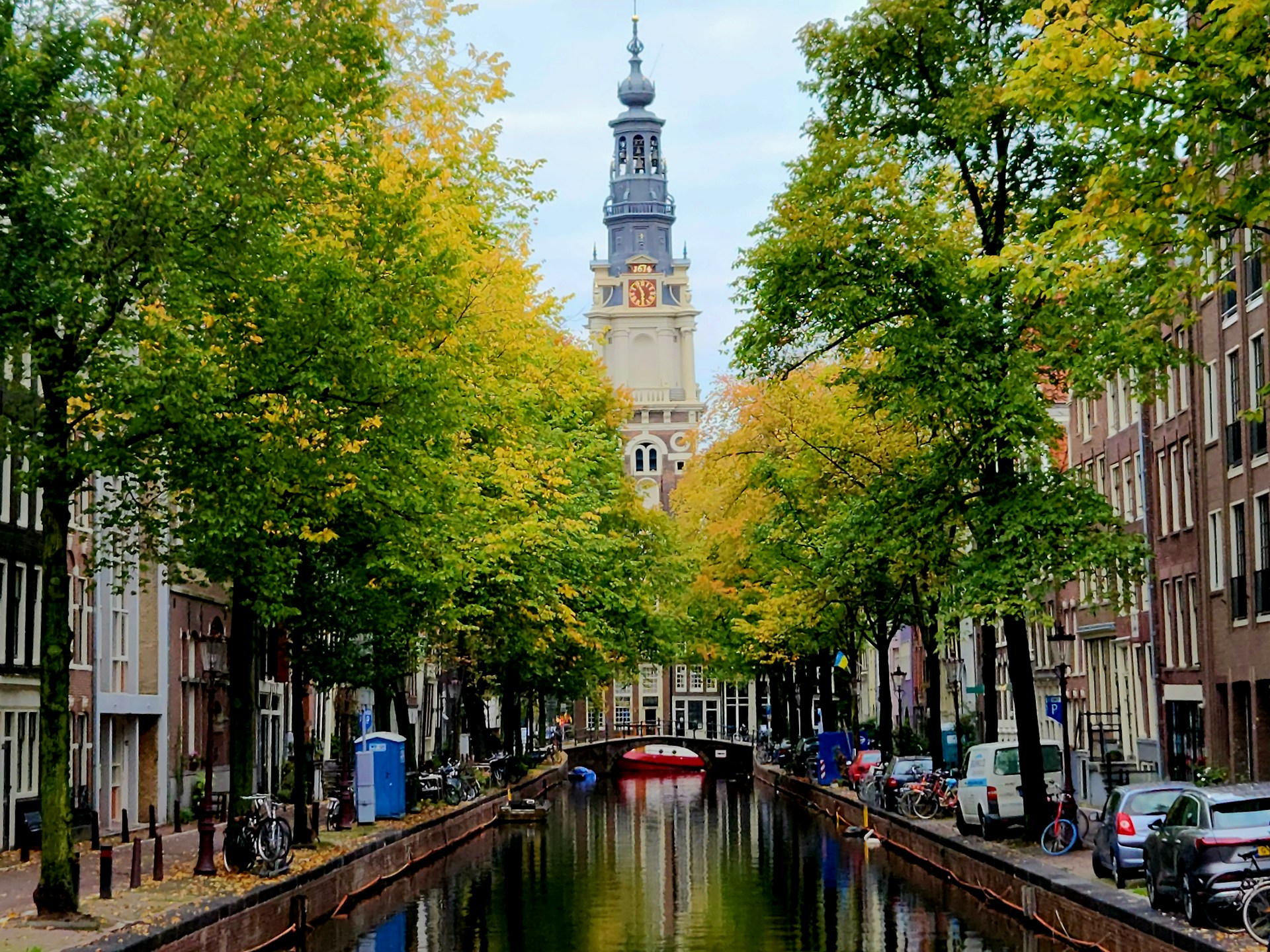
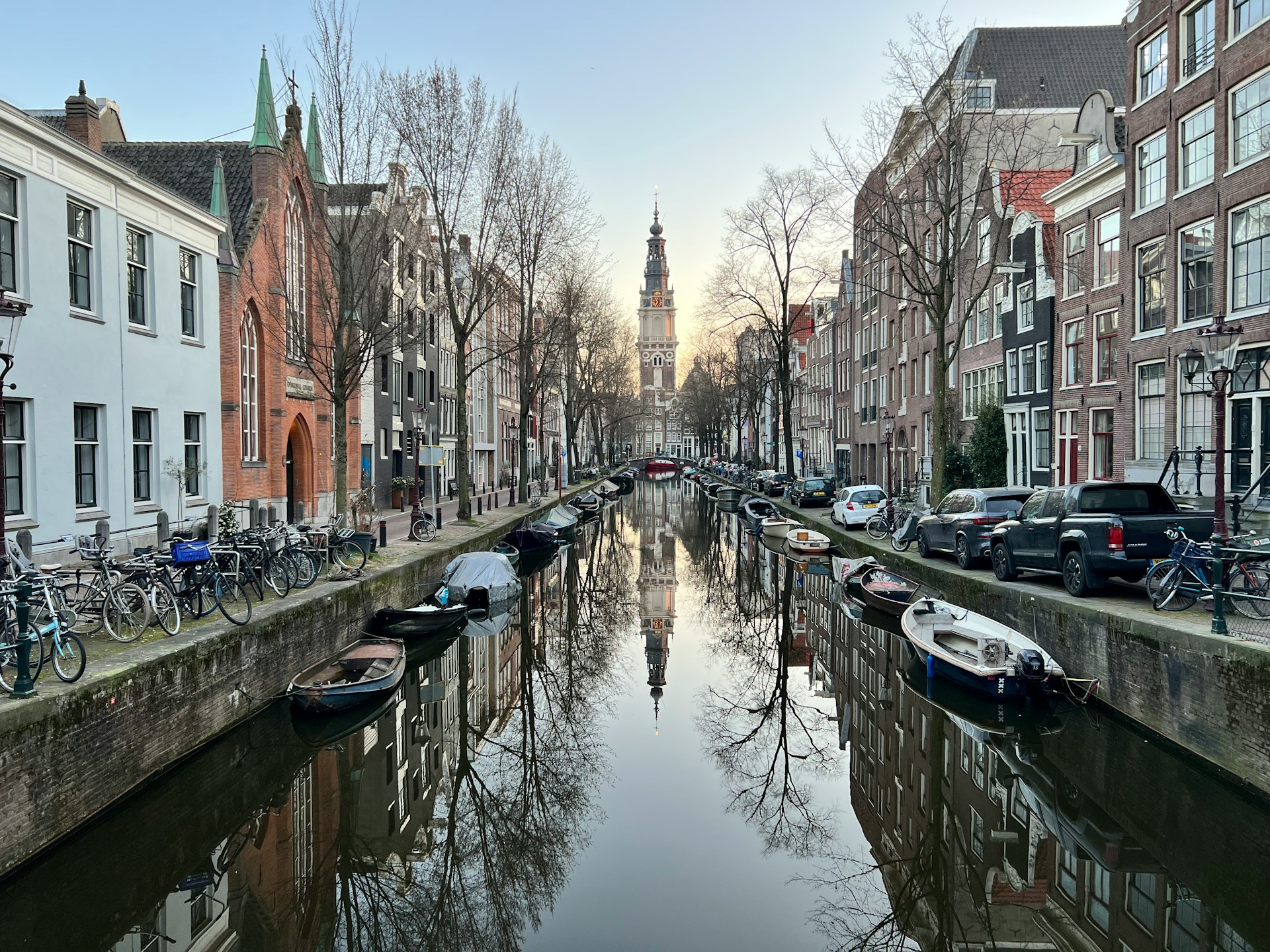
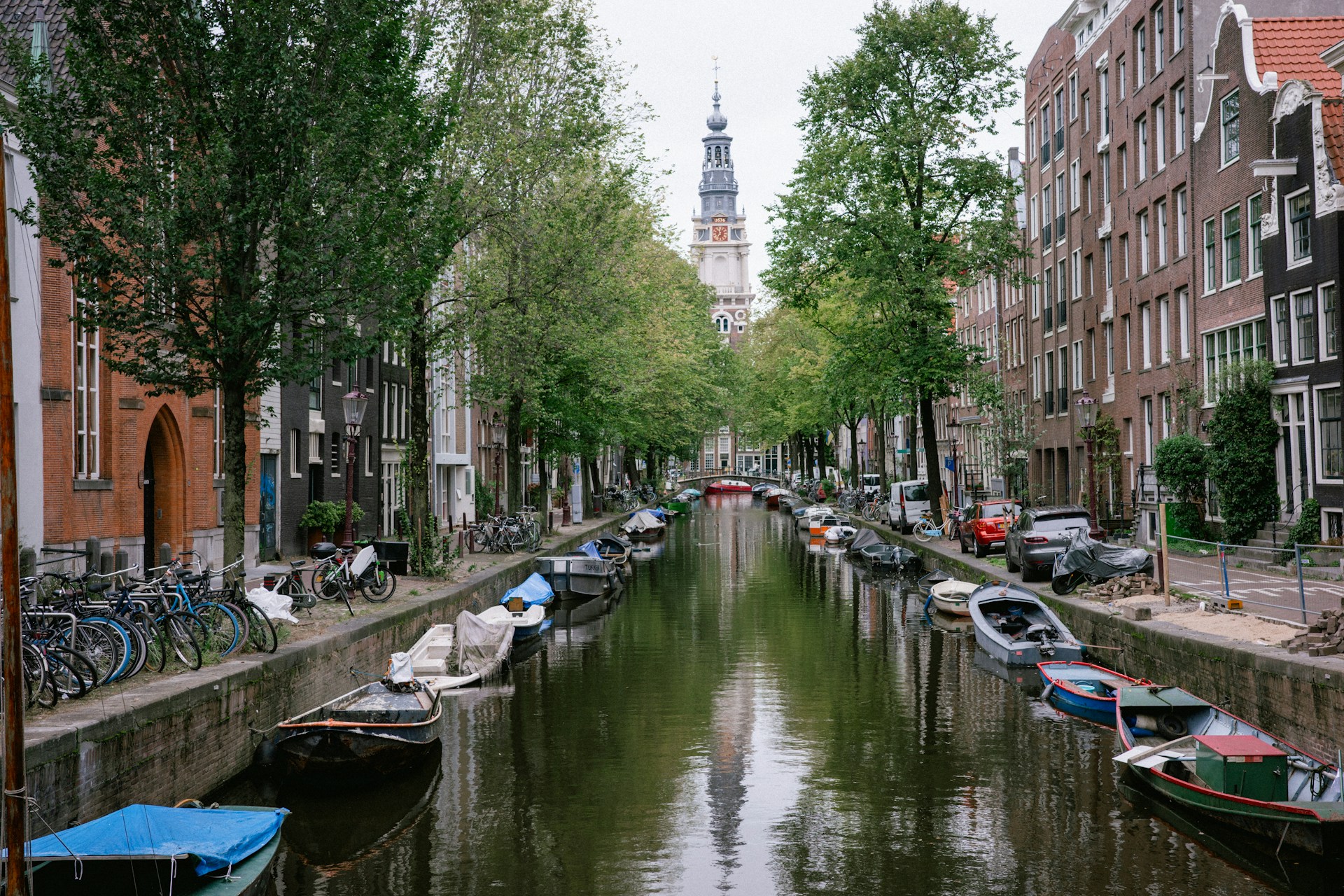
Use these pictures to scout the best angles for your own photography or to visualize the peaceful setting before you arrive.
Did You Know?
The canal water frequently changed color during the Golden Age depending on the specific dyes the textile workers dumped into the flow that day.
Location & Access
Getting to this quiet corner of the city is surprisingly easy, as it sits tucked just behind the bustling Nieuwmarkt square and the Amstel River. While it feels like a hidden village, the Groenburgwal is only a short stroll from major landmarks, making it a perfect detour during a tour of the historic center.
Did You Know?
Couples flock to the wooden drawbridge at the southern end to hang love locks and capture the romantic reflection of the church spire.