



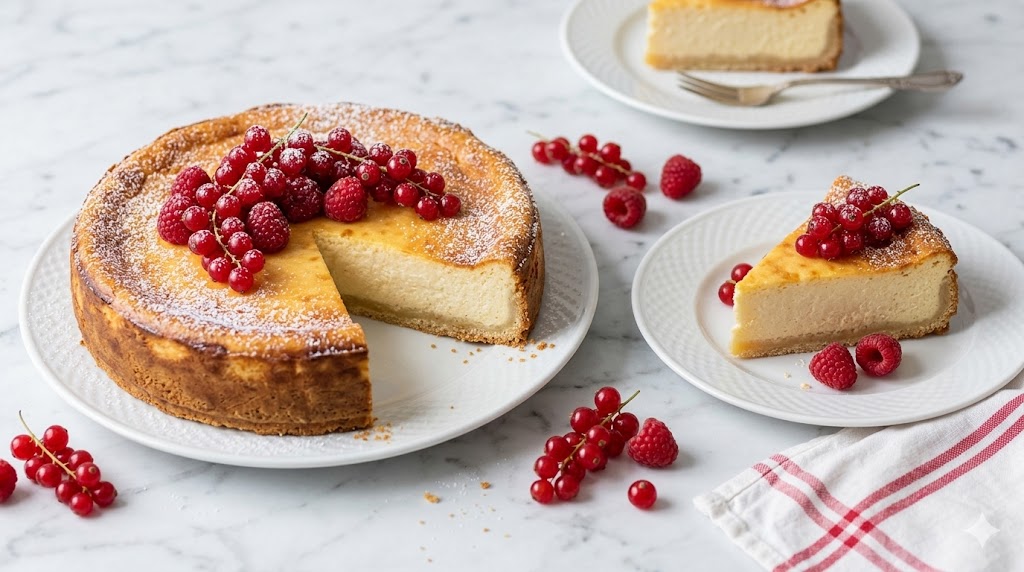
Germany offers hungry travelers much more than just savory sausages and giant pretzels. Local bakers craft incredible traditional desserts that highlight centuries of rich food history. You will discover everything from rich chocolate cakes in the south to sweet berry puddings in the north. Travelers can grab a sugary Berliner from a street cart or buy spiced Lebkuchen at a festive winter market. You might even pause your sightseeing to enjoy a slice of Bienenstich at a neighborhood bakery.
Taste these top ten mouthwatering German treats to make your European vacation truly unforgettable.
Life is uncertain. Eat dessert first.
~ Ernestine Ulmer
Black Forest Cake
Bakers in the early 20th century created the recipe specifically to highlight the region’s famous cherry brandy, known as Kirschwasser. The German government actually protects the cake’s authenticity today. German baking laws dictate that bakeries cannot legally sell a cake under the name “Schwarzwälder Kirschtorte” unless they soak the sponges in real Kirschwasser.
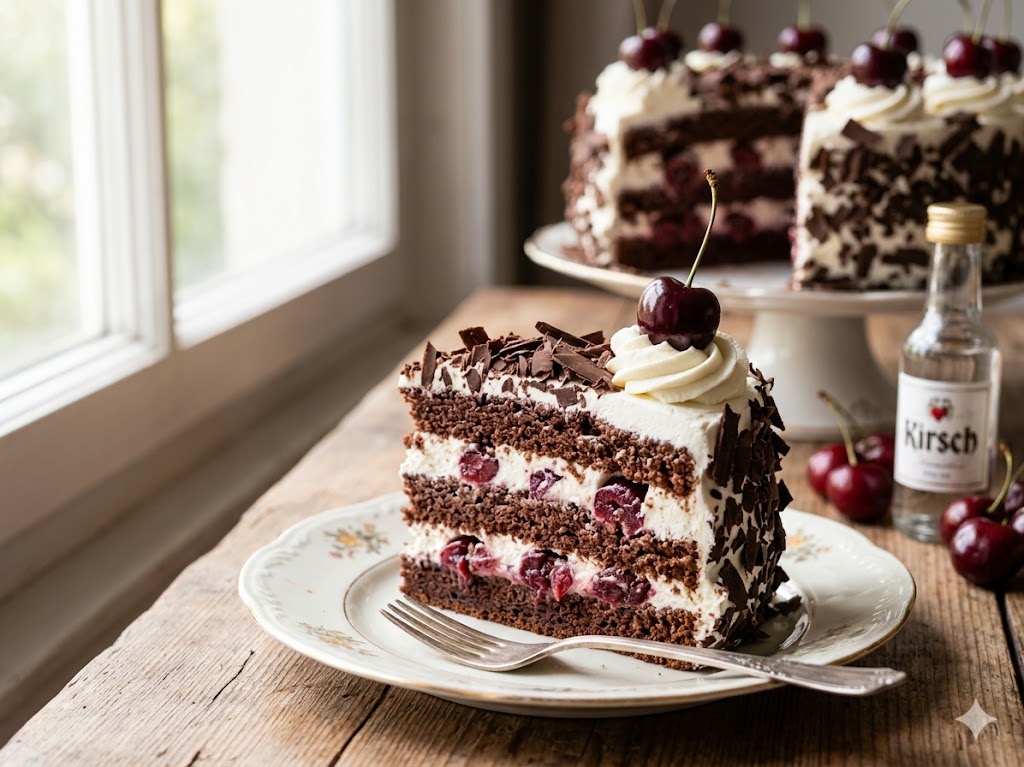
The german name, Schwarzwälder Kirschtorte, translates directly to Black Forest Cherry Torte. It takes its name from the Black Forest mountain range in southwestern Germany, where locals have distilled the tart cherry spirit for centuries.
German Name: Schwarzwälder Kirschtorte
Jelly Doughnut
A popular legend claims a patriotic baker from Berlin invented the treat in 1756 while serving as a field baker for the Prussian army under Frederick the Great. Because he lacked an oven, he fried the yeast dough over an open fire in pans of hot fat.
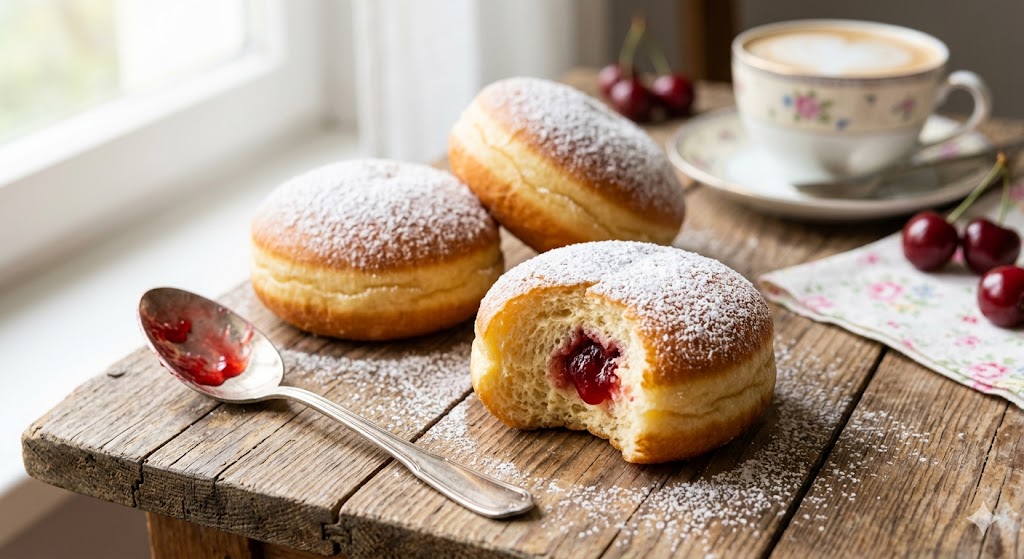
Today, Germans consider the Berliner a massive cultural staple. Bakeries across the country sell them year-round, but Germans consume them in massive quantities during specific traditional holidays, particularly New Year’s Eve (Silvester) and the Carnival season (Fasching or Karneval).
German Name: Berliner Pfannkuchen
German Spice Cookie (Gingerbread)
Monks in the Franconian city of Nuremberg first baked these heavily spiced honey cakes during the 13th century. They utilized the city’s position on major trade routes to access rare spices like cardamom, cloves, and cinnamon.
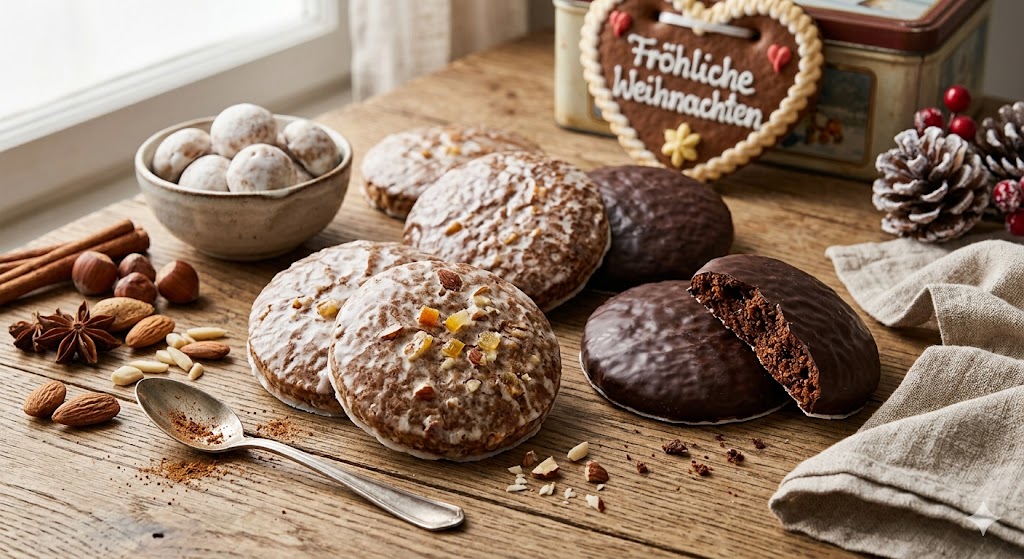
Today, Germans consider Lebkuchen the ultimate holiday sweet. Vendors sell large, decorated, heart-shaped versions at every winter Christmas market across the country. The European Union even protects the famous Nürnberger Lebkuchen with a special geographic indication status. This strict law ensures that bakers can only use that prestigious name if they bake the treats entirely within the city limits of Nuremberg.
German Name: Lebkuchen
Bee Sting Cake
Bakers make this classic treat by splitting a soft yeast cake and filling the middle with a thick layer of rich vanilla custard or buttercream. They finish it by baking a crunchy, sticky crust of caramelized honey and sliced almonds right onto the top layer.
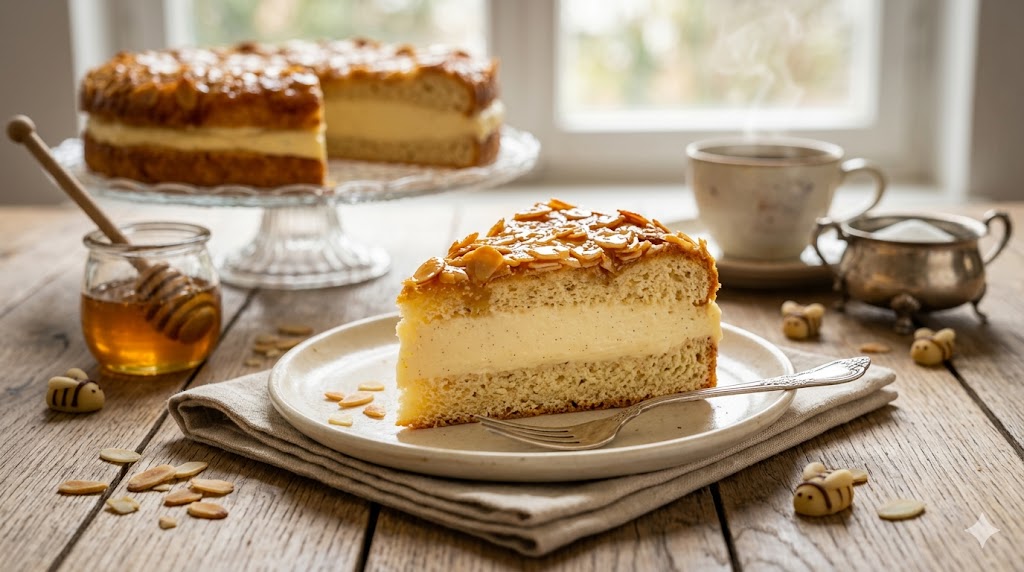
A famous local legend explains the funny name. Hundreds of years ago, bakers in the German town of Andernach supposedly threw heavy beehives over the city walls to drive away invaders from a neighboring town. The attackers ran away covered in bee stings, and the happy bakers created this sweet, honey-topped cake to celebrate their successful defense.
German Name: Bienenstich
German Christmas Bread
Bakers shape this dense, yeast-based fruit bread to represent the baby Jesus wrapped in swaddling clothes. They pack the dough with candied citrus peel, raisins, and chopped almonds, and sometimes roll a sweet rope of marzipan into the center. Finally, they cover the baked loaf completely in a thick layer of white powdered sugar to preserve it for weeks.
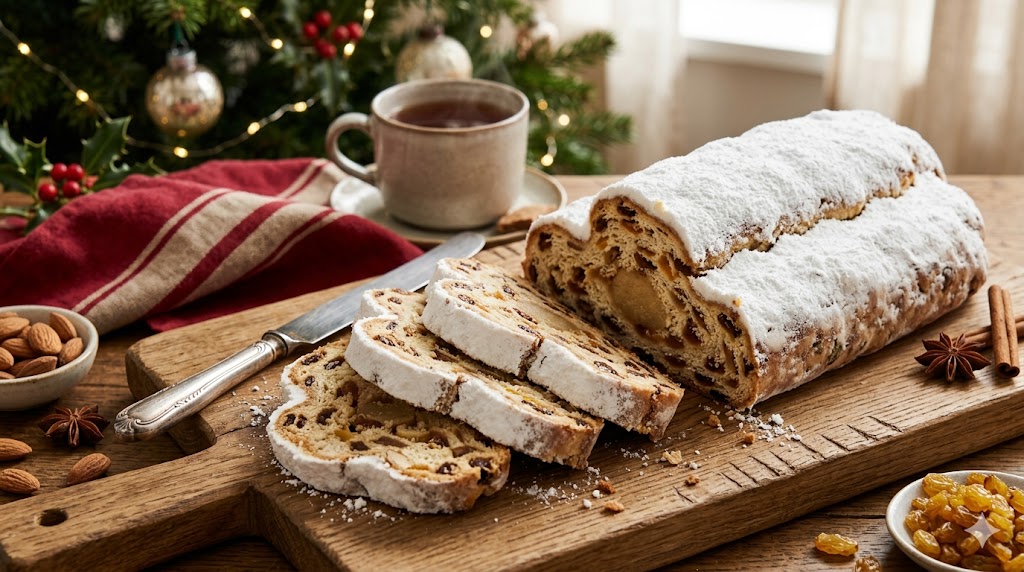
Historic records from the city of Dresden first mention this winter treat in 1474. Originally, the Catholic Church forced bakers to make it using only flour, yeast, and water as a strict fasting food for Advent. However, in 1490, the Pope famously sent a “Butter Letter” that finally allowed German bakers to use rich butter in the recipe.
Today, the European Union protects the famous Dresdner Christstollen with a special geographic indication status. This strict law ensures that only bakers working in the Dresden region can sell their holiday cakes under that prestigious name.
German Name: Stollen (Christstollen)
Poppy Seed Cake
Bakers build this unique treat by spreading a massive, dark layer of sweetened ground poppy seeds over a soft yeast dough base. They often finish the heavy pastry by baking a layer of buttery crumbles, called Streusel, right onto the top.
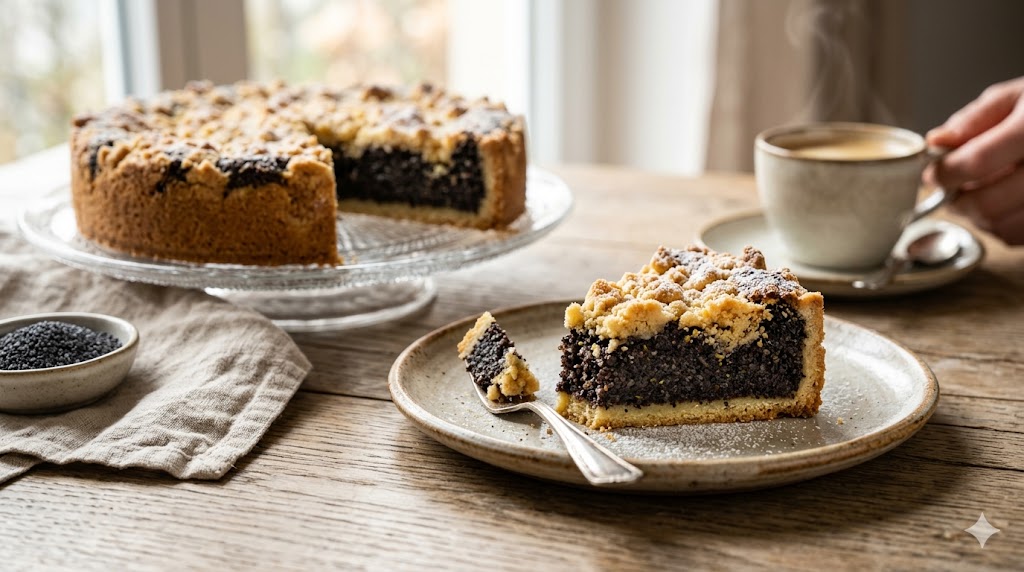
The crushed poppy seeds give the dessert a rich, earthy, and slightly nutty flavor that surprises many foreign visitors. Local families love to eat generous slices of this hearty, filling cake during their daily afternoon coffee break.
German Name: Mohnkuchen
Red Berry Pudding
Cooks in northern states like Hamburg first created this sweet fruit dish centuries ago. They simmer a fresh mix of red cherries and bright raspberries until the tart juices form a thick jelly. Families always chill this compote before serving it.
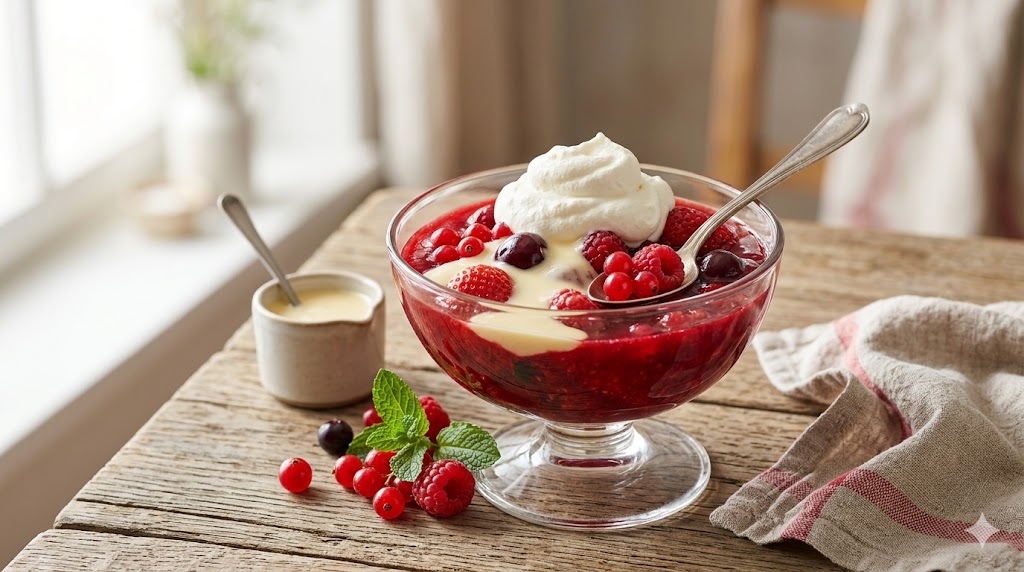
The historic name translates directly to red groats. Early chefs used heavy crushed grains to thicken the sweet berry juices. Modern cooks use simple cornstarch instead to create a lighter texture today. People usually pour warm vanilla sauce or cold liquid cream over the dish to balance the sour fruit.
German Name: Rote Grütze
King of Cakes (Tree Cake)
The name translates directly to Tree Cake. It gets this name from its unique, labor-intensive baking process. Instead of baking the dough in a pan, a baker brushes thin layers of liquid batter onto a thick wooden spit rotating in front of an open heat source. As each layer turns golden brown, the baker brushes on another.
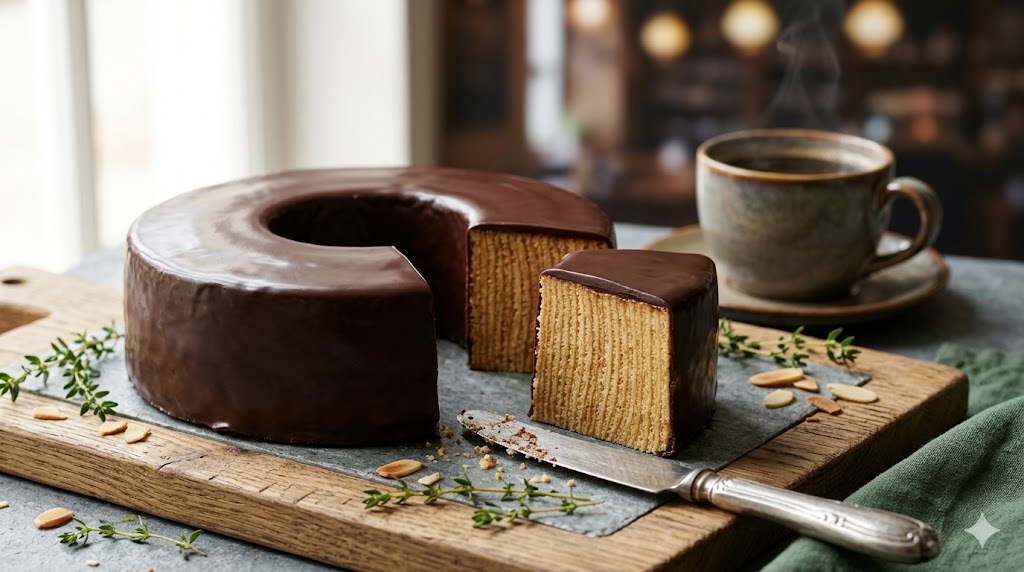
When you finally slice the finished pastry open, the dozens of baked layers look exactly like the rings of a tree trunk. Today, the town of Salzwedel in the state of Saxony-Anhalt is the most famous destination in Germany for authentic, traditionally baked Baumkuchen.
German Name: Baumkuchen
Steamed Dumplings (Steamed Noodles)
Dampfnudeln are deeply traditional steamed yeast dumplings that originate from the southern German regions of Bavaria and the Palatinate. Cooks prepare these unique fluffy treats using a specialized method that simultaneously steams the top and fries the bottom.
They place the raw dough balls into a covered pot containing a shallow mixture of liquid and fat. As the liquid evaporates, the trapped steam puffs the dough up into pillowy clouds while the remaining fat creates a prized golden crust on the base.
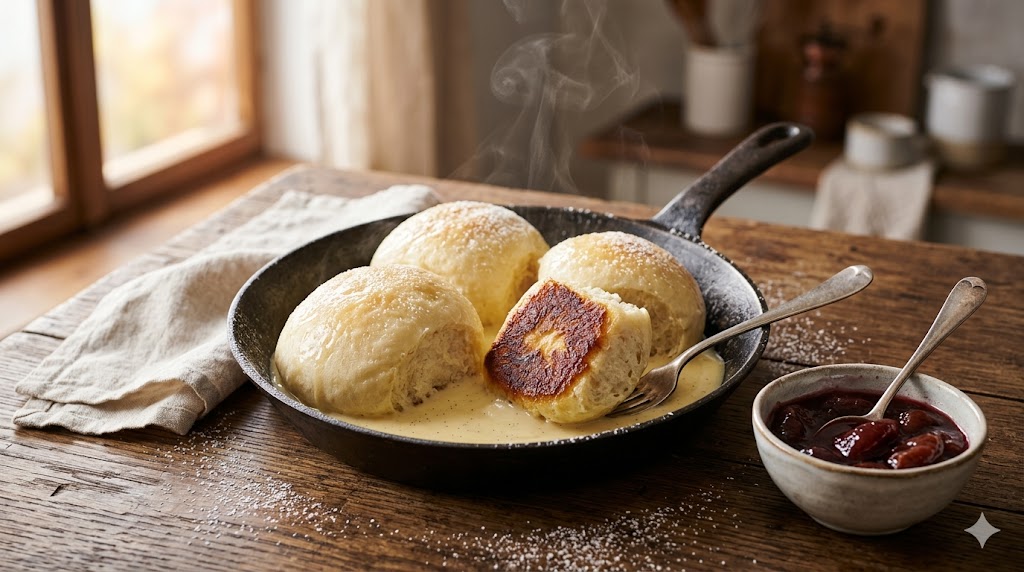
In Bavaria, locals typically enjoy them as a sweet main course drenched in rich, warm vanilla sauce or fruit compote. However, in the Palatinate region, families prefer a savory version with a salty crust served alongside hearty bowls of potato soup or sauerkraut.
German Name: Dampfnudeln
Lübeck Marzipan
While locals don’t typically serve it as a plated dessert, Germans consume massive amounts of this sweet almond paste as a standalone candy and a baking ingredient, especially during the Christmas season. The northern Hanseatic city of Lübeck has been the undisputed capital of German marzipan production for centuries, with historic manufacturers like Niederegger leading the industry since the early 1800s.
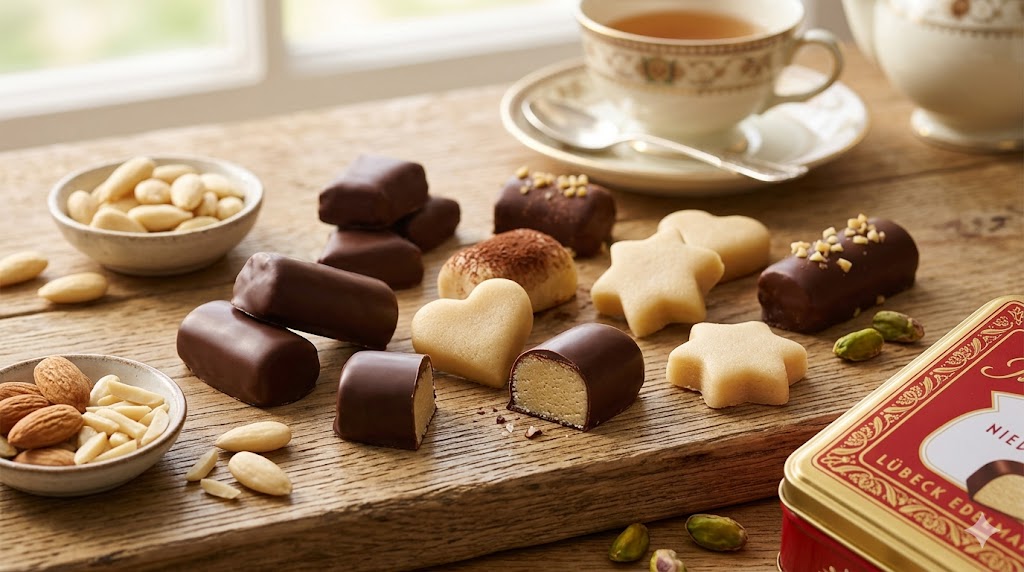
The European Union actually protects the name with a special geographic indication status. To legally be called Lübecker Marzipan, the sweet must be produced in or around the city of Lübeck and adhere to incredibly strict quality standards. Unlike cheaper commercial versions that use heavy amounts of filler sugar, authentic Lübeck marzipan requires a much higher ratio of pure, high-quality crushed almonds.
German Name: Lübecker Marzipan
Honourable Mentions
While the famous classics often steal the spotlight, incredible regional treats like Quarkkeulchen, Frankfurter Kranz, and Streuselkuchen could easily be added to this list of traditional German desserts.
These honorable mentions perfectly showcase the country’s diverse baking heritage and are absolutely worth seeking out if you ever encounter them on your travels.
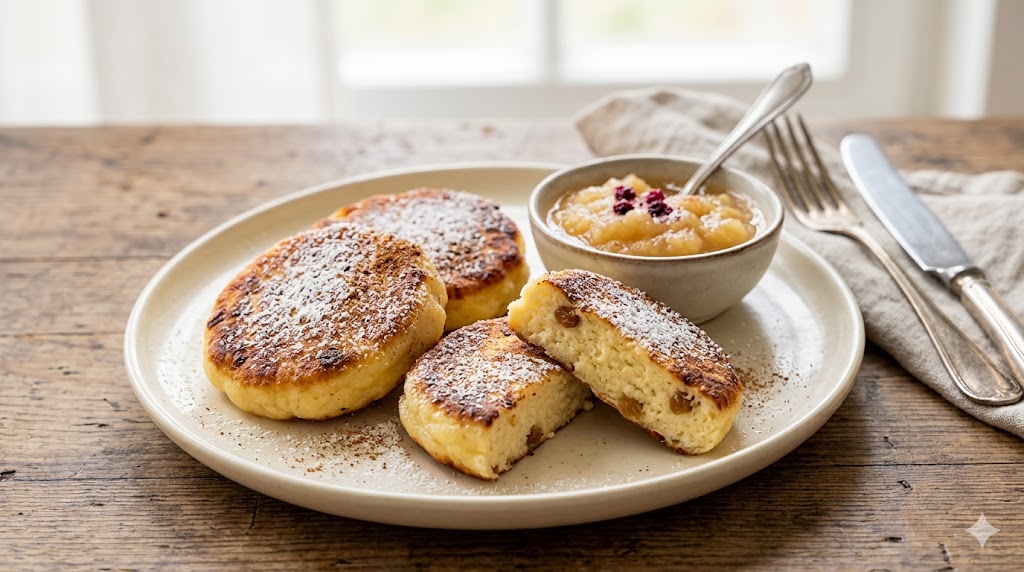
Quarkkeulchen are sweet, pan-fried Saxon fritters made from a clever dough of mashed potatoes and fresh quark cheese. Locals typically dust these hot patties with cinnamon sugar and serve them alongside cold applesauce for a perfect flavor contrast.
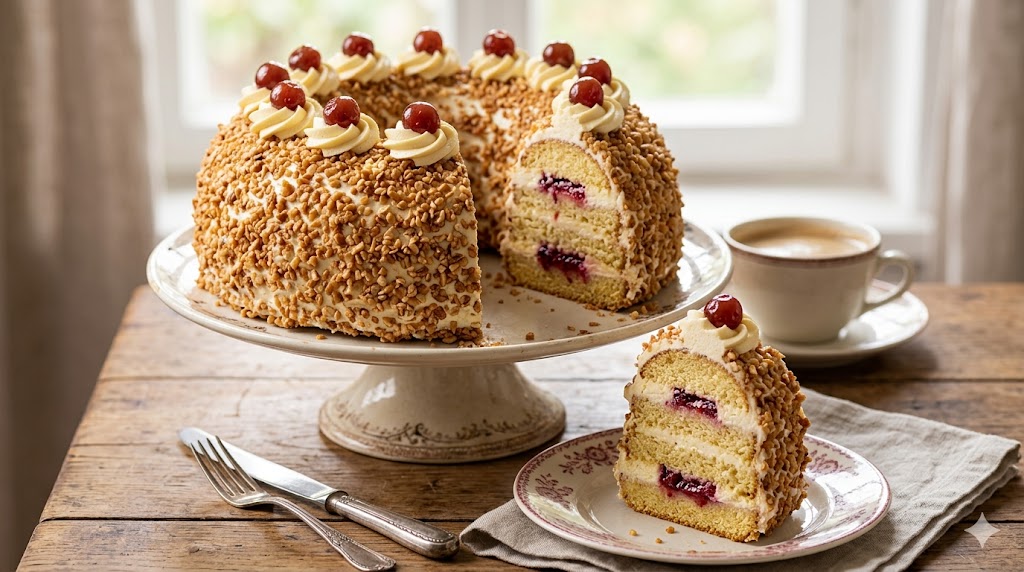
Frankfurter Kranz is an opulent, ring-shaped sponge cake from Frankfurt that was historically designed to resemble a gleaming golden crown. Bakers stack the cake with rich layers of buttercream and red jam before coating the entire outside in crunchy, caramelized nut brittle.
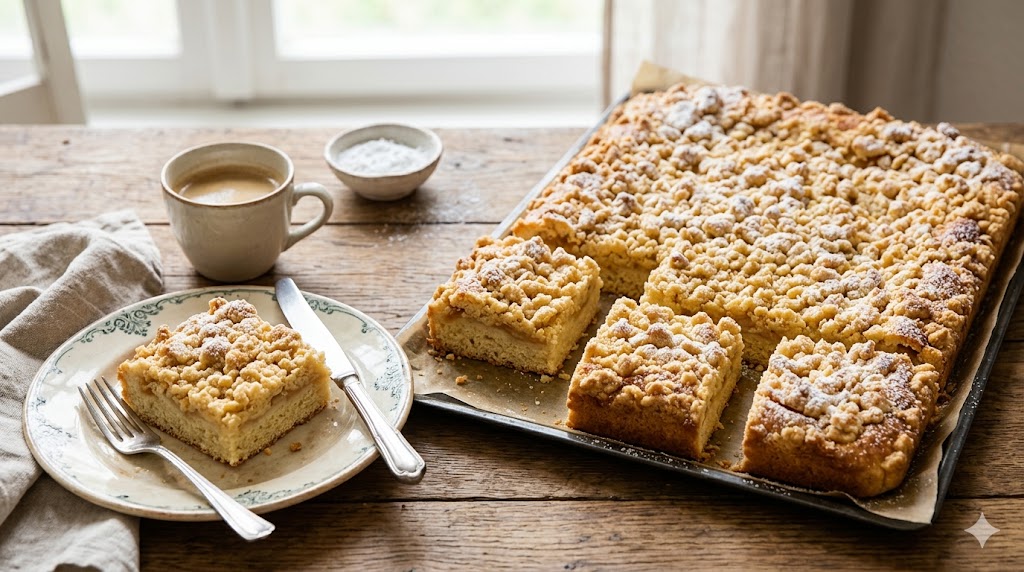
Streuselkuchen is a beloved nationwide classic consisting of a simple, soft yeast sheet cake covered entirely in a thick layer of sweet buttery crumbles. It serves as the quintessential everyday German pastry, perfect for enjoying alongside a strong afternoon cup of coffee.
Desserts are the fairy tales of the kitchen, a happily-ever-after to supper.
~Terri Guillemets