


Discover the sweetest side of Italian culture by tasting these ten incredible local desserts on your next trip. Beyond the stunning ancient ruins and breathtaking coastlines, this beautiful nation boasts a historic pastry and dessert tradition that is truly second to none. Passionate chefs and neighborhood pasticcerias dedicate their lives to perfecting beloved family recipes handed down through generations.
Every distinct region presents a unique culinary journey, featuring creamy, espresso-soaked comforts, elegantly layered creations, and crisp, ricotta-filled masterpieces. Exploring these culinary delights provides a wonderful window into daily life. Prepare your palate for an unforgettable and utterly delicious European vacation.
Taste these top ten mouthwatering Italian treats to make your European vacation truly unforgettable:
Life is uncertain. Eat dessert first.
~ Ernestine Ulmer
The top 10 desserts in Germany
Tiramisù
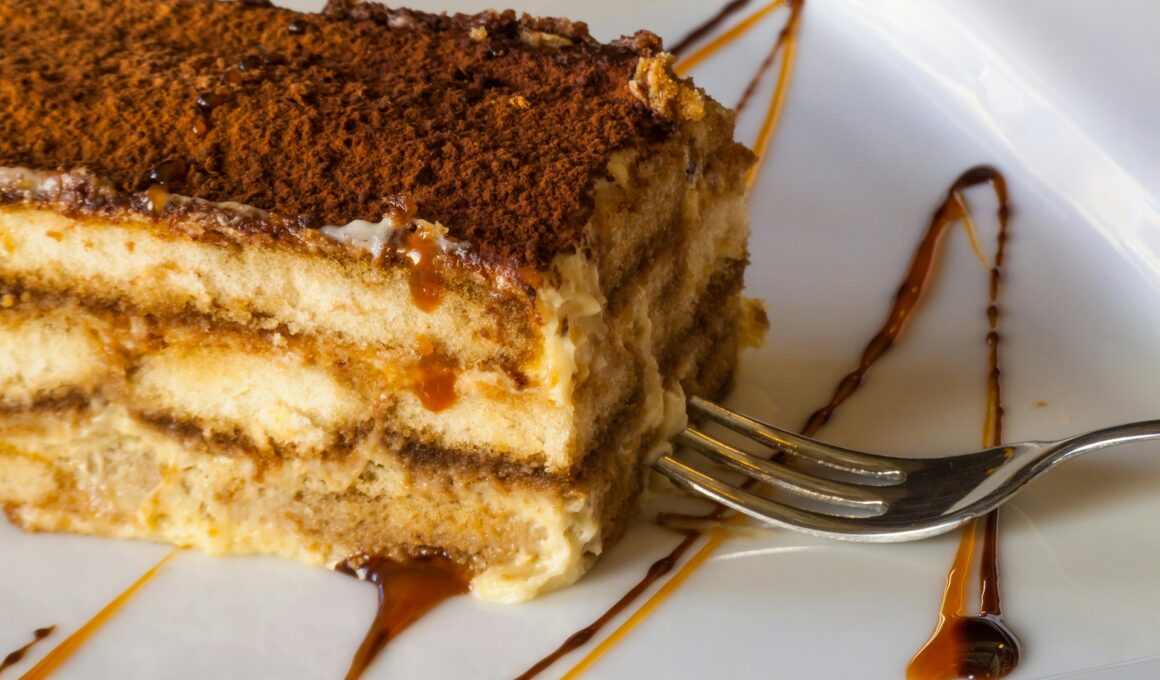
The name translates literally to “pick me up” or “cheer me up” in Italian, a direct nod to its rich, highly caffeinated ingredients. A classic Tiramisù requires no baking at all. It is constructed by briefly dipping crisp ladyfinger cookies (savoiardi) into strong, cold espresso. These soaked cookies are then meticulously layered in a dish with a thick, rich cream made from whisked raw eggs, sugar, and fresh mascarpone cheese.
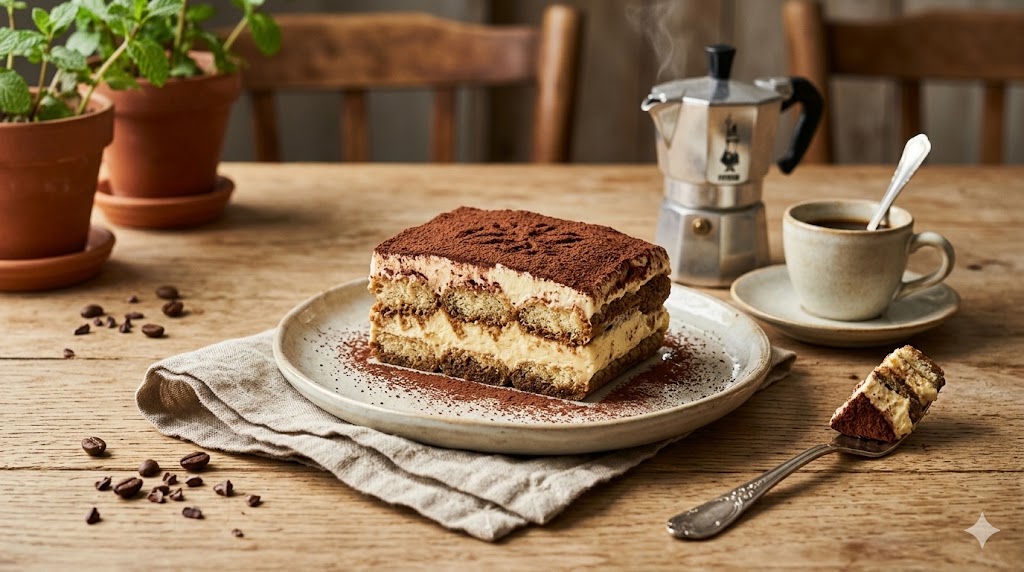
The entire dessert is chilled for several hours to let the flavors meld and the cookies soften into a spongy, cake-like texture, before being heavily dusted with unsweetened cocoa powder just before serving.
While it feels like an ancient culinary tradition, food historians generally agree that Tiramisù was actually invented in the Veneto region, specifically in the city of Treviso, sometime in the late 1960s or early 1970s. Despite its recent invention, it quickly exploded in popularity to become an absolute cornerstone of Italian cuisine worldwide.
Cannoli
This famous pastry consists of a crispy, tube-shaped shell of fried dough that is generously stuffed with a rich, sweet, and creamy cheese filling.
To achieve the signature blistered and bubbly texture of the crust, bakers traditionally add a splash of Marsala wine or a little vinegar to the dough before wrapping it around metal cylinders to deep-fry. The authentic Sicilian filling relies almost exclusively on fresh, high-quality sheep’s milk ricotta that is lightly sweetened, deliberately avoiding the heavy custards or mascarpone creams sometimes used in modern international variations.
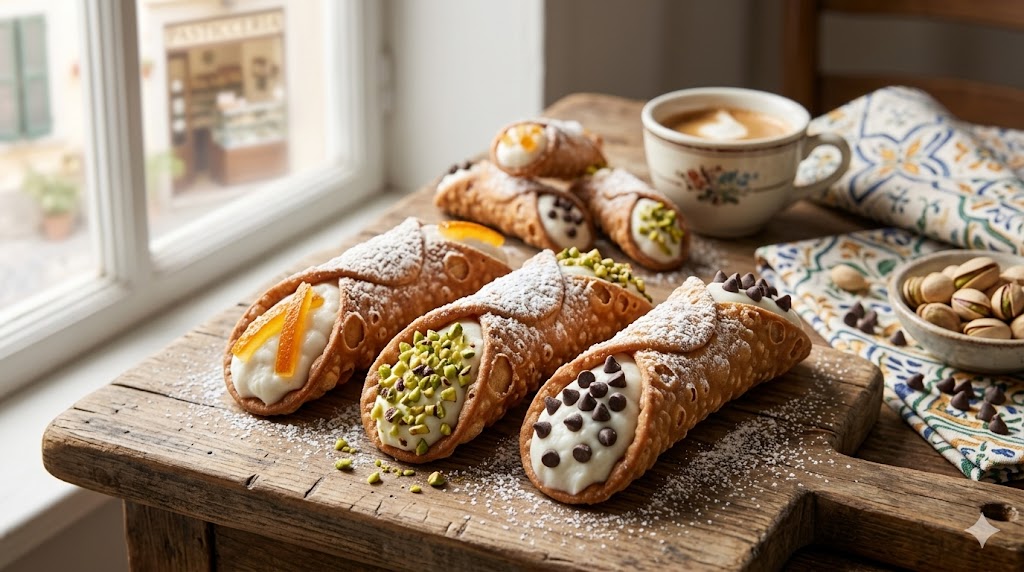
The exposed ends of the creamy filling are usually decorated with classic regional ingredients like chopped green pistachios, dark chocolate chips, or strips of candied orange and cherry peel. Because the moisture from the ricotta will eventually soften the delicate pastry, authentic Italian bakeries follow a strict rule: they never pipe the cream into the shell until the exact moment a customer orders it, ensuring the crust remains shatteringly crisp.
Historically, Sicilians prepared cannoli specifically as a decadent treat to celebrate Carnevale season before Lent, but their incredible popularity has made them a year-round staple worldwide.
Gelato
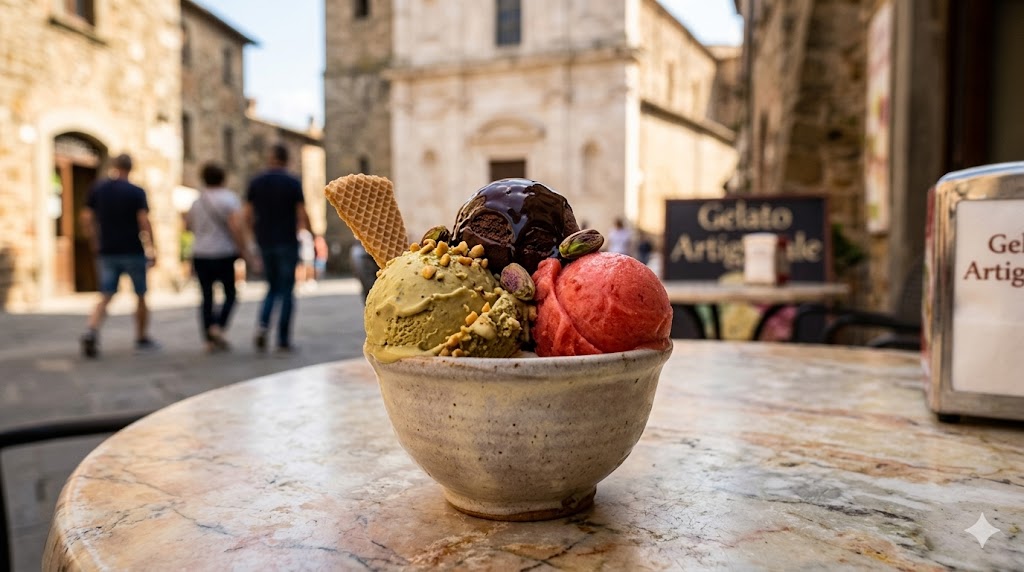
While the word gelato simply translates to “ice cream” in Italian, it is a distinctly different culinary creation from standard American or French ice cream. True artisanal Italian gelato relies on a careful balance of three fundamental factors that set it apart from its global counterparts.
How Gelato Differs from Ice Cream
- Lower Fat Content: Traditional gelato uses a much higher proportion of whole milk to cream, bringing its total butterfat content down to around 4% to 9%.
- Less Air: Commercial ice cream is churned rapidly to whip in air, which can double its volume. Gelato is churned at a much slower speed, introducing very little air into the base. This slow churning results in an incredibly dense, rich, and velvety texture.
- Warmer Serving Temperature: Because it is so dense and has less fat to keep it soft, gelato is stored and served at a slightly warmer temperature than standard ice cream. This warmer temperature ensures it remains perfectly silky and prevents it from numbing the mouth, maximizing your ability to taste the flavors.
Traditional Italian gelaterias do not use round, mechanical ice cream scoops. Instead, servers use a flat metal spade (a spatola) to work the soft dessert, manipulating it into elegant peaks or pressing it smoothly into a cup or cone.
Panna Cotta
The name translates literally to cooked cream. Despite its elegant reputation, it is incredibly simple to make. The base consists of heavy cream and sugar gently warmed together, traditionally infused with a split vanilla bean, and then set using a precise amount of gelatin before being chilled in individual molds.
Unlike baked custards like flan or crème brûlée, which rely on egg yolks to thicken, authentic Panna Cotta contains no eggs at all.
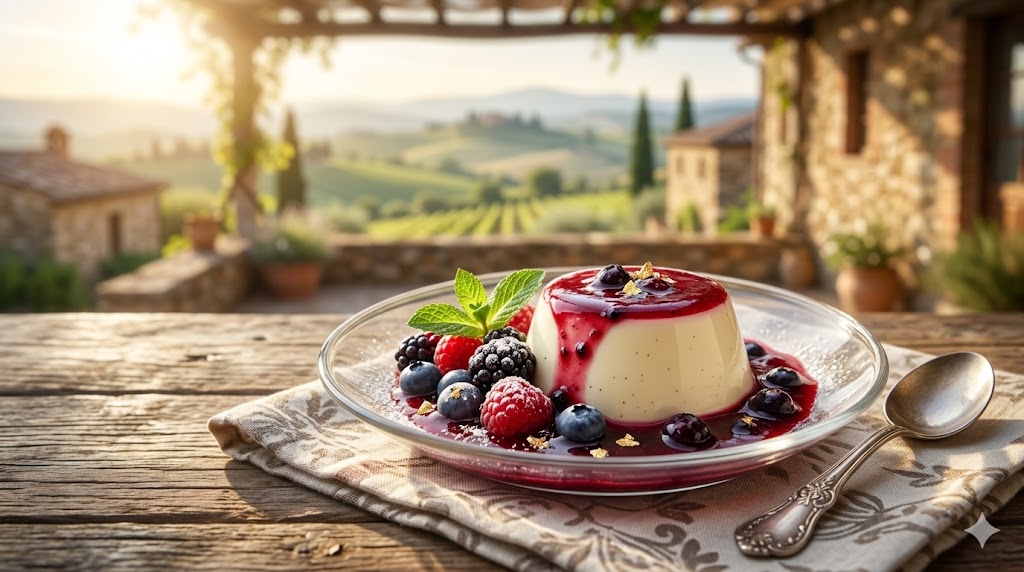
The true mark of a masterfully made Panna Cotta is its texture. It should not be rubbery, stiff, or bouncy like a commercial gelatin dessert. Instead, it must be set just enough to hold its shape when turned out of the mold onto a plate. When nudged with a spoon, it should have a delicate, fragile “wobble” and melt instantly in your mouth, feeling rich and entirely silky.
Because the base is essentially a blank canvas of sweet, pure dairy, Italian chefs almost always serve it with a contrasting accompaniment to cut through the heavy richness like fruit coulis, caramel or chocolate ganache.
Sfogliatella
The name translates to “small, thin leaf,” which perfectly describes its most famous variation: the Sfogliatella Riccia. This delicate, shell-shaped pastry is renowned for its incredibly complex crust, constructed from microscopic, overlapping layers of paper-thin dough that shatter crisply when bitten into.
Inside this crisp exterior is a dense, warm, and aromatic filling made from sweet ricotta cheese, cooked semolina, candied orange peel, and a distinct pinch of cinnamon.
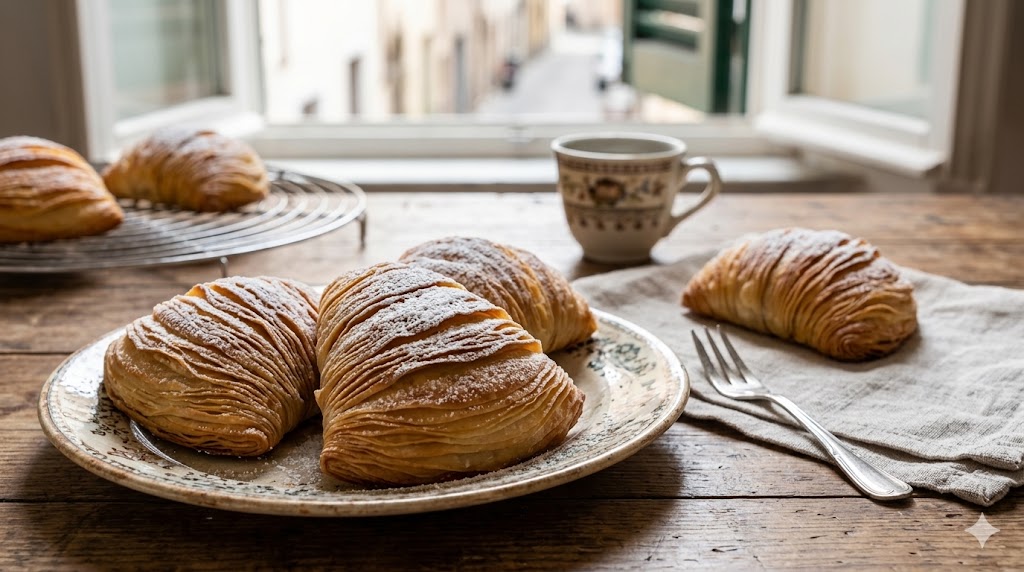
There is also a second popular version called the Sfogliatella Frolla. While it uses the exact same sweet ricotta and semolina filling, it is wrapped in a soft, crumbly shortcrust pastry rather than the flaky, layered dough, making it rounder and much easier to bake.
In Naples, locals traditionally enjoy these pastries warm, straight from the oven, typically paired with a strong shot of morning espresso.
Zabaglione
This warm, airy custard is made from just three core ingredients: raw egg yolks, sugar, and a sweet wine; most traditionally Marsala wine from Sicily.
The magic of the dessert lies entirely in its technique. Chefs vigorously whisk the mixture in a bowl set over a pot of gently simmering water. This gentle, indirect heat cooks the eggs safely while the constant, rapid whipping incorporates air. Over several minutes, the mixture triples in volume, transforming into a thick, velvety, and highly aromatic foam.
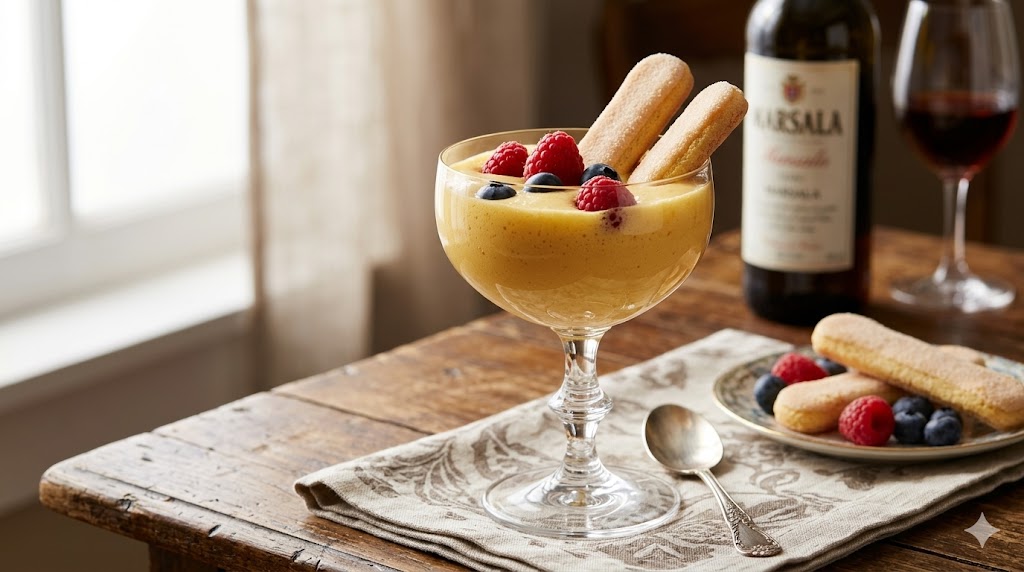
Zabaglione is traditionally served warm in a glass or coupe immediately after it is whisked. Because the dessert is so light and airy, Italians almost always serve it with crisp cookies for dipping, or pour it lavishly over a bowl of fresh berries.
Crostata
Crostata is an incredibly traditional and deeply beloved Italian dessert. This rustic baked tart is a foundational staple in home kitchens and pastry shops throughout the entire country. Dating back centuries, it perfectly embodies the comforting simplicity of authentic Italian home baking using simple but exceptionally fresh ingredients.
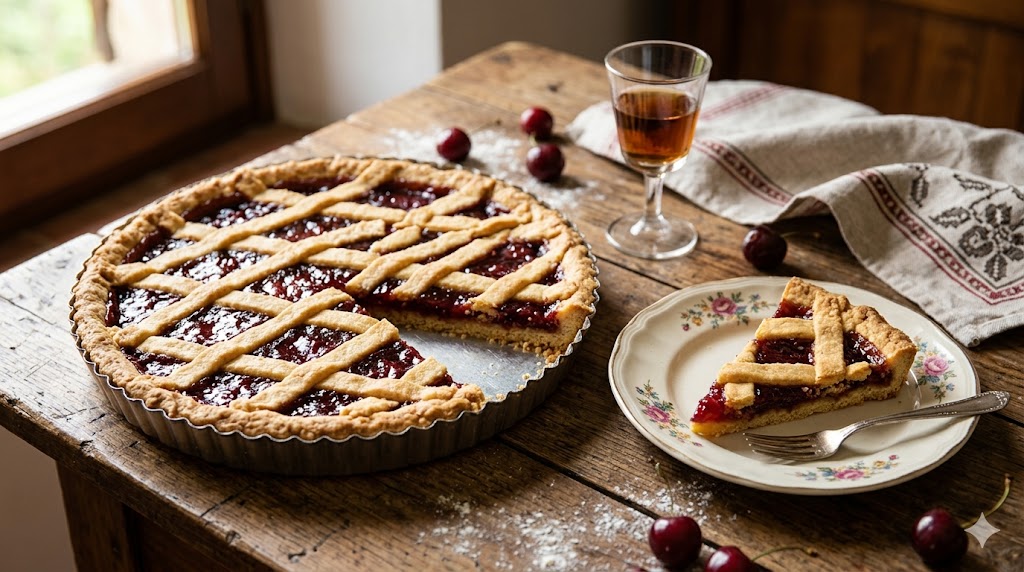
The foundation of every classic crostata relies on pasta frolla, a buttery and sweet shortcrust pastry flavored with bright lemon zest or vanilla. Bakers roll this rich dough tightly across a shallow, round pan, ensuring a firm bottom crust capable of supporting heavy, moist fruit fillings without ever turning soggy.
Traditionally, the tart is generously filled with dense fruit jam, known as marmellata, featuring popular flavors like apricot, cherry, or plum. Finally, strips of leftover dough are woven across the top layer to create its signature lattice pattern, allowing the bubbling fruit inside to peek through beautifully during the baking.
Panforte
Panforte is an ancient, traditional Italian dessert originating from Siena, Tuscany. Dating back to the Middle Ages, it was originally called panpepato (peppered bread) due to its use of exotic spices, which made it a symbol of wealth often used to pay monastery tithes.
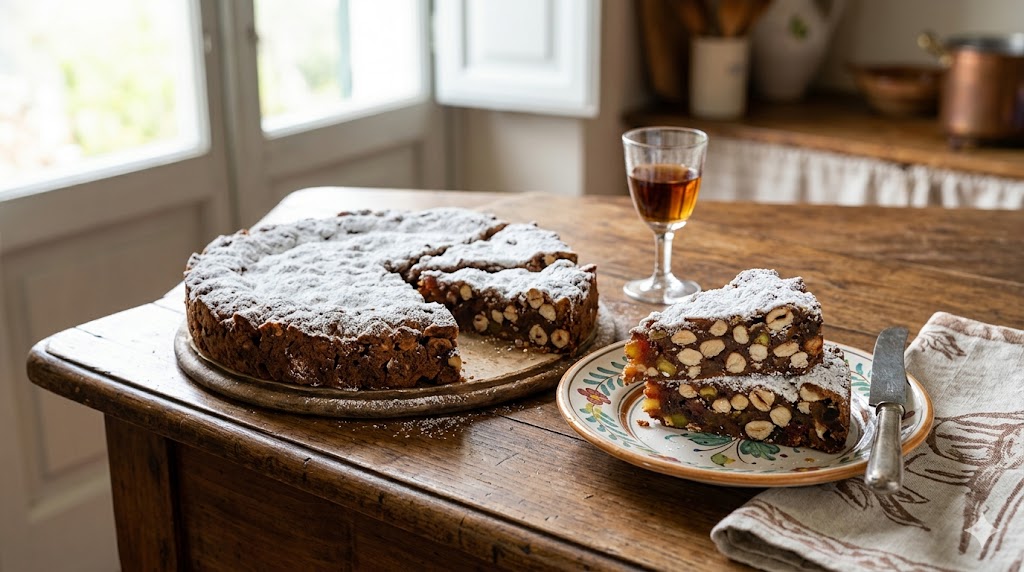
This dense, chewy confection sits comfortably between a fruitcake and a candy. It is made by binding whole almonds, walnuts, and candied fruits with a boiling syrup of honey and sugar. It contains very little flour and is heavily flavored with a warm spice blend of cinnamon, nutmeg, cloves, and white pepper. The mixture is baked over edible rice paper and generously dusted with powdered sugar.
Traditionally a rare Christmas treat for the wealthy, it is now enjoyed all year. Because it is incredibly rich, locals serve it in very thin slices alongside espresso or a sweet dessert wine like Vin Santo in Tuscany today.
Torrone
Torrone is a profoundly traditional Italian dessert, originating in the northern region of Lombardy, specifically the city of Cremona. Documented as early as the fifteenth century for royal weddings, this iconic nougat is now celebrated nationwide, featuring distinct regional variations in places like Sicily and Sardinia.
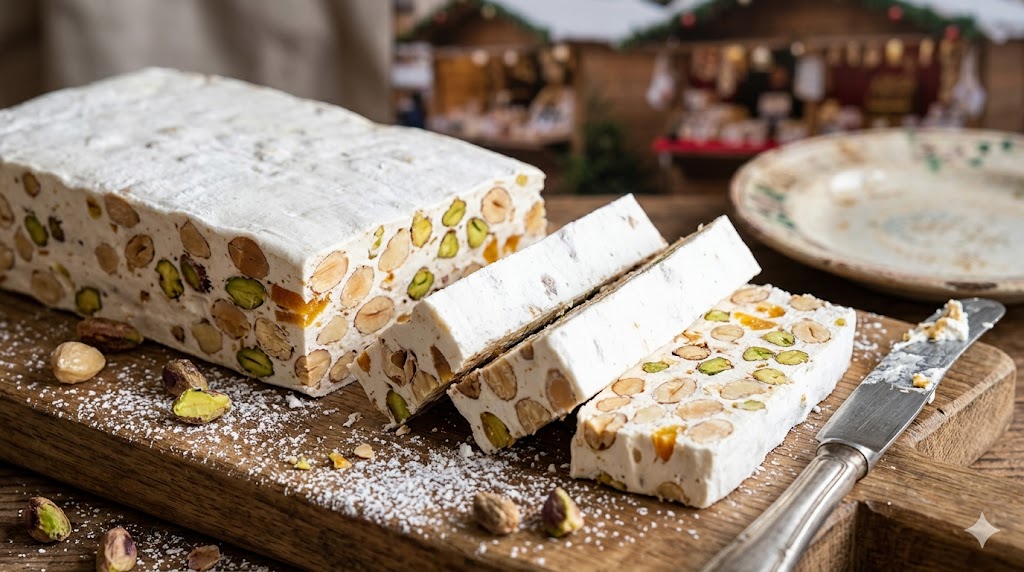
A classic torrone relies on a simple but precise mixture: pure honey, sugar, stiffly whipped egg whites, and toasted nuts, usually almonds, hazelnuts, or pistachios. This sweet meringue base is traditionally sandwiched between thin, edible wafer paper (ostia). Depending on the cooking time, the texture ranges from torrone duro (shatteringly hard and brittle) to torrone morbido (soft and chewy).
Culturally, this nougat is the ultimate Italian Christmas treat. The elongated block shape originally mimicked Cremona’s famous Torrazzo bell tower. Today, sharing beautifully wrapped torrone remains an essential holiday tradition, symbolizing familial warmth and generosity during the winter season across all of modern Italy.
Zeppole
Zeppole are deeply traditional Italian pastries originating from the southern region of Campania, specifically Naples. They are a cherished symbol of authentic Neapolitan street food and culinary pride.
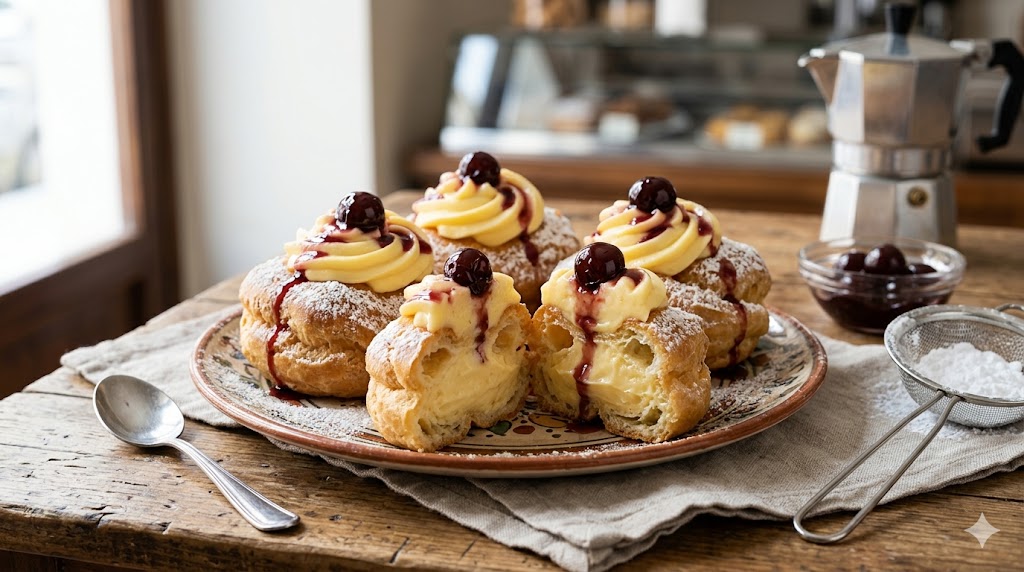
A classic zeppola is made from choux pastry (pasta choux), a simple dough of water, butter, flour, and eggs. The batter is piped into circular rings and traditionally deep-fried until light, airy, and golden-brown. Once cooled, the crisp pastry rings are generously topped or filled with a rich vanilla pastry cream (crema pasticcera). The dessert is beautifully finished with syrupy, dark-red Amarena cherries and a heavy dusting of powdered sugar.
Culturally, these decadent treats are inextricably linked to the Festa di San Giuseppe (Saint Joseph’s Day) on March 19th, which also serves as Italy’s Father’s Day. Sharing Zeppole di San Giuseppe remains an essential, joyous family tradition to honor fathers throughout the country.
Desserts are the fairy tales of the kitchen, a happily-ever-after to supper.
~Terri Guillemets